
President of Estonia
President of Estonia is a public office. It was created in 1938.
All 5 facts, and where they come from
Facts
5 facts · 0 confirmed by two sources · 0 cited · 5 from one source
Where this comes from
Papalocal keeps its own record. It started from these sources; what each one said is kept here as it was copied, so a change on their side never changes this page by itself. Tap one to read its version.
What Wikidata says · copied November 17, 2026 · revision 2552583550
- Described as
- position
- Other names
- President of the Republic of Estonia, President
- What it is
- public office
- Created
- April 24, 1938
- Country
- Estonia
- Office of
- Estonia
- Official website
- http://www.president.ee/
- Wikipedias with a page
- 51
Wikidata item Q890005 (wikidata.org/wiki/Q890005), public domain (CC0). Copied 2026-11-17.
What Wikipedia says · copied November 17, 2026 · revision 1380874265
The president of the Republic of Estonia (Estonian: Eesti Vabariigi President) is the head of state of the Republic of Estonia. The current president is Ülle Madise, elected by Parliament on 2 September 2026, replacing Alar Karis.
Estonia is one of the few parliamentary republics in which the president is a ceremonial figurehead without even nominal executive powers. The president is obliged to suspend their membership in any political party for the term in office. Upon assuming office, the authority and duties of the president in all other elected or appointed offices terminate automatically. These measures should theoretically help the president to function in a more independent and impartial manner. The president holds office for five years. They may be elected any number of times, but not more than twice consecutively.
In Estonia, the president is elected by the Riigikogu; a candidate must win a two-thirds supermajority to be elected. If no candidate achieves two-thirds support in the Riigikogu after three rounds of balloting, a special electoral body is convened comprising all members of the Riigikogu and elected representatives of all municipalities (at least one representative per each municipality, but not more than 10 representatives depending on the number of citizens with voting rights residing in the municipality). This body chooses between the two candidates with the largest percentage of votes.
While this election process has been criticised, the idea of direct elections does not have enough support in parliament, with only the Estonian Centre Party and Conservative People's Party defending it.
From the Wikipedia article “President of Estonia” (en.wikipedia.org/wiki/President_of_Estonia), by its contributors, under CC BY-SA 4.0 (creativecommons.org/licenses/by-sa/4.0/). Copied 2026-11-17; not changed.
Confirmed Two sources agree. Cited One source, and it names where it got it. One source One source, without a reference of its own. Sources disagree The sources disagree. We show the best-supported value and keep theirs below.
People connected 7
Held this office
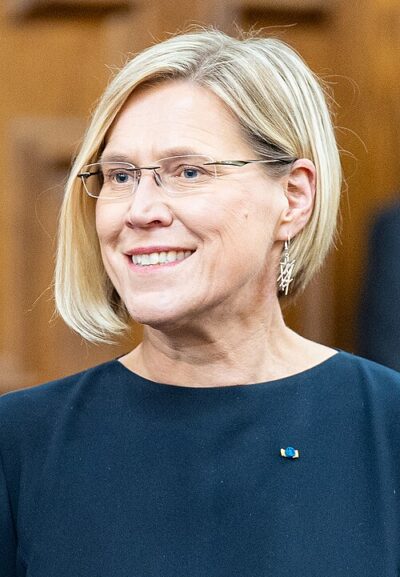 Ülle Madise (2026–)Estonian legal scholar and politician (born 1974)
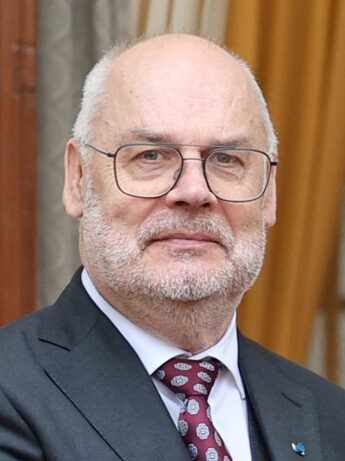 Alar Karis (2021–2026)Estonian molecular geneticist and President of Estonia (born 1958)
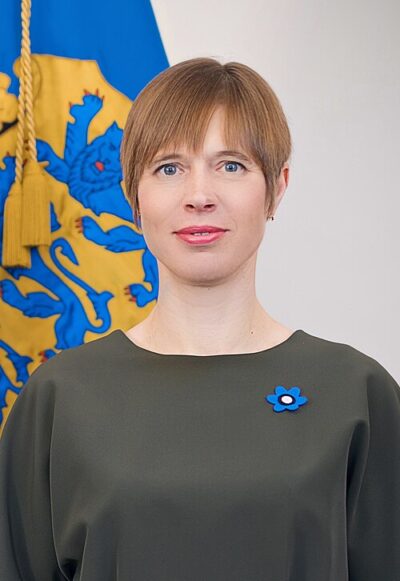 Kersti Kaljulaid (2016–2021)Estonian politician and president of Estonia (born 1969)
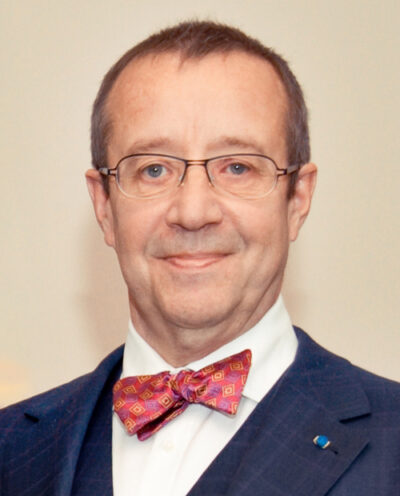 Toomas Hendrik Ilves (2006–2016)Estonian politician and diplomat, fourth president of Estonia (born 1953)
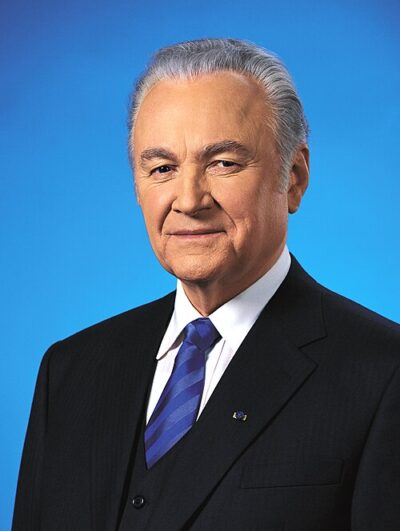 Arnold Rüütel (2001–2006)Estonian politician, former President of Estonia (1928–2024)
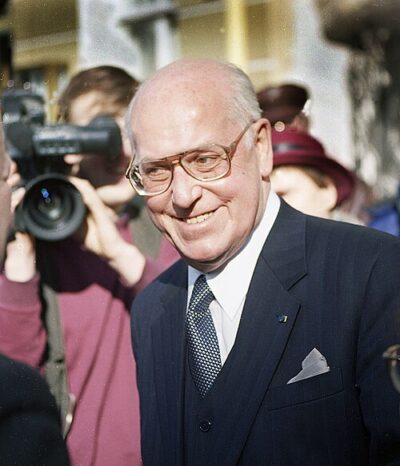 Lennart Meri (1992–2001)Estonian writer, filmmaker and politician; President of Estonia in 1992–2001 (1929-2006)
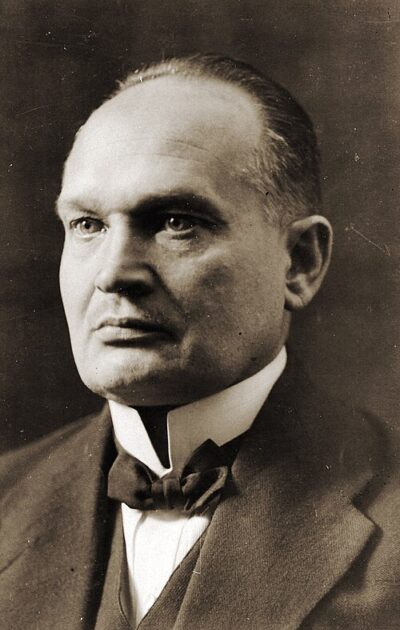 Konstantin Päts (1938–1940)Estonian politician (1874–1956)
