
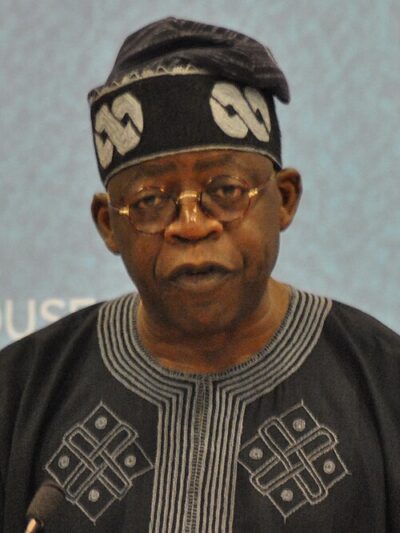
President of Nigeria
President of Nigeria is an Office of the President is called Grand Commander of the Order of the Federal Republic (GCFR). It was created in 1963.
All 6 facts, and where they come from
Facts
6 facts · 0 confirmed by two sources · 0 cited · 6 from one source
Where this comes from
Papalocal keeps its own record. It started from these sources; what each one said is kept here as it was copied, so a change on their side never changes this page by itself. Tap one to read its version.
What Wikidata says · copied November 17, 2026 · revision 2565303640
- Described as
- Office of the President is called Grand Commander of the Order of the Federal Republic (GCFR)
- What it is
- public office; president
- Created
- October 1, 1963
- Country
- Nigeria
- Office of
- Nigeria
- Official website
- http://www.statehouse.gov.ng/
- Wikipedias with a page
- 37
Wikidata item Q500282 (wikidata.org/wiki/Q500282), public domain (CC0). Copied 2026-11-17.
What Wikipedia says · copied November 17, 2026 · revision 1381682579
The president of Nigeria, officially the president of the Federal Republic of Nigeria, is the head of state and head of government of the Federal Republic of Nigeria. The president directs the executive branch of the Federal Government and is the commander-in-chief of the Nigerian Armed Forces.
The offices, powers, and titles of the head of state and the head of government were officially merged into the office of the presidency under the 1979 Constitution of Nigeria.
Executive power is vested in the president. The power includes the execution and enforcement of federal law and the responsibility to appoint federal executive, diplomatic, regulatory, and judicial officers. Based on constitutional provisions empowering the president to appoint and receive ambassadors and conclude treaties with foreign powers, and on subsequent laws enacted by the House, the presidency has primary responsibility for conducting foreign policy.
The president also plays a leading role in federal legislation and domestic policymaking. As part of the system of separation of powers, the Constitution gives the president the power to sign or veto federal legislation. Presidents are typically viewed as leaders of their political parties, major policy making is significantly shaped by the outcome of presidential elections.
The president is directly elected in national elections to a four-year term, along with the vice president.
Bola Tinubu is the 16th and current president of Nigeria, having assumed office on 29 May 2023.
From the Wikipedia article “President of Nigeria” (en.wikipedia.org/wiki/President_of_Nigeria), by its contributors, under CC BY-SA 4.0 (creativecommons.org/licenses/by-sa/4.0/). Copied 2026-11-17; not changed.
Confirmed Two sources agree. Cited One source, and it names where it got it. One source One source, without a reference of its own. Sources disagree The sources disagree. We show the best-supported value and keep theirs below.
Picture: Chatham House, via Wikimedia Commons · CC BY 2.0
People connected 14
Held this office
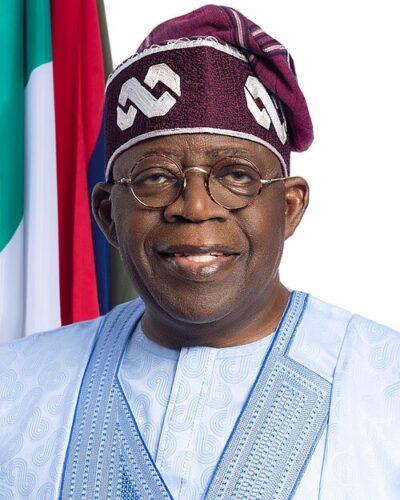 Bola Tinubu (2023–)12th Governor of Lagos (1999–2007) and President of Nigeria since 2023
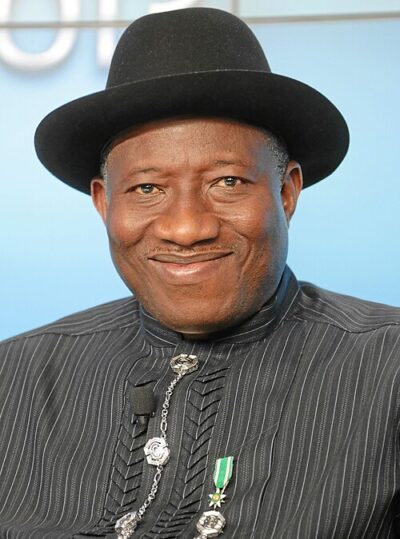 Goodluck Jonathan (2010–2015)President of Nigeria from 2010 to 2015
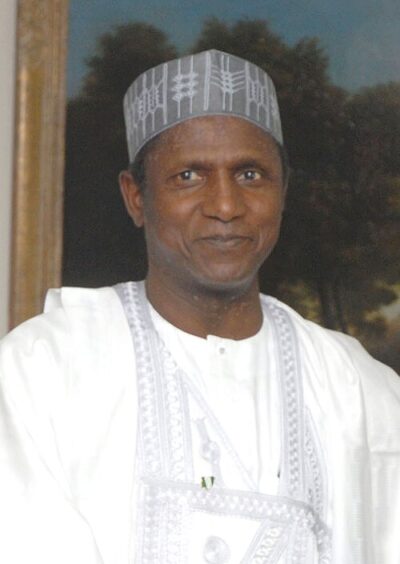 Umaru Musa Yar'Adua (2007–2010)President of Nigeria (1951-2010)
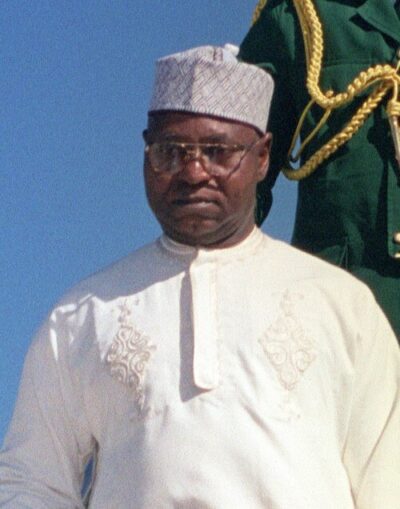 Abdulsalami Abubakar (1998–1999)nigerian general and brief head of state
- SSani Abacha (1993–1998)nigerian military ruler (1943-1998)
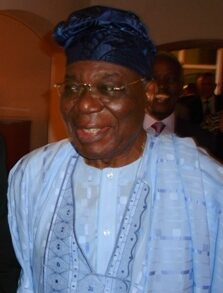 Ernest Shonekan (1993)President of Nigeria
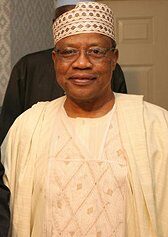 Ibrahim Babangida (1985–1993)Head of State of Nigeria
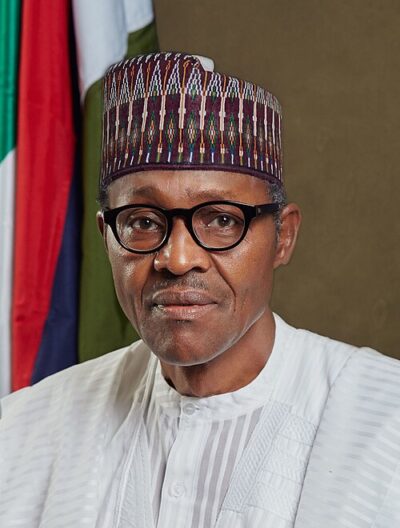 Muhammadu Buhari (1983–2023)former President of Nigeria from 1983 to 1985 and 2015 to 2025 (1942–2025)
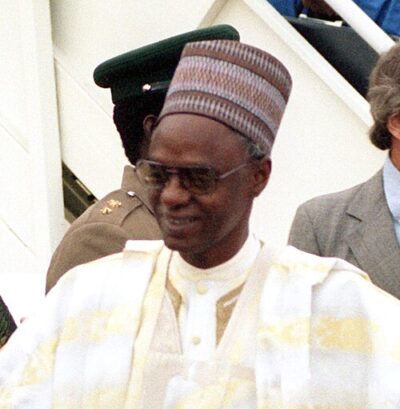 Shehu Shagari (1979–1983)president of Nigeria (1925-2018)
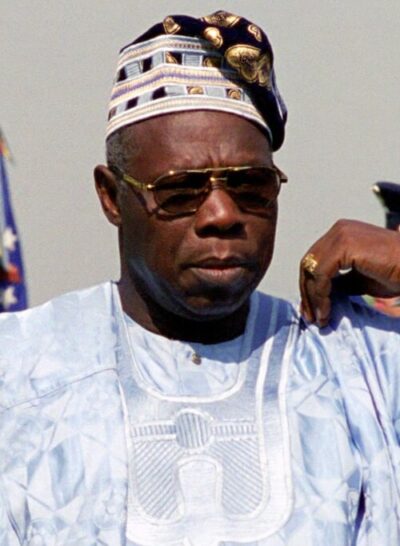 Olusegun Obasanjo (1976–2007)Nigerian president (1999-2007) and military leader (1976–79)
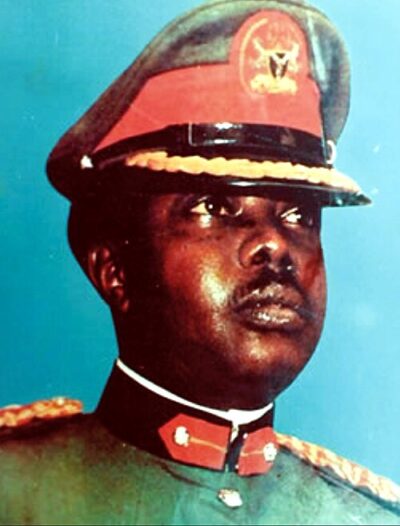 Murtala Muhammed (1975–1976)Nigerian politician and general (1938–1976)
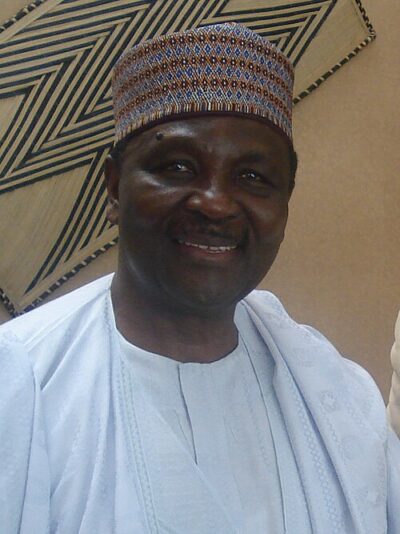 Yakubu Gowon (1966–1975)Nigerian politician and Military general
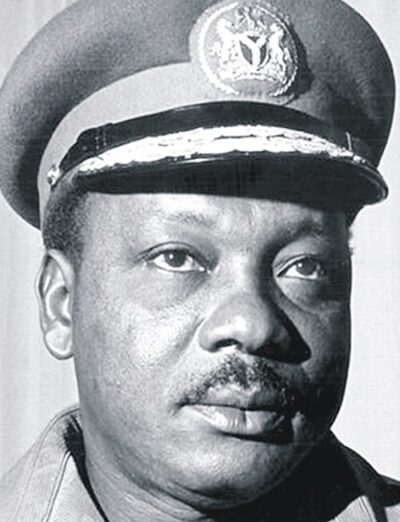 Johnson Aguiyi-Ironsi (1966)Nigerian Military Leader (1924-1966)
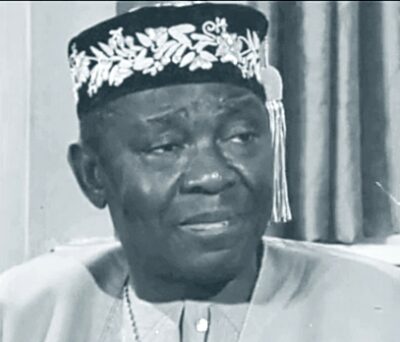 Nnamdi Azikiwe (1963–1966)first President of Nigeria (1904-1996)
