President of the National Assembly of Venezuela
The President of the National Assembly of Venezuela is a presiding officer (speaker) of the National Assembly, Venezuela's unicameral legislature. It was created in 1999.
All 4 facts, and where they come from
Facts
4 facts · 0 confirmed by two sources · 0 cited · 4 from one source
Where this comes from
Papalocal keeps its own record. It started from these sources; what each one said is kept here as it was copied, so a change on their side never changes this page by itself. Tap one to read its version.
What Wikidata says · copied November 17, 2026 · revision 2506913078
- Described as
- presiding officer (speaker) of the National Assembly, Venezuela's unicameral legislature
- Other names
- Speaker of the National Assembly of Venezuela
- What it is
- public office
- Created
- 1999
- Country
- Venezuela
- Office of
- Venezuela
- Wikipedias with a page
- 5
Wikidata item Q6597955 (wikidata.org/wiki/Q6597955), public domain (CC0). Copied 2026-11-17.
What Wikipedia says · copied November 17, 2026 · revision 1373761319
The president of the National Assembly (Spanish: Presidente de la Asamblea Nacional) is the presiding officer (speaker) of the National Assembly, Venezuela's unicameral legislature. The president's term coincides with the term of the legislature (five years as per constitutional convention). The post has existed since the election of the first National Assembly in 2000. Before the creation of the National Assembly with the adoption of the 1999 constitution, the country's legislature was the bicameral Congress, which contained the Senate and the Chamber of Deputies. The last president of the Senate was Luis Alfonso Dávila, and the last president of the Chamber of Deputies was Henrique Capriles Radonski.
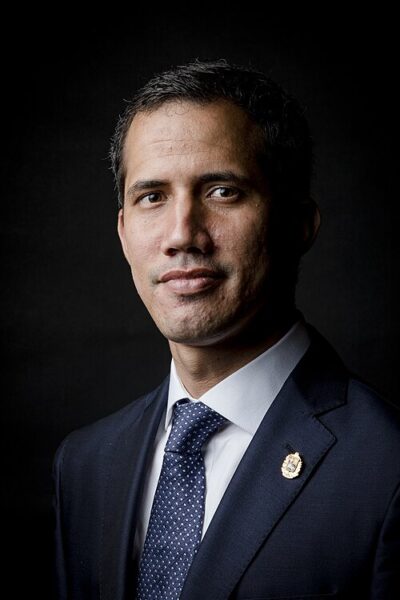
Since 5 January 2019, Juan Guaidó, a member of the Popular Will (VP) party and the Democratic Unity Roundtable coalition, has been President of the National Assembly. On 5 January 2020, however, state police blocked some deputies' entry to the chambers of the National Assembly as Luis Parra was elected to be the next president of the Assembly, with Guaidó and his allies alleging the election took place without a quorum being present. However, José Noriega of the Popular Will party and second vice-president of the National Assembly stated that a sufficient number of votes were cast for a valid election. Following the disputed election, two competing claims emerged over the post – one by Luis Parra and one by Juan Guaidó, with both claiming to be the legitimate President of the National Assembly.
In 2020, parliamentary elections took place in Venezuela, in which, without opposition participation and amid claims for fraud and lack of transparency, Chavismo took full control of the legislature. Since January 5, 2021, the date on which the majority socialist parliament began sessions – the V Legislature, Jorge Rodríguez claims to be the president of the National Assembly, while the IV Legislature, elected in 2015 and recognized by a considerable part of the international community, extended its functions through a referendum, so Juan Guaidó also continues to maintain that he leads the Venezuelan parliament. By this situation, it is understood that two parliaments now operate in parallel in the country, one elected in 2015 with an opposition majority, and another elected in 2020 with a Chavista majority.
From the Wikipedia article “President of the National Assembly of Venezuela” (en.wikipedia.org/wiki/President_of_the_National_Assembly_of_Venezuela), by its contributors, under CC BY-SA 4.0 (creativecommons.org/licenses/by-sa/4.0/). Copied 2026-11-17; not changed.
Confirmed Two sources agree. Cited One source, and it names where it got it. One source One source, without a reference of its own. Sources disagree The sources disagree. We show the best-supported value and keep theirs below.