Principia Mathematica
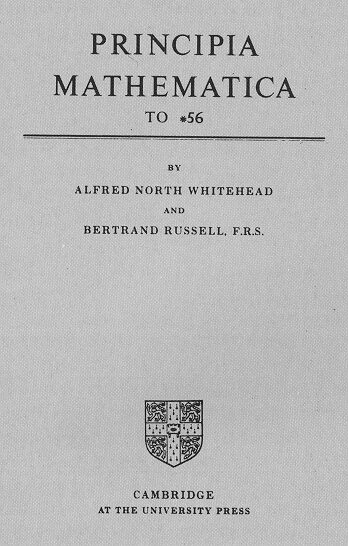
Principia Mathematica is a book on the foundations of mathematics. It came out in 1917. It was written by Bertrand Russell and Alfred North Whitehead.
- Released
- 1917
- Written by
- Bertrand Russell
- Genre
- essay
All 7 facts, and where they come from
Facts
7 facts · 0 confirmed by two sources · 0 cited · 7 from one source
Where this comes from
Papalocal keeps its own record. It started from these sources; what each one said is kept here as it was copied, so a change on their side never changes this page by itself. Tap one to read its version.
What Wikidata says · copied November 17, 2026 · revision 2569065301
- Described as
- book on the foundations of mathematics
- Other names
- PM
- What it is
- book series
- Written by
- Bertrand Russell; Alfred North Whitehead
- Publisher
- Cambridge University Press
- Genre
- essay · 2 references
- Released
- 1917
- Language
- English
- Wikipedias with a page
- 36
Wikidata item Q163335 (wikidata.org/wiki/Q163335), public domain (CC0). Copied 2026-11-17.
What Wikipedia says · copied November 17, 2026 · revision 1384220947
The Principia Mathematica (often abbreviated PM) is a three-volume work on the foundations of mathematics written by the mathematician–philosophers Alfred North Whitehead and Bertrand Russell and published in 1910, 1912, and 1913. In 1925–1927, it appeared in a second edition with an important Introduction to the Second Edition, an Appendix A (that replaced ✱9), and with an additional new Appendix B and Appendix C. PM was conceived as a sequel to Russell's 1903 The Principles of Mathematics, but as PM states, this became an unworkable suggestion for practical and philosophical reasons: "The present work was originally intended by us to be comprised in a second volume of Principles of Mathematics ... But as we advanced, it became increasingly evident that the subject is a very much larger one than we had supposed; moreover on many fundamental questions which had been left obscure and doubtful in the former work, we have now arrived at what we believe to be satisfactory solutions."
PM, according to its introduction, had three aims:to analyse to the greatest possible extent the ideas and methods of mathematical logic and to minimise the number of primitive notions, axioms, and inference rules;
to precisely express mathematical propositions in symbolic logic using the most convenient notation that precise expression allows;
to solve the paradoxes that plagued logic and set theory at the turn of the 20th century, like Russell's paradox.
This third aim motivated the adoption of the theory of types in PM. The theory of types adopts grammatical restrictions on formulas that rule out the unrestricted comprehension of classes, properties, and functions. The effect of this is that formulas such as would allow the comprehension of objects like the Russell set turn out to be ill-formed: they violate the grammatical restrictions of the system of PM.
PM sparked interest in symbolic logic and advanced the subject, popularizing it and demonstrating its power. The Modern Library placed PM 23rd in their list of the top 100 English-language nonfiction books of the 20th century.
From the Wikipedia article “Principia Mathematica” (en.wikipedia.org/wiki/Principia_Mathematica), by its contributors, under CC BY-SA 4.0 (creativecommons.org/licenses/by-sa/4.0/). Copied 2026-11-17; not changed.
Confirmed Two sources agree. Cited One source, and it names where it got it. One source One source, without a reference of its own. Sources disagree The sources disagree. We show the best-supported value and keep theirs below.
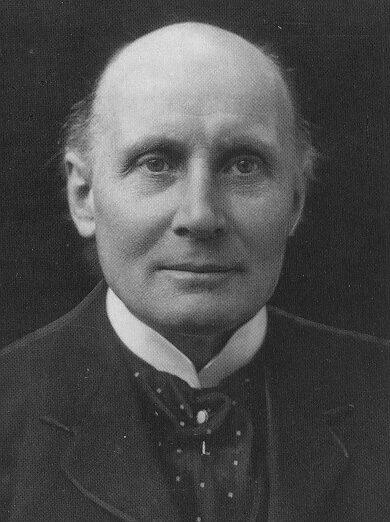
Picture: Nick Dillinger, via Wikimedia Commons · Public domain