
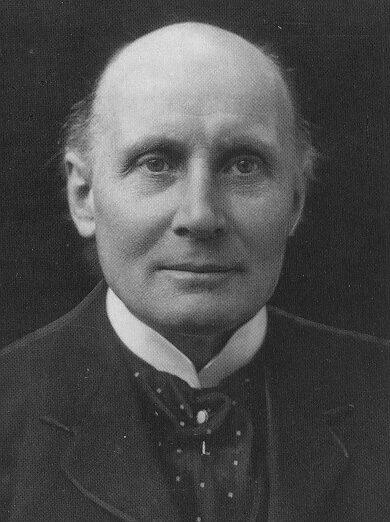
Alfred North Whitehead
Alfred North Whitehead was an English mathematician and philosopher. Born February 15, 1861, in Ramsgate. Died December 30, 1947, in Cambridge. Known for Principia Mathematica, Process and Reality and The Concept of Nature. Educated at Trinity College and Sherborne School. Awards include Fellow of the Royal Society, honorary doctor of the University of St Andrews and honorary doctor of Harvard University.
Facts
43 facts · 2 confirmed by two sources · 25 cited · 16 from one source
Where this comes from
Papalocal keeps its own record. It started from these sources; what each one said is kept here as it was copied, so a change on their side never changes this page by itself. Tap one to read its version.
What Wikidata says · copied November 16, 2026 · revision 2567341208
- Described as
- English mathematician and philosopher (1861–1947)
- Born
- February 15, 1861 · 11 references
- Died
- December 30, 1947 · 10 references
- Born in
- Ramsgate · 2 references
- Died in
- Cambridge · 2 references
- Buried in
- Trinity College Chapel · 1 reference
- Citizen of
- United Kingdom
- Occupation
- philosopher · 1 reference; mathematician · 2 references; physicist; theologian · 1 reference; writer; logician; university teacher · 1 reference
- Worked for
- Harvard University (1924–1937) · 1 reference; Imperial College London (1914–1924) · 1 reference; University of Cambridge (1884–1910) · 1 reference
- Education
- Trinity College (1880–1884) · 1 reference; Sherborne School (1875–1880) · 1 reference; University of Cambridge (–1884) · 2 references
- Member of
- Royal Society of London; American Academy of Arts and Sciences; American Philosophical Society (1926–)
- Known for
- Principia Mathematica; Process and Reality; The Concept of Nature; Whitehead's theory of gravitation; Whitehead's point-free geometry; A Treatise on Universal Algebra; Science and the Modern World / Alfred North Whitehead
- Awards
- Fellow of the Royal Society (1903) · 1 reference; honorary doctor of the University of St Andrews · 1 reference; honorary doctor of Harvard University · 1 reference; Sylvester Medal (1925) · 1 reference; James Scott Prize Lectureship (1922) · 1 reference; Butler Medal (1930) · 1 reference; Order of Merit (1945) · 1 reference
- Field
- logic · 1 reference; mathematics · 1 reference; philosophy of science · 1 reference; metaphysics · 1 reference
- Spouse
- Evelyn Ada Maud Rice Willoughby-Wade · 1 reference
- Children
- Thomas North Whitehead · 1 reference
- Siblings
- Henry Whitehead
- Wikipedias with a page
- 100
Wikidata item Q183372 (wikidata.org/wiki/Q183372), public domain (CC0). Copied November 16, 2026.
What Wikipedia says · copied November 16, 2026 · revision 1384774089
Alfred North Whitehead (15 February 1861 – 30 December 1947) was an English mathematician and philosopher. He created the philosophical school known as process philosophy, which has been applied in a wide variety of disciplines, including ecology, theology, education, physics, biology, economics, and psychology.
In his early career Whitehead wrote primarily on mathematics, logic, and physics. He wrote the three-volume Principia Mathematica (1910–1913), with his former student Bertrand Russell. Principia Mathematica is considered one of the twentieth century's most important works in mathematical logic, and placed 23rd in a list of the top 100 English-language nonfiction books of the twentieth century by Modern Library.
Beginning in the late 1910s and early 1920s, Whitehead gradually turned his attention from mathematics to philosophy of science, and finally to metaphysics. He developed a comprehensive metaphysical system which radically departed from most of Western philosophy. Whitehead argued that reality consists of processes rather than material objects, and that processes are best defined by their relations with other processes, thus rejecting the theory that reality is fundamentally constructed by bits of matter that exist independently of one another. Whitehead's philosophical works – particularly Process and Reality – are regarded as the foundational texts of process philosophy.
Whitehead's process philosophy argues that "there is urgency in coming to see the world as a web of interrelated processes of which we are integral parts, so that all of our choices and actions have consequences for the world around us." For this reason, one of the most promising applications of Whitehead's thought in the 21st century has been in the area of ecological civilization and environmental ethics pioneered by John B. Cobb.
- Born, in its opening lines
- February 15, 1861
- Died, in its opening lines
- December 30, 1947
From the Wikipedia article “Alfred North Whitehead” (en.wikipedia.org/wiki/Alfred_North_Whitehead), by its contributors, under CC BY-SA 4.0 (creativecommons.org/licenses/by-sa/4.0/). Copied November 16, 2026; not changed.
Confirmed Two sources agree. Cited One source, and it names where it got it. One source One source, without a reference of its own. Sources disagree The sources disagree. We show the best-supported value and keep theirs below.
