
radio astronomy
Radio astronomy is a subfield of astronomy that studies celestial objects at radio frequencies.
All 1 facts, and where they come from
Facts
1 facts · 0 confirmed by two sources · 0 cited · 1 from one source
Where this comes from
Papalocal keeps its own record. It started from these sources; what each one said is kept here as it was copied, so a change on their side never changes this page by itself. Tap one to read its version.
What Wikidata says · copied November 17, 2026 · revision 2556014773
- Described as
- subfield of astronomy that studies celestial objects at radio frequencies
- Other names
- radioastronomy
- What it is
- branch of astronomy
- Wikipedias with a page
- 63
Wikidata item Q4306 (wikidata.org/wiki/Q4306), public domain (CC0). Copied 2026-11-17.
What Wikipedia says · copied November 17, 2026 · revision 1384268407
Radio astronomy is a subfield of astronomy that studies celestial objects using radio waves. It started in 1933, when Karl Jansky at Bell Telephone Laboratories reported radiation coming from the Milky Way. Subsequent observations have identified a number of different sources of radio emission. These include stars and galaxies, as well as entirely new classes of objects, such as radio galaxies, quasars, pulsars, and masers. The discovery of the cosmic microwave background radiation, regarded as evidence for the Big Bang theory, was made through radio astronomy.
Radio astronomy is conducted using large radio antennas referred to as radio telescopes, that are either used alone, or with multiple linked telescopes utilizing the techniques of radio interferometry and aperture synthesis. The use of interferometry allows radio astronomy to achieve high angular resolution, as the resolving power of an interferometer is set by the distance between its components, rather than the size of its components.
Radio astronomy differs from radar astronomy in that the former is a passive observation (i.e., receiving only) and the latter an active one (transmitting and receiving).
From the Wikipedia article “Radio astronomy” (en.wikipedia.org/wiki/Radio_astronomy), by its contributors, under CC BY-SA 4.0 (creativecommons.org/licenses/by-sa/4.0/). Copied 2026-11-17; not changed.
Confirmed Two sources agree. Cited One source, and it names where it got it. One source One source, without a reference of its own. Sources disagree The sources disagree. We show the best-supported value and keep theirs below.
People connected 7
Field
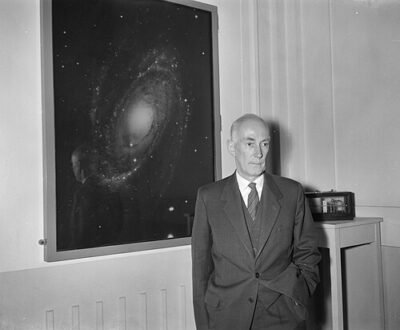 Jan Hendrik OortDutch astronomer (1900–1992)
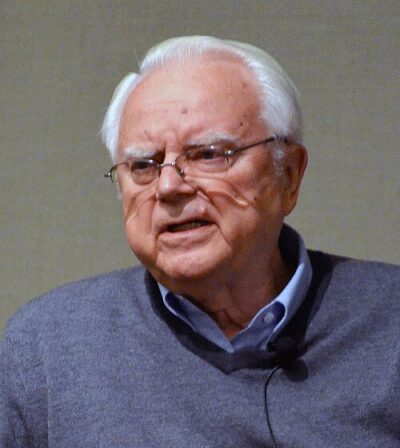 Frank DrakeAmerican astronomer and astrophysicist (1930–2022)
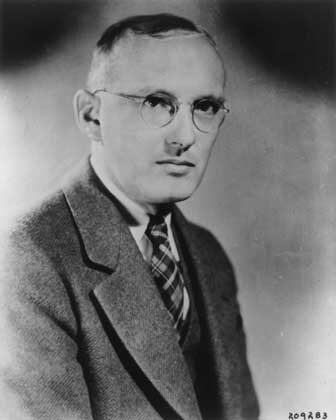 Karl Guthe JanskyAmerican physicist and radio engineer
 Nikolai KardashevSoviet and Russian astronomer
 Grote ReberAmerican pioneer of radio astronomy (1911–2002)
 Ruby Payne-ScottAustralian radio astronomer (1912-1981)

