Rashomon
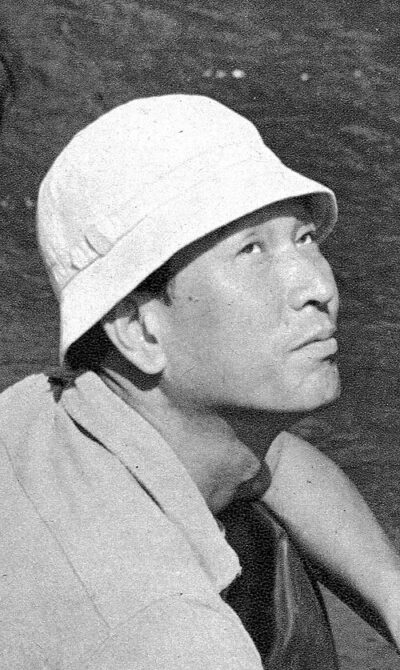
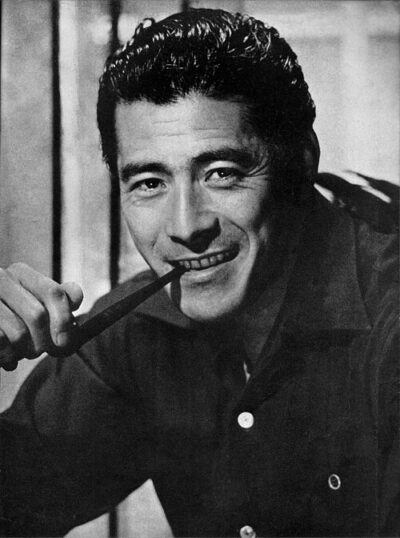
Rashomon is a 1950 film directed by Akira Kurosawa. It stars Toshirō Mifune, Machiko Kyō and Masayuki Mori. It is based on In a Grove. It won the Golden Lion and 1 more.
- Released
- August 25, 1950
- Directed by
- Akira Kurosawa
- Created by
- Akira Kurosawa
- Genre
- drama film
- Country of origin
- Japan
All 23 facts, and where they come from
Facts
23 facts · 0 confirmed by two sources · 7 cited · 16 from one source
Where this comes from
Papalocal keeps its own record. It started from these sources; what each one said is kept here as it was copied, so a change on their side never changes this page by itself. Tap one to read its version.
What Wikidata says · copied November 16, 2026 · revision 2564884198
- Described as
- 1950 film directed by Akira Kurosawa
- Other names
- Rashōmon
- What it is
- film
- Directed by
- Akira Kurosawa · 4 references
- Created by
- Akira Kurosawa
- Music by
- Fumio Hayasaka
- Screenplay by
- Shinobu Hashimoto; Akira Kurosawa; Ryūnosuke Akutagawa
- Starring
- Toshirō Mifune; Machiko Kyō; Masayuki Mori · 4 references; Takashi Shimura · 3 references; Minoru Chiaki · 2 references
- Genre
- drama film · 2 references; crime film · 1 reference; flashback film; samurai cinema
- Released
- August 25, 1950 · 1 reference; August 4, 1952 · 1 reference; August 23, 1951
- Original language
- Japanese
- Country of origin
- Japan
- Based on
- In a Grove; Rashōmon
- Awards
- Golden Lion (1951); Academy Honorary Award
- Wikipedias with a page
- 63
Wikidata item Q135465 (wikidata.org/wiki/Q135465), public domain (CC0). Copied 2026-11-16.
What Wikipedia says · copied November 16, 2026 · revision 1385960833
Rashomon (Japanese: 羅生門, Hepburn: Rashōmon) is a 1950 Japanese jidaigeki (period drama) psychological thriller film directed by Akira Kurosawa from a screenplay he co-wrote with Shinobu Hashimoto. Starring Toshiro Mifune, Machiko Kyō, Masayuki Mori, and Takashi Shimura, it follows various people who describe how a samurai was murdered in a forest. The plot and characters are based upon Ryūnosuke Akutagawa's short story "In a Grove", with the title and framing story taken from Akutagawa's "Rashōmon". Every element is largely identical, from the murdered samurai speaking through a Shinto psychic to the bandit in the forest, the monk, the assault of the wife, and the dishonest retelling of the events in which everyone shows their ideal self by lying.
Production began in 1948 at Kurosawa's regular production firm Toho but was canceled as it was viewed as a financial risk. Two years later, Sōjirō Motoki pitched Rashomon to Daiei Film upon the completion of Kurosawa's Scandal. Daiei initially turned it down but eventually agreed to produce and distribute the film. Principal photography lasted from July 7 to August 17, 1950, taking place primarily in Kyoto on an estimated ¥15–20 million budget. When creating the film's visual style, Kurosawa and cinematographer Kazuo Miyagawa experimented with various methods such as pointing the camera at the sun, which was considered taboo. Post-production took only one week.
Rashomon premiered at the Imperial Theatre on August 25, 1950, and was distributed throughout Japan the following day, to moderate commercial success, becoming Daiei's fourth highest-grossing film of 1950. Japanese critics praised the experimental direction and cinematography but criticized its adapting of Akutagawa's story and complexity. Upon winning the Golden Lion at the 12th Venice International Film Festival, Rashomon became the first Japanese film to attain significant international reception, garnering critical acclaim and earning roughly $800,000 abroad. It later won Best Foreign Language Film at the 24th Academy Awards, and was nominated for Best Film at the 6th British Academy Film Awards.
Rashomon is now considered one of the greatest films ever made and among the most influential movies from the 20th century. It pioneered the Rashomon effect, a plot device that involves various characters providing subjective, alternative, and contradictory versions of the same incident. In 1999, critic Andrew Johnston asserted that "the film's title has become synonymous with its chief narrative conceit".
From the Wikipedia article “Rashomon” (en.wikipedia.org/wiki/Rashomon), by its contributors, under CC BY-SA 4.0 (creativecommons.org/licenses/by-sa/4.0/). Copied 2026-11-16; not changed.
Confirmed Two sources agree. Cited One source, and it names where it got it. One source One source, without a reference of its own. Sources disagree The sources disagree. We show the best-supported value and keep theirs below.
Picture: Wikimedia Commons: Rashomon (1950) Press Photo of Toshiro Mifune and Machiko Kyō.jpg · See Commons file page