Reflections on the Revolution in France
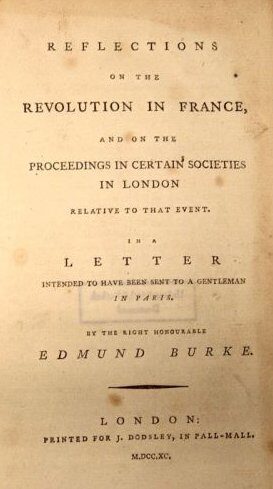
Reflections on the Revolution in France is a 1790 Edmund Burke political book.
- Published
- November 1790
- Written by
- Edmund Burke
- Genre
- essay
- Country of origin
- Kingdom of Great Britain
All 6 facts, and where they come from
Facts
6 facts · 0 confirmed by two sources · 0 cited · 6 from one source
Where this comes from
Papalocal keeps its own record. It started from these sources; what each one said is kept here as it was copied, so a change on their side never changes this page by itself. Tap one to read its version.
What Wikidata says · copied November 17, 2026 · revision 2569757829
- Described as
- 1790 Edmund Burke political book
- Other names
- Reflections on the French Revolution
- What it is
- written work
- Written by
- Edmund Burke
- Genre
- essay
- Published
- November 1790
- Language
- English
- Country of origin
- Kingdom of Great Britain
- Wikipedias with a page
- 21
Wikidata item Q2287584 (wikidata.org/wiki/Q2287584), public domain (CC0). Copied 2026-11-17.
What Wikipedia says · copied November 17, 2026 · revision 1384239182
Reflections on the Revolution in France is a political pamphlet written by the British statesman Edmund Burke and published in November 1790. It is fundamentally a contrast of the French Revolution to that time with the unwritten British Constitution and, to a significant degree, an argument with British supporters and interpreters of the events in France. One of the best-known intellectual attacks against the French Revolution, Reflections is a defining tract of modern conservatism as well as an important contribution to international theory. The Norton Anthology of English Literature describes Reflections as becoming the "most eloquent statement of British conservatism favoring monarchy, aristocracy, property, hereditary succession, and the wisdom of the ages." Above all else, it has been one of the defining efforts of Edmund Burke's transformation of "traditionalism into a self-conscious and fully conceived political philosophy of conservatism".
The pamphlet has not been easy to classify. Before seeing this work as a pamphlet, Burke wrote in the mode of a letter, invoking expectations of openness and selectivity that added a layer of meaning. Academics have had trouble identifying whether Burke, or his tract, can best be understood as "a realist or an idealist, Rationalist or a Revolutionist". Thanks to its thoroughness, rhetorical skill and literary power, it has become one of the most widely known of Burke's writings and a classic text in political theory. In the 20th century, it influenced a number of conservative intellectuals, who recast Burke's Whiggish arguments as a critique of Bolshevik programmes.
From the Wikipedia article “Reflections on the Revolution in France” (en.wikipedia.org/wiki/Reflections_on_the_Revolution_in_France), by its contributors, under CC BY-SA 4.0 (creativecommons.org/licenses/by-sa/4.0/). Copied 2026-11-17; not changed.
Confirmed Two sources agree. Cited One source, and it names where it got it. One source One source, without a reference of its own. Sources disagree The sources disagree. We show the best-supported value and keep theirs below.
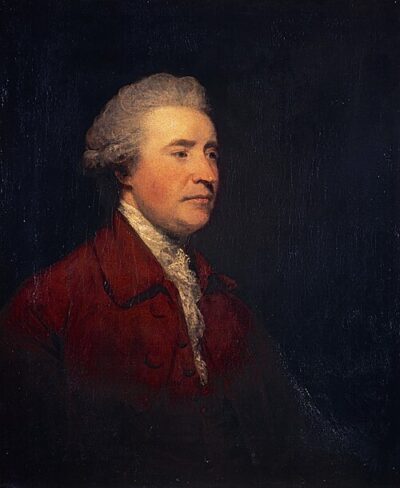
Picture: Edmund Burke (1729-1797), via Wikimedia Commons · Public domain