
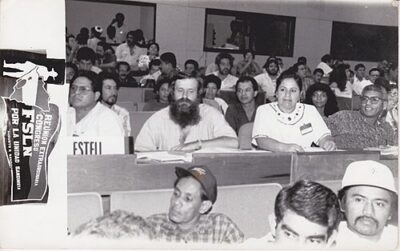
Sandinista National Liberation Front
The Sandinista National Liberation Front is a political party in Nicaragua, founded in 1961. It was founded by Carlos Fonseca Amador, Tomás Borge and Silvio Mayorga. Its headquarters are in Managua. It stands for Sandinism, Marxism and Christian socialism.
- Country
- Nicaragua
- Founded
- 1961
- Ideology
- Sandinism
All 13 facts, and where they come from
Facts
13 facts · 0 confirmed by two sources · 10 cited · 3 from one source
Where this comes from
Papalocal keeps its own record. It started from these sources; what each one said is kept here as it was copied, so a change on their side never changes this page by itself. Tap one to read its version.
What Wikidata says · copied November 16, 2026 · revision 2550158358
- Described as
- political party in Nicaragua, founded in 1961
- Other names
- Sandinistas, Sandinist National Liberation Front, FSLN
- What it is
- political party · 1 reference
- Founded
- 1961 · 1 reference
- Founded by
- Carlos Fonseca Amador · 1 reference; Tomás Borge · 1 reference; Silvio Mayorga · 1 reference; Germán Pomares Ordóñez · 1 reference
- Headquarters
- Managua · 1 reference
- Country
- Nicaragua · 1 reference
- Ideology
- Sandinism; Marxism; Christian socialism (2012) · 1 reference; Bolivarianism
- Named after
- Augusto César Sandino · 1 reference
- Wikipedias with a page
- 57
Wikidata item Q27389 (wikidata.org/wiki/Q27389), public domain (CC0). Copied 2026-11-16.
What Wikipedia says · copied November 16, 2026 · revision 1384462837
The Sandinista National Liberation Front (Spanish: Frente Sandinista de Liberación Nacional, FSLN) is a socialist political party in Nicaragua. Its members are called Sandinistas (Spanish pronunciation: [sandiˈnistas]) in both English and Spanish. The party is named after Augusto César Sandino, who, in the 1930s, led the resistance against the country's occupation by the United States.
The FSLN overthrew Anastasio Somoza Debayle in the 1979 Nicaraguan Revolution, ending the Somoza family's political control of Nicaragua, and established a revolutionary government in its place. Having seized power, the Sandinistas ruled Nicaragua from 1979 to 1990, first as part of a Junta of National Reconstruction. Following the resignation of centrist members from this Junta, the FSLN took exclusive power in March 1981. They instituted literacy programs, nationalization, land reform, and devoted significant resources to healthcare, but came under international criticism for human rights abuses, including mass execution and oppression of indigenous peoples. They were also criticized for their management of the economy and inflation.
A US-backed group, known as the Contras, was formed in 1981 to overthrow the Sandinista government and was funded and trained by the Central Intelligence Agency. The United States sought to place economic pressure on the Sandinista government by imposing a full trade embargo and by planting underwater mines in Nicaragua's ports. In 1984, free and fair elections were held, but were boycotted by three opposition parties. The FSLN won the majority of the votes, and those who opposed the Sandinistas won approximately a third of the seats. The civil war between the Contras and the government continued until 1989. After revising the constitution in 1987, and after years of fighting the Contras, the FSLN lost the 1990 election to Violeta Barrios de Chamorro in an election marked by US interference, but retained a plurality of seats in the legislature.
The FSLN is now Nicaragua's dominant party. Since the 2006 Nicaraguan general election when Daniel Ortega was reelected President of Nicaragua, Ortega and the FSLN have centralized power and overseen democratic backsliding in Nicaragua. In October 2009, the Supreme Court, with a majority of Sandinista judges, overturned presidential term limits that were set by the constitution. Ortega and the FSLN were reelected in the presidential elections of 2011, 2016, and 2021, although these elections have been denounced by international observers. The party is firmly controlled by Ortega.
From the Wikipedia article “Sandinista National Liberation Front” (en.wikipedia.org/wiki/Sandinista_National_Liberation_Front), by its contributors, under CC BY-SA 4.0 (creativecommons.org/licenses/by-sa/4.0/). Copied 2026-11-16; not changed.
Confirmed Two sources agree. Cited One source, and it names where it got it. One source One source, without a reference of its own. Sources disagree The sources disagree. We show the best-supported value and keep theirs below.
Picture: Titovdv140987, via Wikimedia Commons · CC BY-SA 3.0
People connected 6
Party members
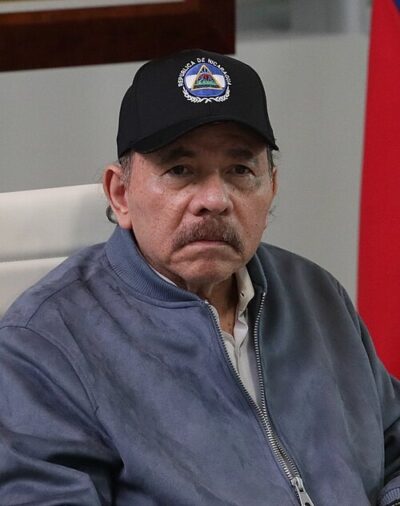 Daniel Ortega (1963–)Leader of Nicaragua (1979–1990; 2007–present)
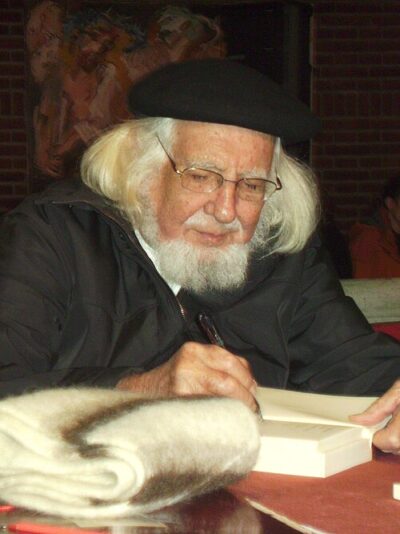 Ernesto Cardenal (–1994)Nicaraguan priest and politician (1925–2020)
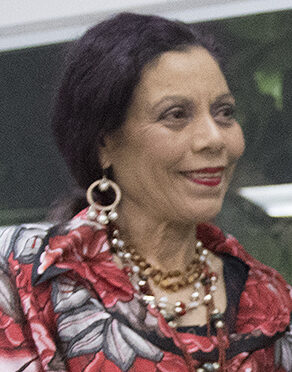 Rosario MurilloNicaraguan politician and poet; co-president of Nicaragua since 2025
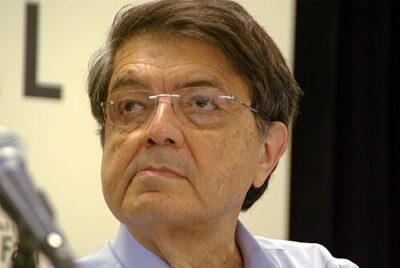 Sergio Ramírez (–1995)Nicaraguan novelist and journalist, vice president of Nicaragua from 1985 to 1990 and winner of the 2017 Cervantes Prize
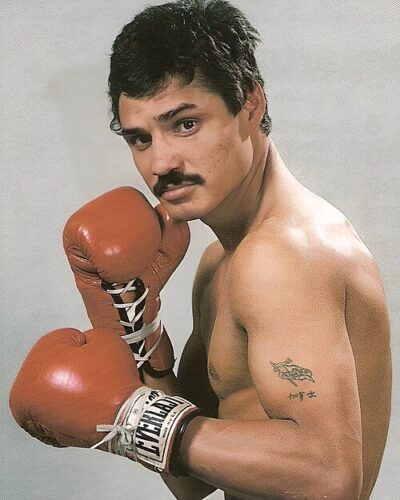 Alexis Argüello (2001–)Nicaraguan professional boxer and politician (1952–2009), world champion in three weight divisions and mayor of Managua in 2009
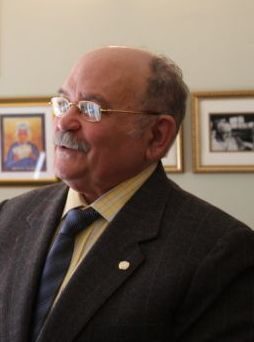 Miguel d'Escoto BrockmannNicaraguan-American Catholic priest and diplomat (1933–2017)
