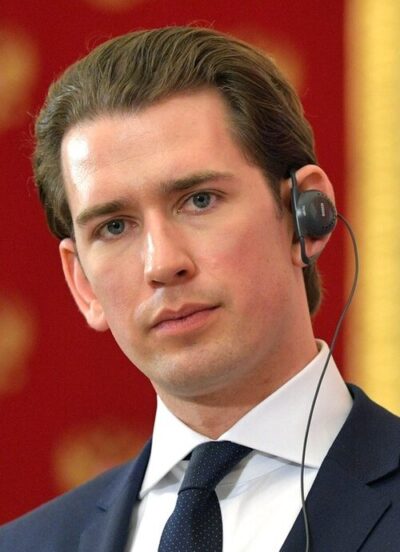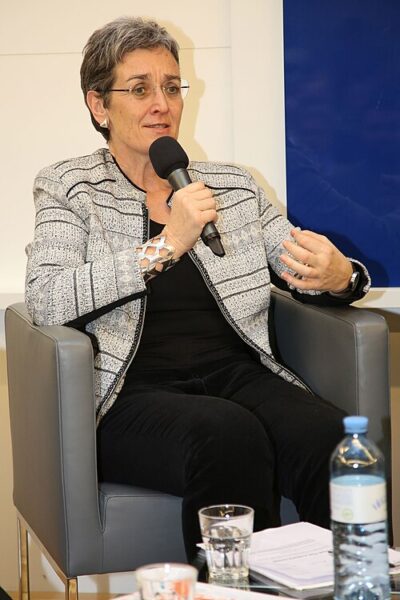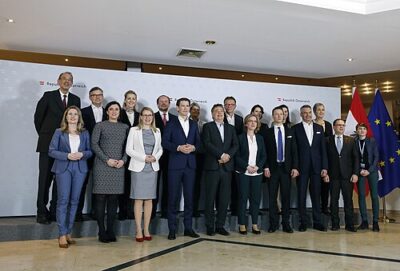
Second Kurz cabinet
Second Kurz cabinet is a second chancellorship of Sebastian Kurz, January 2020 to October 2021.
- Founded
- January 7, 2020
- Country
- Austria
All 5 facts, and where they come from
Facts
5 facts · 0 confirmed by two sources · 0 cited · 5 from one source
Where this comes from
Papalocal keeps its own record. It started from these sources; what each one said is kept here as it was copied, so a change on their side never changes this page by itself. Tap one to read its version.
What Wikidata says · copied November 17, 2026 · revision 2545488564
- Described as
- second chancellorship of Sebastian Kurz, January 2020 to October 2021
- Other names
- Second Kurz government, Kurz II
- What it is
- Austrian Federal Government
- Founded
- January 7, 2020
- Ended
- October 11, 2021
- Country
- Austria
- Office of
- Austria
- Wikipedias with a page
- 11
Wikidata item Q80810433 (wikidata.org/wiki/Q80810433), public domain (CC0). Copied 2026-11-17.
What Wikipedia says · copied November 17, 2026 · revision 1381062256
The Second Kurz government (German: Zweite Bundesregierung Kurz or Kurz II for short) was the 33rd government of Austria. Led by Sebastian Kurz as chancellor and Werner Kogler as vice-chancellor, it was sworn in by President Alexander Van der Bellen on 7 January 2020. It was officially dissolved and succeeded by the Schallenberg government on 11 October 2021.
This government represented many firsts. Headed by a former chancellor who had been ousted in a parliamentary vote of no confidence and made a comeback by winning the 2019 legislative election, it marked an alliance of a centre-right Austrian People's Party (ÖVP) with the centre-left The Greens as junior partner in the national government; it was the only such coalition in Europe until June 2020. It also featured a majority of female cabinet members. Chancellor Kurz himself was the youngest member of his own government and the youngest chief executive of any of the European Union's member states for the second time. The new political alliance was closely watched in Europe, especially in neighbouring Germany, as it could become the prototype for a new type of politics in which ascendant conservatives make common cause with green parties to tackle climate change, which has become a salient concern of voters.
The Second Kurz government succeeded the Bierlein government, a nonpartisan caretaker administration installed on 3 June 2019 to run Austria following the collapse of the First Kurz government in the wake of the Ibiza affair involving its coalition partner, the far-right Freedom Party (FPÖ). The termination of the coalition of Kurz's party with the FPÖ was followed by a vote of no confidence in Parliament and snap election in which voter support for the FPÖ dropped sharply and support for the Greens surged to nearly 14%, its highest level ever. The ÖVP emerged victorious with 37% of the popular vote. Although the ÖVP won the election, it did not achieve a parliamentary majority in the National Council and therefore had to look for a junior coalition partner.
From the Wikipedia article “Second Kurz government” (en.wikipedia.org/wiki/Second_Kurz_government), by its contributors, under CC BY-SA 4.0 (creativecommons.org/licenses/by-sa/4.0/). Copied 2026-11-17; not changed.
Confirmed Two sources agree. Cited One source, and it names where it got it. One source One source, without a reference of its own. Sources disagree The sources disagree. We show the best-supported value and keep theirs below.
Picture: Bundesministerium für europäische und internationale Angelegenheiten, via Wikimedia Commons · CC BY 2.0