Serbian Radical Party
The Serbian Radical Party is a political party in Serbia. It was founded in 1991. Its headquarters are in Zemun. It stands for Serbian nationalism, ultranationalism and right-wing populism.
- Country
- Serbia
- Founded
- February 23, 1991
- Ideology
- Serbian nationalism
- Chair
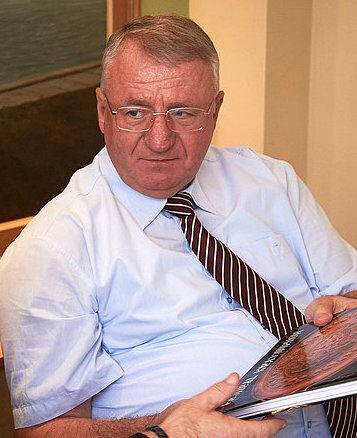
- Vojislav Šešelj
All 10 facts, and where they come from
Facts
10 facts · 0 confirmed by two sources · 0 cited · 10 from one source
Where this comes from
Papalocal keeps its own record. It started from these sources; what each one said is kept here as it was copied, so a change on their side never changes this page by itself. Tap one to read its version.
What Wikidata says · copied November 17, 2026 · revision 2549991988
- Described as
- political party in Serbia
- Other names
- SRS, Srpska Radikalna Stranka, Српска радикална странка, СРС, Српски четнички покрет
- What it is
- political party
- Founded
- February 23, 1991
- Headquarters
- Zemun
- Country
- Serbia
- Chair
- Vojislav Šešelj
- Ideology
- Serbian nationalism; ultranationalism; right-wing populism; Greater Serbia
- Official website
- https://srpskaradikalnastranka.org.rs
- Wikipedias with a page
- 35
Wikidata item Q334410 (wikidata.org/wiki/Q334410), public domain (CC0). Copied 2026-11-17.
What Wikipedia says · copied November 17, 2026 · revision 1384071347
The Serbian Radical Party (Serbian: Српска радикална странка, romanised: Srpska radikalna stranka, abbr. SRS) is a far-right ultranationalist political party in Serbia. Founded in 1991, its co-founder, first and only leader is Vojislav Šešelj. During the Yugoslav Wars, it became prominent, enjoying the status of the second largest party in the Serbian parliament under the regime of Slobodan Milošević. In this period and in the following decade, it had been described as neo-fascist.
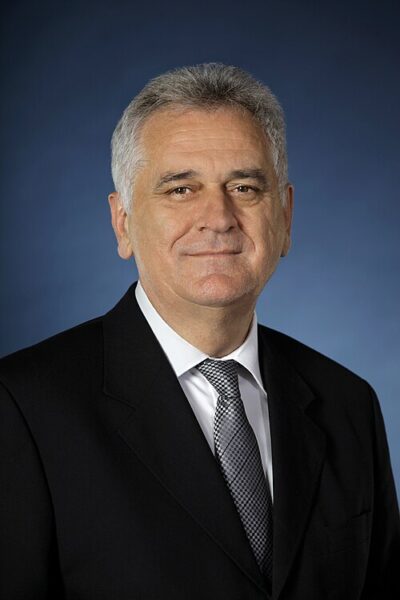
The SRS was founded in 1991 as a merger of the Serbian Chetnik Movement, led by Šešelj, and the People's Radical Party, led by Tomislav Nikolić. Upon formation, they became the president and deputy president of SRS respectively. During the first half of the 1990s the SRS supported the ruling Socialist Party of Serbia regime led by Milošević, which had contributed greatly to the rise of SRS through the use of media. The SRS was endorsed by Milošević and collaborated with him as a part of his coalition; later it experienced persecution for competing with him and then a reconciliation, with Milošević making Šešelj his Deputy Prime Minister. The party had strong support until the 2000 election, when SRS suffered a major defeat, but through populist rhetoric it became the most voted party in the early-to-mid 2000s. Šešelj voluntarily surrendered to the ICTY to defend himself against charges of war crimes and crimes against humanity that he was alleged to have committed during the Croatian War of Independence and the Bosnian War. Nikolić assumed de facto party leadership until he left the party in 2008.
During the years of Nikolić's leadership, SRS blended ultranationalism with brash, populist, and anti-corruption rhetoric. Due to disagreements with Šešelj over European Union integration, Nikolić took many of the high-ranking members of the party to form the Serbian Progressive Party (SNS), which became the ruling party of Serbia in 2012. After the split, Dragan Todorović assumed de facto leadership, and the party went into a major decline, winning only 4.8% of the vote in 2012, when it failed to enter parliament for the first time, and 2.1% in 2014. Shortly after Šešelj's return to Serbia in 2014, the party gained back some of its popularity and it placed third with 8% of the vote in the 2016 election. In late 2019, the party went into decline again, and in the 2020 election it won only 2% of the vote and lost its seats; it also failed to win seats in 2022 and 2023. After allying with SNS in the 2023 and 2024 Belgrade elections, the SRS contested the 2026 parliamentary election on the SNS-led "Aleksandar Vučić – United Serbia" list.
A right-wing populist party, SRS supports the creation of a Greater Serbia. It is Eurosceptic, anti-Western orientated, opposed to the accession of Serbia to the European Union and supports establishing closer ties with Russia instead. Some journalists described SRS as neo-fascist in the 1990s; this definition of the party is met in scholarly and academic materials written in the 1990s and the 2000s or describing the party in that period. Regarding social issues, SRS is traditionalist. It also holds local branches in some of the neighbouring states.
From the Wikipedia article “Serbian Radical Party” (en.wikipedia.org/wiki/Serbian_Radical_Party), by its contributors, under CC BY-SA 4.0 (creativecommons.org/licenses/by-sa/4.0/). Copied 2026-11-17; not changed.
Confirmed Two sources agree. Cited One source, and it names where it got it. One source One source, without a reference of its own. Sources disagree The sources disagree. We show the best-supported value and keep theirs below.