
Socialist Revolutionary Party
The Socialist Revolutionary Party is a political party of the Russian Empire, the Russian Republic and Soviet Russia. It was founded in 1902 by Viktor Chernov, Andrei Argunov and Mikhail Gots. Its headquarters are in Moscow. It stands for agrarian socialism, democratic socialism and federalism.
- Country
- Russian Empire
- Founded
- 1902
- Ideology
- agrarian socialism
- Chair
- Viktor Chernov
All 14 facts, and where they come from
Facts
14 facts · 0 confirmed by two sources · 0 cited · 14 from one source
Where this comes from
Papalocal keeps its own record. It started from these sources; what each one said is kept here as it was copied, so a change on their side never changes this page by itself. Tap one to read its version.
What Wikidata says · copied November 17, 2026 · revision 2562060121
- Described as
- political party of the Russian Empire, the Russian Republic and Soviet Russia
- Other names
- SR, Esers, Esery
- What it is
- political party · 1 reference
- Followed by
- Trudoviks
- Founded
- 1902 · 1 reference
- Ended
- 1940
- Founded by
- Viktor Chernov; Andrei Argunov · 1 reference; Mikhail Gots · 1 reference
- Headquarters
- Moscow
- Country
- Russian Empire
- Chair
- Viktor Chernov · 1 reference
- Ideology
- agrarian socialism · 1 reference; democratic socialism · 1 reference; federalism · 1 reference; Narodniks · 1 reference
- Wikipedias with a page
- 49
Wikidata item Q217009 (wikidata.org/wiki/Q217009), public domain (CC0). Copied 2026-11-17.
What Wikipedia says · copied November 17, 2026 · revision 1380964610
The Socialist Revolutionary Party (SR; Russian: Па́ртия социали́стов-революционе́ров, romanized: Pártiya sotsialístov-revolyutsionérov, lit. 'Party of Socialists-Revolutionaries') was a major socialist political party in the late Russian Empire, during both phases of the Russian Revolution, and in early Soviet Russia. The party members were known as SRs, or Esers (эсеры, esery, from the Cyrillic letters that make up the organization's acronym in Russian – С pronounced "es" and Р pronounced "er").
The SRs were agrarian socialists and supporters of a democratic socialist Russian republic. The ideological heirs of the Narodniks, the SRs won a mass following among the Russian peasantry by endorsing the overthrow of the Tsar and the redistribution of land to the peasants. The SRs boycotted the elections to the First Duma following the Revolution of 1905 alongside the Russian Social Democratic Labour Party, but chose to run in the elections to the Second Duma and received the majority of the few seats allotted to the peasantry. Following the 1907 coup, the SRs boycotted all subsequent Dumas until the fall of the Tsar in the February Revolution of March 1917. Controversially, the party leadership endorsed the Russian Provisional Government and participated in multiple coalitions with liberal and social-democratic parties, while a radical faction within the SRs rejected the Provisional Government's authority in favor of the Congress of Soviets and began to drift towards the Bolsheviks. These divisions would ultimately result in the party splitting over the course of the fall of 1917, with the emergence of a separate Party of Left Socialist Revolutionaries. Meanwhile, Alexander Kerensky, one of the leaders of the February Revolution and the second and last head of the Provisional Government (July–November 1917), was a nominal member of the SR party but in practice acted independently of its decisions.
By November 1917, the Provisional Government had been widely discredited by its failure to withdraw from World War I, implement land reform or convene a Constituent Assembly to draft a Constitution, leaving the soviet councils in de facto control of the country. The Bolsheviks thus moved to hand power to the 2nd Congress of Soviets in the October Revolution. After a few weeks of deliberation, the Left SRs ultimately formed a coalition government with the Bolsheviks – the Council of People's Commissioners – from November 1917 to March 1918 while the Right SRs boycotted the Soviets and denounced the Revolution as an illegal coup. The SRs obtained a majority in the subsequent elections to the Russian Constituent Assembly. Citing outdated voter-rolls which did not acknowledge the party split, and the Assembly's conflicts with the Congress of Soviets, the Bolshevik-Left SR government moved to dissolve the Constituent Assembly by force in January 1918.
The SRs supported the Whites during the Russian Civil War of 1917–1922, but the White movement's anti-socialist leadership increasingly marginalized and ultimately purged them. A small SR remnant continued to operate in exile from 1923 to 1940 as a member of the Labour and Socialist International.
From the Wikipedia article “Socialist Revolutionary Party” (en.wikipedia.org/wiki/Socialist_Revolutionary_Party), by its contributors, under CC BY-SA 4.0 (creativecommons.org/licenses/by-sa/4.0/). Copied 2026-11-17; not changed.
Confirmed Two sources agree. Cited One source, and it names where it got it. One source One source, without a reference of its own. Sources disagree The sources disagree. We show the best-supported value and keep theirs below.
People connected 10
Party members
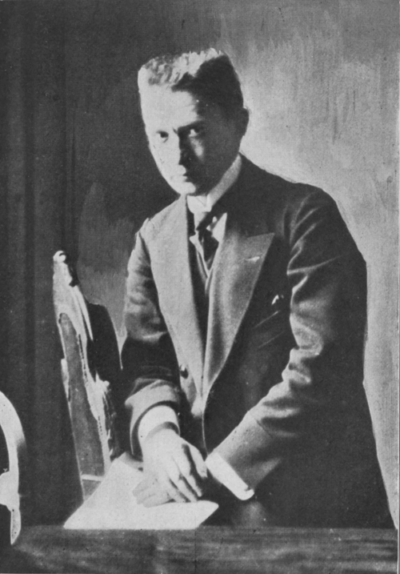 Alexander KerenskyRussian politician, prime minister in 1917 (1881–1970)
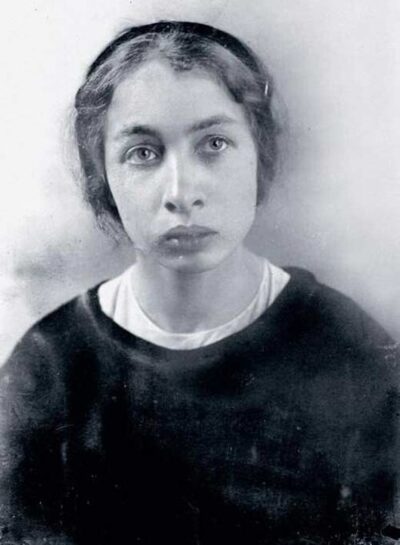 Fanny KaplanRussian assassin (1890-1918)
 Boris SavinkovRussian writer (1879-1925)
 Nikolai Kondratiev (–1919)Soviet economist (1892-1938)
 Catherine BreshkovskyRussian politician (1844–1934)
 Maria Spiridonova (1905–1917)Russian terrorist and politician (1884-1941)
 Viktor ChernovRussian politician (1873–1952)
 Vera Figner (1907–1909)Russian political activist (1852-1942)
 Zeki Velidi ToganTurkish historian and Turkologist (1890–1970)
 Volin (1904–1911)Russian anarchist (1882–1945)
