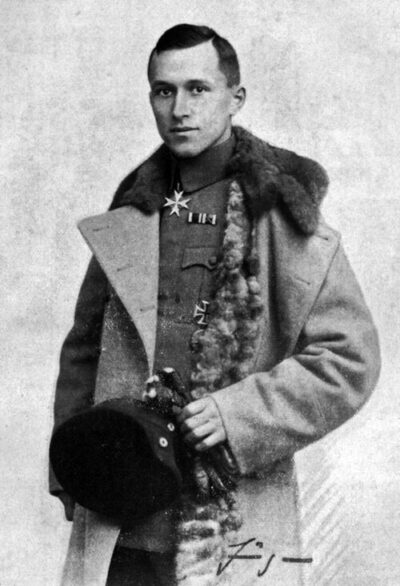
Storm of Steel
Storm of Steel is a German war memoir. It came out in 1920. It was written by Ernst Jünger.
- Published
- 1920
- Written by
- Ernst Jünger
- Genre
- autobiography
- Country of origin
- Germany
All 7 facts, and where they come from
Facts
7 facts · 0 confirmed by two sources · 0 cited · 7 from one source
Where this comes from
Papalocal keeps its own record. It started from these sources; what each one said is kept here as it was copied, so a change on their side never changes this page by itself. Tap one to read its version.
What Wikidata says · copied November 17, 2026 · revision 2560617019
- Described as
- German war memoir
- What it is
- literary work
- Written by
- Ernst Jünger
- Genre
- autobiography; diary
- Published
- 1920
- Language
- German
- Country of origin
- Germany
- Wikipedias with a page
- 17
Wikidata item Q1660671 (wikidata.org/wiki/Q1660671), public domain (CC0). Copied 2026-11-17.
What Wikipedia says · copied November 17, 2026 · revision 1384800092
Storm of Steel (German: In Stahlgewittern; original English title: In Storms of Steel) is the memoir of German officer Ernst Jünger's experiences on the Western Front during the First World War from December 1914 to August 1918. The book is a graphic account of trench warfare and is often seen as either morally ambivalent or actually pro-war.
Storm of Steel was originally printed privately in 1920, making it one of the first personal accounts to be published. It was largely devoid of editorialization when first published, but was heavily revised several times. The book established Jünger's fame as a writer in the 1920s.
As noted by German-British poet and translator Michael Hofmann, who published an English translation of the text in 2004, this book is, after Henri Barbusse's 1916 Under Fire, one of the very first literary accounts of The Great War.
From the Wikipedia article “Storm of Steel” (en.wikipedia.org/wiki/Storm_of_Steel), by its contributors, under CC BY-SA 4.0 (creativecommons.org/licenses/by-sa/4.0/). Copied 2026-11-17; not changed.
Confirmed Two sources agree. Cited One source, and it names where it got it. One source One source, without a reference of its own. Sources disagree The sources disagree. We show the best-supported value and keep theirs below.
Picture: Wikimedia Commons: Ernst Juenger inSG.jpg · See Commons file page