string theory
String theory is a physical theory of quantized one-dimensional objects with conformal symmetry, which can describe gravitation, gauge theory and other phenomena.
All 1 facts, and where they come from
Facts
1 facts · 0 confirmed by two sources · 0 cited · 1 from one source
Where this comes from
Papalocal keeps its own record. It started from these sources; what each one said is kept here as it was copied, so a change on their side never changes this page by itself. Tap one to read its version.
What Wikidata says · copied November 16, 2026 · revision 2516860412
- Described as
- physical theory of quantized one-dimensional objects with conformal symmetry, which can describe gravitation, gauge theory and other phenomena
- What it is
- branch of physics
- Wikipedias with a page
- 82
Wikidata item Q33198 (wikidata.org/wiki/Q33198), public domain (CC0). Copied 2026-11-16.
What Wikipedia says · copied November 16, 2026 · revision 1384363715
In physics, string theory is a theoretical framework in which the point-like particles of particle physics are replaced by one-dimensional objects called strings. String theory describes how these strings move through space and interact with each other by vibrations. On distance scales larger than the string scale, a string acts like a particle, with its mass, charge, and other properties determined by the vibrational state of the string. In string theory, one of the many vibrational states of the string corresponds to the graviton, a quantum mechanical particle that carries the gravitational force. Thus, string theory is a theory of quantum gravity.
String theory is a broad and varied subject that attempts to address a number of deep questions of fundamental physics. String theory has contributed a number of advances to mathematical physics, which have been applied to a variety of problems in black hole physics, early universe cosmology, nuclear physics, and condensed matter physics, and it has stimulated a number of major developments in pure mathematics. Because string theory potentially provides a unified description of gravity and particle physics, it is a candidate for a theory of everything, a self-contained mathematical model that describes all fundamental forces and forms of matter. Despite much work on these problems, it is not known to what extent string theory describes the real world or how much freedom the theory allows in the choice of its details.
String theory was first studied in the late 1960s as a theory of the strong nuclear force, before being abandoned in favor of quantum chromodynamics. Because of this, it was realized that the very properties that made string theory unsuitable as a theory of nuclear physics made it a promising candidate for a quantum theory of gravity. The earliest version of string theory, bosonic string theory, incorporated only the class of particles known as bosons. It later developed into superstring theory, which posits a connection called supersymmetry between bosons and the class of particles called fermions. Five consistent versions of superstring theory were developed before it was conjectured in the mid-1990s that they were all different limiting cases of a single theory in eleven dimensions known as M-theory. In late 1997, theorists discovered an important relationship called the anti-de Sitter/conformal field theory (AdS/CFT) correspondence, which relates string theory to another type of physical theory called a quantum field theory.
One of the shortcomings of string theory is that the full theory does not have a satisfactory definition in all circumstances. Another issue is that the theory is thought to describe an enormous landscape of possible universes, which has complicated efforts to develop theories of particle physics based on string theory. These issues have led some in the community to criticize these approaches to physics, and to question the value of continued research on string theory unification.
From the Wikipedia article “String theory” (en.wikipedia.org/wiki/String_theory), by its contributors, under CC BY-SA 4.0 (creativecommons.org/licenses/by-sa/4.0/). Copied 2026-11-16; not changed.
Confirmed Two sources agree. Cited One source, and it names where it got it. One source One source, without a reference of its own. Sources disagree The sources disagree. We show the best-supported value and keep theirs below.
Picture: Wikimedia Commons: Apfel partikel.jpg · See Commons file page
People connected 4
Field
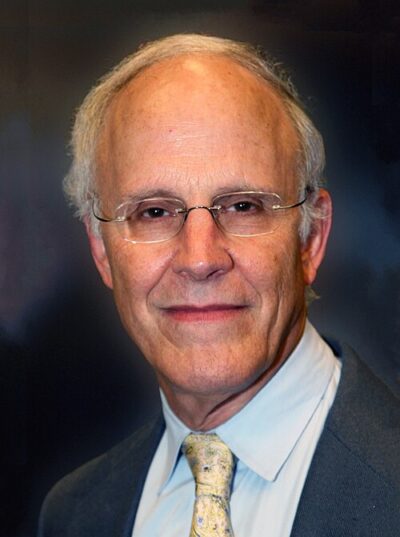 David GrossAmerican particle physicist and string theorist
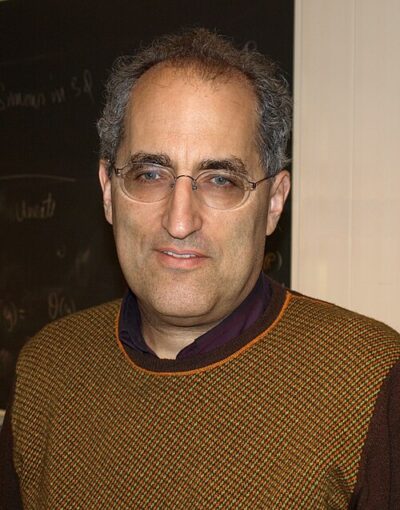 Edward WittenAmerican theoretical physicist
 Leonard SusskindAmerican physicist