Von Neumann–Bernays–Gödel set theory
Von Neumann–Bernays–Gödel set theory is an axiomatic set theory.
All 3 facts, and where they come from
Facts
3 facts · 0 confirmed by two sources · 0 cited · 3 from one source
Where this comes from
Papalocal keeps its own record. It started from these sources; what each one said is kept here as it was copied, so a change on their side never changes this page by itself. Tap one to read its version.
What Wikidata says · copied November 16, 2026 · revision 2563999524
- Described as
- axiomatic set theory
- Other names
- NBG
- What it is
- set theory
- Named after
- John von Neumann; Paul Bernays
- Wikipedias with a page
- 16
Wikidata item Q278770 (wikidata.org/wiki/Q278770), public domain (CC0). Copied 2026-11-16.
What Wikipedia says · copied November 16, 2026 · revision 1330985339
In the foundations of mathematics, von Neumann–Bernays–Gödel set theory (NBG) is an axiomatic set theory that is a conservative extension of Zermelo–Fraenkel–choice set theory (ZFC). NBG introduces the notion of class, which is a collection of sets defined by a formula whose quantifiers range only over sets. NBG can define classes that are larger than sets, such as the class of all sets and the class of all ordinals. Morse–Kelley set theory (MK) allows classes to be defined by formulas whose quantifiers range over classes. NBG is finitely axiomatizable, while ZFC and MK are not.
A key theorem of NBG is the class existence theorem, which states that for every formula whose quantifiers range only over sets, there is a class consisting of the sets satisfying the formula. This class is built by mirroring the step-by-step construction of the formula with classes. Since all set-theoretic formulas are constructed from two kinds of atomic formulas (membership and equality) and finitely many logical symbols, only finitely many axioms are needed to build the classes satisfying them. This is why NBG is finitely axiomatizable. Classes are also used for other constructions, for handling the set-theoretic paradoxes, and for stating the axiom of global choice, which is stronger than ZFC's axiom of choice.
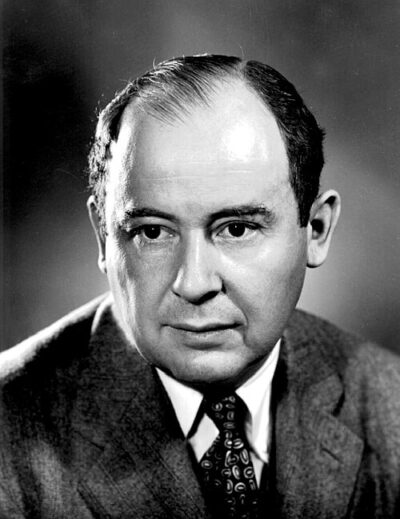
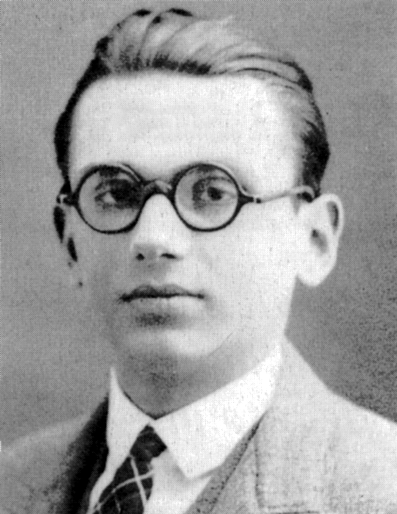
John von Neumann introduced classes into set theory in 1925. The primitive notions of his theory were function and argument. Using these notions, he defined class and set. Paul Bernays reformulated von Neumann's theory by taking class and set as primitive notions. Kurt Gödel simplified Bernays' theory for his relative consistency proof of the axiom of choice and the generalized continuum hypothesis.
From the Wikipedia article “Von Neumann–Bernays–Gödel set theory” (en.wikipedia.org/wiki/Von_Neumann–Bernays–Gödel_set_theory), by its contributors, under CC BY-SA 4.0 (creativecommons.org/licenses/by-sa/4.0/). Copied 2026-11-16; not changed.
Confirmed Two sources agree. Cited One source, and it names where it got it. One source One source, without a reference of its own. Sources disagree The sources disagree. We show the best-supported value and keep theirs below.