
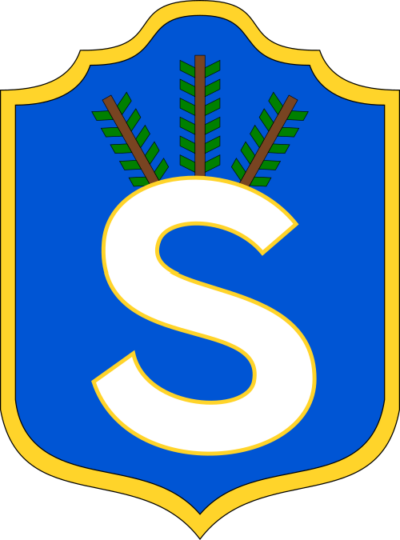
White Guard
The White Guard is an anti-communist militia during and after the Finnish Civil War (1918–1944).
- Founded
- 1918
- Country
- Finland
All 5 facts, and where they come from
Facts
5 facts · 0 confirmed by two sources · 0 cited · 5 from one source
Where this comes from
Papalocal keeps its own record. It started from these sources; what each one said is kept here as it was copied, so a change on their side never changes this page by itself. Tap one to read its version.
What Wikidata says · copied November 17, 2026 · revision 2520259045
- Described as
- anti-communist militia during and after the Finnish Civil War (1918–1944)
- Other names
- Civil Guard (Finland), Finnish White Guard, Finnish Civil Guard, White Guard (Finland)
- What it is
- militia
- Founded
- 1918 · 1 reference
- Ended
- November 7, 1944
- Country
- Finland
- Office of
- Finland · 1 reference
- Wikipedias with a page
- 24
Wikidata item Q2014199 (wikidata.org/wiki/Q2014199), public domain (CC0). Copied 2026-11-17.
What Wikipedia says · copied November 17, 2026 · revision 1382504193
The White Guard, officially known as the Civil Guard (Finnish: Suojeluskunta, IPA: [ˈsuo̯jelusˌkuntɑ]; Swedish: Skyddskår, Finland Swedish pronunciation: [ˈɕydːsˌkoːr]; lit. 'Protection Corps'), was a voluntary militia, part of the Finnish Whites movement, that emerged victorious over the socialist Red Guards in the Finnish Civil War of 1918. They were generally known as the "White Guard" in the West due to their opposition to the "communist" Red Guards. In the White Army of Finland, many participants were recruits, draftees and German-trained Jägers – rather than part of the paramilitary. The central organization was named the White Guard Organization, and the organization consisted of local chapters in municipalities.
The Russian Revolution of 1905 led to social and political unrest and a breakdown of security in Finland, which was then a Grand Duchy under the rule of the Russian Tsar. Citizen militias formed as a response, but soon these would be transformed along political (left-right) lines. The Russian Revolution of 1917 and the subsequent independence of Finland (declared in December 1917) also caused conflicts in the country. On January 27, 1918, the Finnish government ordered the disarming of all remaining Russian garrisons by the forces of the White Guard, and on the same day the Reds proclaimed revolution, leading to a bloody civil war. White Guards, led by General Gustaf Mannerheim, constituted the bulk of the victorious White Army during the Finnish Civil War (1918).
After the war, the Finnish Defence Forces and a regular police service were founded. From 1919–1934 White Guards were considered a voluntary part of the army, and separate Guard formations served in the reserve, but in 1934 all defence was consolidated into the regular army and the Guard became a voluntary defence-training organization only. Politically it was neutral, although unofficially it was anti-leftist, clearly anticommunist, conservative, largely rejected by the labour movement and by the political left. Units of it formed the main forces of the Lapua Movement's abortive coup d'état (the Mäntsälä Rebellion) in 1932, however only a small fraction of the Guard participated and the majority of it stayed loyal to the government. White Guardsmen served in the regular army during the Second World War. The White Guard was disbanded according to the terms of the 1944 Moscow Armistice, following the end of the Continuation War.
Similar militias operated in Estonia, Latvia and Lithuania, lands that, like Finland, came under Russian sovereignty until the collapse of Tsarist Russia in 1917. These militias remained in existence until World War II, evolving somewhat into home-guard militias. The phenomenon should be distinguished from the Freikorps established in Germany after its defeat in World War I, although some similarities exist.
From the Wikipedia article “White Guard (Finland)” (en.wikipedia.org/wiki/White_Guard_(Finland)), by its contributors, under CC BY-SA 4.0 (creativecommons.org/licenses/by-sa/4.0/). Copied 2026-11-17; not changed.
Confirmed Two sources agree. Cited One source, and it names where it got it. One source One source, without a reference of its own. Sources disagree The sources disagree. We show the best-supported value and keep theirs below.
Picture: Kwasura, via Wikimedia Commons · Public domain
People connected 4
Members
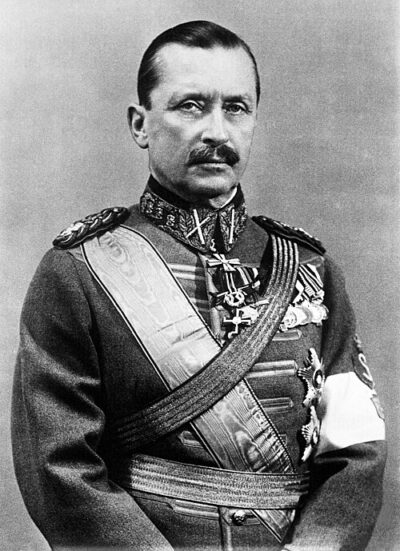 Carl Gustaf Emil MannerheimFinnish military leader and statesman (1867–1951)
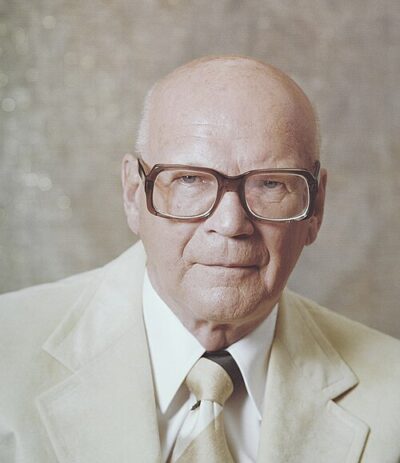 Urho Kekkoneneighth President of Finland (1900–1986)
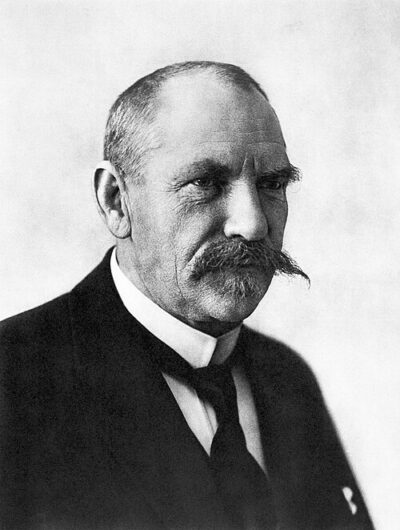 Pehr Evind SvinhufvudPresident of Finland (1861–1945)
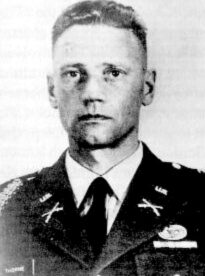 Lauri TörniFinnish military officer in the Finnish Army, Waffen-SS, and U.S. Army (1919-1965)
