
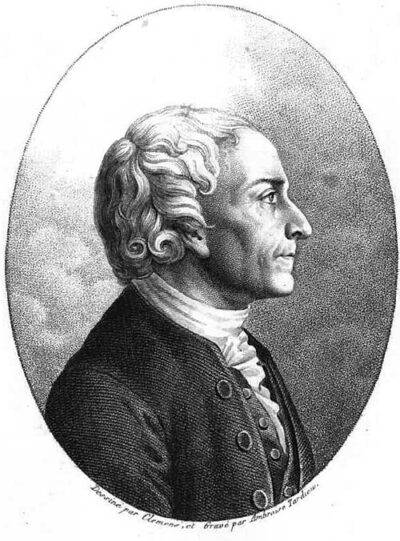
Abraham Trembley
Abraham Trembley was a Genevan naturalist. Born September 3, 1710, in Geneva. Died May 12, 1784, in Geneva. Awards include Copley Medal.
Facts
15 facts · 2 confirmed by two sources · 7 cited · 6 from one source
Where this comes from
Papalocal keeps its own record. It started from these sources; what each one said is kept here as it was copied, so a change on their side never changes this page by itself. Tap one to read its version.
What Wikidata says · copied November 18, 2026 · revision 2568935400
- Described as
- Genevan naturalist (1710-1784)
- Born
- September 3, 1710 · 4 references
- Died
- May 12, 1784 · 4 references
- Born in
- Geneva · 6 references
- Died in
- Geneva · 6 references
- Citizen of
- Republic of Geneva · 1 reference
- Occupation
- naturalist · 1 reference; zoologist · 1 reference
- Member of
- Royal Society of London · 1 reference; French Academy of Sciences · 1 reference; Academy of Sciences of Turin (1790–) · 1 reference
- Awards
- Copley Medal (1743) · 2 references
- Field
- zoology
- Father
- Jean Trembley · 1 reference
- Siblings
- Jacques-André Trembley · 1 reference
- Religion
- reformed · 1 reference
- Wikipedias with a page
- 24
Wikidata item Q115810 (wikidata.org/wiki/Q115810), public domain (CC0). Copied November 18, 2026.
What Wikipedia says · copied November 18, 2026 · revision 1371961032
Abraham Trembley (3 September 1710 – 12 May 1784 Geneva) was a Genevan naturalist. He is best known for being the first to study freshwater polyps or hydra and for being among the first to develop experimental zoology. His mastery of experimental method has led some historians of science to credit him as the "father of biology".
He also wrote on religion and morals.
- Born, in its opening lines
- September 3, 1710
- Died, in its opening lines
- May 12, 1784
From the Wikipedia article “Abraham Trembley” (en.wikipedia.org/wiki/Abraham_Trembley), by its contributors, under CC BY-SA 4.0 (creativecommons.org/licenses/by-sa/4.0/). Copied November 18, 2026; not changed.
Confirmed Two sources agree. Cited One source, and it names where it got it. One source One source, without a reference of its own. Sources disagree The sources disagree. We show the best-supported value and keep theirs below.
