
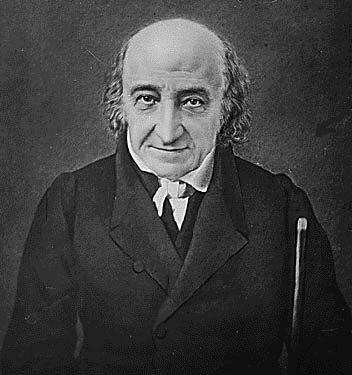
Albert Gallatin
Albert Gallatin was a Swiss and American politician, diplomat and scholar. Born January 29, 1761, in Geneva. Died August 12, 1849, in Astoria. Positions held include United States senator (1793–1794), United States representative and United States Secretary of the Treasury (1801–1814). Educated at University of Geneva.
Facts
43 facts · 2 confirmed by two sources · 18 cited · 23 from one source
Where this comes from
Papalocal keeps its own record. It started from these sources; what each one said is kept here as it was copied, so a change on their side never changes this page by itself. Tap one to read its version.
What Wikidata says · copied November 15, 2026 · revision 2562713990
- Described as
- Swiss and American politician, diplomat and scholar (1761-1849)
- Other names
- Abraham Alphonse Albert Gallatin, Abraham Alfonse Albert Gallatin
- Born
- January 29, 1761 · 9 references
- Died
- August 12, 1849 · 9 references
- Born in
- Geneva · 2 references
- Died in
- Astoria · 1 reference
- Buried in
- Trinity Church Cemetery · 1 reference
- Name at birth
- Abraham Alfonse Albert de Gallatin
- Citizen of
- Republic of Geneva · 1 reference; United States (1785–) · 1 reference
- Occupation
- politician · 2 references; diplomat · 1 reference; peace activist; lawyer · 1 reference; linguist · 2 references; writer · 1 reference; ethnologist · 2 references; member of parliament · 1 reference
- Positions held
- United States senator (1793–1794) · 2 references; United States representative; United States Secretary of the Treasury (1801–1814); United States Ambassador to the United Kingdom; United States Ambassador to France; senator · 1 reference
- Political party
- Democratic-Republican Party
- Worked for
- Harvard University (1781–1783) · 1 reference; New York University · 1 reference; United States Department of the Treasury
- Education
- University of Geneva · 1 reference
- Member of
- American Antiquarian Society
- Field
- Indigenous languages of the Americas; diplomacy · 1 reference; politics · 1 reference; ethnology · 1 reference; linguistics · 1 reference
- Children
- Albert Rolaz Gallatin · 1 reference; Frances Stevens · 1 reference; James Gallatin
- Father
- Jean Gallatin · 1 reference
- Religion
- reformed · 1 reference
- Lived in
- Machias (1780–1781); Geneva (1761–1780) · 1 reference; Boston (1781–1783); Friendship Hill; Manhattan
- Wikipedias with a page
- 32
Wikidata item Q500046 (wikidata.org/wiki/Q500046), public domain (CC0). Copied November 15, 2026.
What Wikipedia says · copied November 15, 2026 · revision 1384628474
Abraham Alfonse Albert Gallatin (January 29, 1761 – August 12, 1849) was a Genevan-American politician, diplomat, ethnologist, and linguist. Often described as "America's Swiss Founding Father", he was a leading figure in the early years of the United States, helping shape the new republic's financial system and foreign policy. Gallatin was a prominent member of the Democratic-Republican Party, represented Pennsylvania in both chambers of Congress, and held several influential roles across four presidencies, most notably as the longest serving U.S. secretary of the treasury. He is also known for his contributions to academia, namely as the founder of New York University and cofounder of the American Ethnological Society.
Gallatin was born in Geneva in present-day Switzerland and spoke French as a first language. Inspired by the ideals of the American Revolution, he immigrated to the United States in the 1780s, settling in western Pennsylvania. He served as a delegate to the 1789 Pennsylvania Constitutional Convention and won election to the Pennsylvania General Assembly. Gallatin was elected to the U.S. Senate in 1793, emerging as a leading Anti-Federalist and opponent of Alexander Hamilton's economic policies. However, he was soon removed from office on a party-line vote due to not meeting requisite citizenship requirements; returning to Pennsylvania, Gallatin helped calm many angry farmers during the Whiskey Rebellion.
Gallatin won election to the U.S. House of Representatives in 1795, where he helped establish the House Ways and Means Committee. He became the chief spokesman on financial matters for the Democratic-Republican Party and led opposition to the Federalist economic program. Gallatin helped Thomas Jefferson prevail in the contentious 1800 U.S. presidential election, and his reputation as a prudent financial manager led to his appointment as Treasury Secretary. Under Jefferson, Gallatin reduced government spending, instituted checks and balances for government expenditures, and financed the Louisiana Purchase and advocated for internal improvements, most notably through his Report on Roads and Canals. He retained his position through James Madison's administration until February 1814, maintaining much of Hamilton's financial system while presiding over a reduction in the national debt. Gallatin served on the American commission that agreed to the Treaty of Ghent, which ended the War of 1812. In the aftermath of the war, he helped found the Second Bank of the United States.
Declining another term at the Treasury, Gallatin served as U.S. Ambassador to France from 1816 to 1823, struggling with scant success to improve relations during the Bourbon Restoration. In the 1824 U.S. presidential election, Gallatin was nominated for Vice President by the Democratic-Republican Congressional caucus but never wanted the position and ultimately withdrew due to a lack of popular support. In 1826 and 1827, he served as the American ambassador to Britain and negotiated several agreements, such as a ten-year extension of the joint occupation of Oregon Country. He thereafter retired from politics and dedicated the rest of his life to various civic, humanitarian, and academic causes. He became the first president of the New York branch of the National Bank from 1831 to 1839, and in 1842 joined John Russell Bartlett to establish the American Ethnological Society; his studies of Indigenous languages of North America have earned him the moniker "father of American ethnology." Gallatin remained active in public life as an outspoken opponent of slavery and an advocate for fiscal responsibility, free trade, and individual liberty.
- Born, in its opening lines
- January 29, 1761
- Died, in its opening lines
- August 12, 1849
From the Wikipedia article “Albert Gallatin” (en.wikipedia.org/wiki/Albert_Gallatin), by its contributors, under CC BY-SA 4.0 (creativecommons.org/licenses/by-sa/4.0/). Copied November 15, 2026; not changed.
Confirmed Two sources agree. Cited One source, and it names where it got it. One source One source, without a reference of its own. Sources disagree The sources disagree. We show the best-supported value and keep theirs below.
