
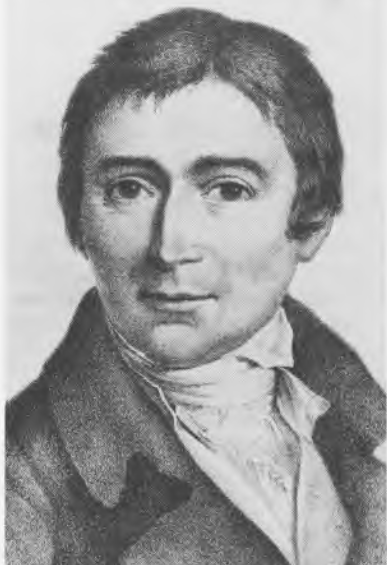
Albrecht Wilhelm Roth
Albrecht Wilhelm Roth was a German botanist. Born January 6, 1757, in Dötlingen. Died October 16, 1834, in Vegesack. Educated at Martin Luther University Halle-Wittenberg and University of Erlangen–Nuremberg.
Facts
15 facts · 2 confirmed by two sources · 5 cited · 8 from one source
Where this comes from
Papalocal keeps its own record. It started from these sources; what each one said is kept here as it was copied, so a change on their side never changes this page by itself. Tap one to read its version.
What Wikidata says · copied November 18, 2026 · revision 2569112366
- Described as
- German botanist (1757-1834)
- Other names
- Roth, A. W. Roth, Albrecht W. Roth, Alberto Guilielmo Roth
- Born
- January 6, 1757
- Died
- October 16, 1834 · 1 reference
- Born in
- Dötlingen · 1 reference
- Died in
- Vegesack
- Citizen of
- Grand Duchy of Oldenburg
- Occupation
- botanist · 1 reference; physician · 2 references; botanical collector · 1 reference
- Worked for
- University of Jena
- Education
- Martin Luther University Halle-Wittenberg; University of Erlangen–Nuremberg · 1 reference
- Member of
- Bavarian Academy of Sciences and Humanities; German Academy of Sciences Leopoldina
- Field
- botany
- Spouse
- Philippine Margarethe Roth · 1 reference
- Wikipedias with a page
- 22
Wikidata item Q64246 (wikidata.org/wiki/Q64246), public domain (CC0). Copied November 18, 2026.
What Wikipedia says · copied November 18, 2026 · revision 1372587935
Albrecht Wilhelm Roth (6 January 1757 – 16 October 1834) was a medical doctor and botanist born in Dötlingen, Germany.
He studied medicine at the Universities of Halle and Erlangen, where he received his doctorate in 1778.
After graduation, he practiced medicine in Dötlingen, and shortly afterwards relocated to Bremen-Vegesack. From 1785 to 1787 he issued an exsiccata under the title Herbarium vivum plantarum officinalium nebst einer Anweisung Pflanzen zum medizinischen Gebrauche zu sammeln.
Roth is remembered for his influential scientific publications, particularly in the field of botany. His botanical research and writings came to the attention of Johann Wolfgang von Goethe (1749–1832), who recommended Roth to a position at the botanical institute at the University of Jena.
Two of his better written works were Tentamen florae germanica (a treatise on German flora), and Novae plantarum species praesertim Indiae orientalis (a book of Indian flora). The latter work is primarily based on botanical specimens collected by Moravian missionary Benjamin Heyne (1770–1819).
The botanical genus Rothia from the family Fabaceae is named after him.
- Born, in its opening lines
- January 6, 1757
- Died, in its opening lines
- October 16, 1834
From the Wikipedia article “Albrecht Wilhelm Roth” (en.wikipedia.org/wiki/Albrecht_Wilhelm_Roth), by its contributors, under CC BY-SA 4.0 (creativecommons.org/licenses/by-sa/4.0/). Copied November 18, 2026; not changed.
Confirmed Two sources agree. Cited One source, and it names where it got it. One source One source, without a reference of its own. Sources disagree The sources disagree. We show the best-supported value and keep theirs below.
