
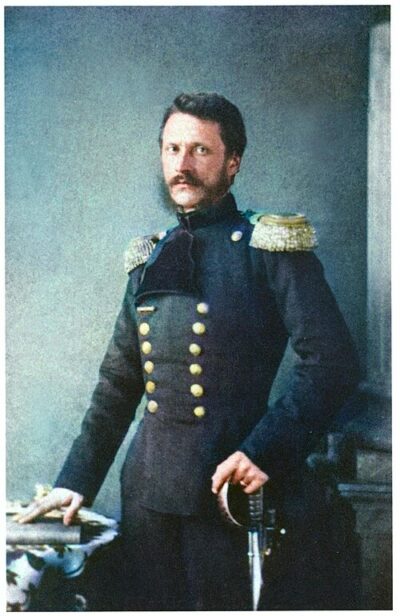
Alexandru Ioan Cuza
Alexandru Ioan Cuza was a first ruler of the United Principalities of Moldavia and Wallachia. Born March 20, 1820, in Bârlad. Died May 3, 1873, in Heidelberg. Positions held include Prince of Romania (1862–1866), lord of Moldavia (1859–1862) and lord of Wallachia (1859–1862). Educated at University of Paris and University of Pavia. Awards include Order of the Redeemer, Order of Saints Maurice and Lazarus and Order of the Medjidie.
Facts
32 facts · 1 confirmed by two sources · 7 cited · 23 from one source · 1 where the sources disagree
What’s different
- Died: we show May 3, 1873 (Sources disagree). Wikipedia says May 15, 1873
Where this comes from
Papalocal keeps its own record. It started from these sources; what each one said is kept here as it was copied, so a change on their side never changes this page by itself. Tap one to read its version.
What Wikidata says · copied November 16, 2026 · revision 2569194672
- Described as
- first ruler of the United Principalities of Moldavia and Wallachia
- Other names
- Alexander Joan Cuza, Alexandru Ioan I
- Born
- March 20, 1820
- Died
- May 3, 1873 · 3 references
- Born in
- Bârlad · 1 reference
- Died in
- Heidelberg · 3 references
- Buried in
- Trei Ierarhi Monastery
- Citizen of
- Principality of Moldavia; Principality of Wallachia; United Principalities of Moldavia and Wallachia
- Occupation
- politician; military officer; revolutionary; jurist; diplomat
- Positions held
- Prince of Romania (1862–1866); lord of Moldavia (1859–1862); lord of Wallachia (1859–1862)
- Education
- University of Paris; University of Pavia · 1 reference; University of Bologna · 1 reference; National and Kapodistrian University of Athens · 1 reference
- Member of
- Romanian Academy
- Awards
- Order of the Redeemer · 1 reference; Order of Saints Maurice and Lazarus; Order of the Medjidie; Order of Osmanieh
- Spouse
- Elena Cuza (1844–) · 2 references
- Children
- Alexandru Al. Ioan Cuza · 1 reference; Dimitrie Cuza · 1 reference
- Father
- Ioan Cuza · 1 reference
- Mother
- Sultana Cozadini
- Siblings
- Dimitrie Cuza
- Religion
- Romanian Orthodox Church
- Wikipedias with a page
- 51
Wikidata item Q294832 (wikidata.org/wiki/Q294832), public domain (CC0). Copied November 16, 2026.
What Wikipedia says · copied November 16, 2026 · revision 1378514971
Alexandru Ioan Cuza (Romanian: [alekˈsandru iˈo̯aŋ ˈkuza] , or Alexandru Ioan I, also Anglicised as Alexander John Cuza; 20 March [O.S. 8 March] 1820 – 15 May 1873) was the first domnitor (prince) of the Romanian Principalities through his double election as Prince of Moldavia on 5 January 1859 and Prince of Wallachia on 24 January 1859, which resulted in the unification of the two states. He was a prominent figure of the Moldavian Revolution of 1848. Following his double election, he initiated a series of liberal and progressive reforms that contributed to the modernization of Romanian society and of state structures.
As ruler of the Romanian Principalities, he supported a political and diplomatic activity for the recognition of the union of Moldavia and Wallachia by the suzerain Ottoman Empire and achieved constitutional and administrative unity between Moldavia and Wallachia in 1862, when the Romanian Principalities officially adopted the name Romanian United Principalities with a single capital at Bucharest, a single national assembly and a single government.
Cuza's reform policies alienated a large coalition of conservatives and radical liberals, for the most part landowners and business owners. On 22 February 1866, he was forced to abdicate and leave the country. Today, he is often considered one of the founders of the modern Romanian state and a national hero of Romania.
- Born, in its opening lines
- March 20, 1820
- Died, in its opening lines
- May 15, 1873
From the Wikipedia article “Alexandru Ioan Cuza” (en.wikipedia.org/wiki/Alexandru_Ioan_Cuza), by its contributors, under CC BY-SA 4.0 (creativecommons.org/licenses/by-sa/4.0/). Copied November 16, 2026; not changed.
Confirmed Two sources agree. Cited One source, and it names where it got it. One source One source, without a reference of its own. Sources disagree The sources disagree. We show the best-supported value and keep theirs below.
