
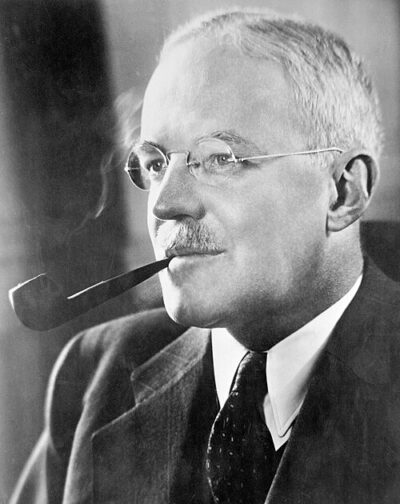
Allen Dulles
Allen Dulles was a first civilian and longest-serving Director of Central Intelligence (DCI). Born April 7, 1893, in Watertown. Died January 29, 1969, in Georgetown. Positions held include Director of Central Intelligence (1953–1961), board of directors member and O.S.S. station chief in Switzerland. Educated at Princeton University and George Washington University. Awards include St George's Medal.
Facts
33 facts · 2 confirmed by two sources · 4 cited · 27 from one source
Where this comes from
Papalocal keeps its own record. It started from these sources; what each one said is kept here as it was copied, so a change on their side never changes this page by itself. Tap one to read its version.
What Wikidata says · copied November 13, 2026 · revision 2561581198
- Described as
- first civilian and longest-serving Director of Central Intelligence (DCI)
- Other names
- Allen Welsh Dulles, Allen W. Dulles
- Born
- April 7, 1893 · 10 references
- Died
- January 29, 1969 · 10 references
- Born in
- Watertown · 1 reference
- Died in
- Georgetown
- Buried in
- Green Mount Cemetery
- Cause of death
- pneumonia
- Citizen of
- United States
- Occupation
- lawyer; diplomat; politician · 1 reference; intelligence officer
- Positions held
- Director of Central Intelligence (1953–1961); board of directors member; O.S.S. station chief in Switzerland
- Political party
- Democratic Party; Republican Party
- Worked for
- Office of Strategic Services (1942–1945) · 1 reference; Central Intelligence Agency · 1 reference; United Fruit Company; Sullivan & Cromwell · 1 reference; United States Department of State · 1 reference; Council on Foreign Relations · 1 reference
- Education
- Princeton University; George Washington University; Phillips Exeter Academy · 1 reference
- Member of
- American Whig–Cliosophic Society · 1 reference
- Awards
- St George's Medal
- Spouse
- Clover Todd Dulles
- Children
- Allen Macy Dulles · 1 reference
- Father
- Allen Macy Dulles
- Mother
- Edith Foster Dulles
- Siblings
- John Foster Dulles
- Religion
- Catholicism
- Wikipedias with a page
- 47
Wikidata item Q317243 (wikidata.org/wiki/Q317243), public domain (CC0). Copied November 13, 2026.
What Wikipedia says · copied November 13, 2026 · revision 1382377168
Allen Welsh Dulles ( DUL-iss; April 7, 1893 – January 29, 1969) was an American lawyer who was the first civilian director of central intelligence (DCI) and its longest serving director. As head of the Central Intelligence Agency (CIA) during the early Cold War, he oversaw numerous activities, such as US involvement in the 1953 Iranian coup d'état, the 1954 Guatemalan coup d'état, the Project MKUltra attempt to create a mind control program and the Bay of Pigs Invasion of Cuba in 1961. As a result of the failed invasion of Cuba, Dulles was forced to resign by President John F. Kennedy and was replaced with John McCone for the remainder of the Kennedy administration.
Following his resignation, Dulles was appointed to the Warren Commission tasked with investigating President Kennedy's assassination. His inclusion on the panel, despite having been dismissed by Kennedy and formerly serving as head of the CIA, has prompted sustained discussion among historians and commentators regarding potential conflicts of interest. While the 1979 House Select Committee on Assassinations concluded that the CIA as an institution was not involved in the assassination, debate persists over the extent of internal agency knowledge, as well as Dulles’s influence on the commission’s scope and findings.
Between his stints of government service, Dulles was a corporate lawyer and partner at Sullivan & Cromwell. His older brother, John Foster Dulles, was the Secretary of State during the Eisenhower administration and is the namesake of Dulles International Airport.
- Born, in its opening lines
- April 7, 1893
- Died, in its opening lines
- January 29, 1969
From the Wikipedia article “Allen Dulles” (en.wikipedia.org/wiki/Allen_Dulles), by its contributors, under CC BY-SA 4.0 (creativecommons.org/licenses/by-sa/4.0/). Copied November 13, 2026; not changed.
Confirmed Two sources agree. Cited One source, and it names where it got it. One source One source, without a reference of its own. Sources disagree The sources disagree. We show the best-supported value and keep theirs below.
