
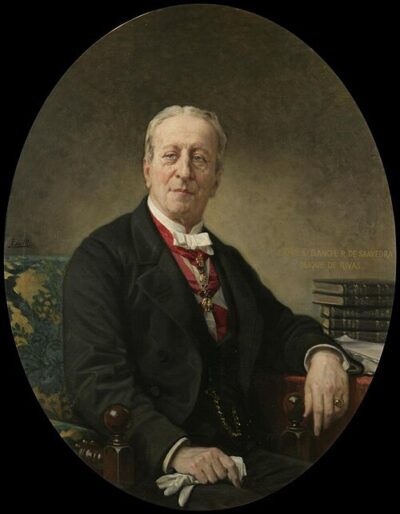
Ángel de Saavedra, 3rd Duke of Rivas
Ángel de Saavedra, 3rd Duke of Rivas was a Spanish writer, poet, playwright and politician. Born March 10, 1791, in Córdoba. Died June 22, 1865, in Madrid. Positions held include member of the Congress of Deputies (1821–1823), ambassador of Spain to France (1857–1858) and president of the State Council (1863–1864). Known for Don Álvaro o la fuerza del sino. Awards include Knight of the Order of the Golden Fleece, Order of Santiago and Knights Hospitaller.
Facts
40 facts · 2 confirmed by two sources · 22 cited · 16 from one source
What’s different
- Born: we show March 10, 1791 (Confirmed). Wikidata also lists March 19, 1791
Where this comes from
Papalocal keeps its own record. It started from these sources; what each one said is kept here as it was copied, so a change on their side never changes this page by itself. Tap one to read its version.
What Wikidata says · copied November 16, 2026 · revision 2567410812
- Described as
- Spanish writer, poet, playwright and politician (1791-1865)
- Other names
- Duque de Rivas, Angel de Saavedra
- Born
- March 10, 1791 · 8 references; March 19, 1791 · 1 reference
- Died
- June 22, 1865 · 9 references
- Born in
- Córdoba · 1 reference
- Died in
- Madrid · 1 reference
- Buried in
- San Isidro Cemetery · 1 reference
- Name at birth
- Ángel de Saavedra y Ramírez de Baquedano
- Citizen of
- Spain
- Occupation
- writer · 2 references; poet · 1 reference; playwright; politician · 1 reference
- Positions held
- member of the Congress of Deputies (1821–1823) · 1 reference; ambassador of Spain to France (1857–1858) · 2 references; president of the State Council (1863–1864) · 2 references; President of the Council of Ministers (1854) · 1 reference; ministro de Gobernación (1836) · 1 reference; Minister of the Spanish Navy (1854) · 1 reference; Member of the Royal Spanish Academy (1847–1865) · 1 reference; Member of the Real Academia de la Historia (1852–1865) · 1 reference; Director de la Real Academia Española (1862–1865) · 1 reference; Ambassador of Spain to the Kingdom of the Two Sicilies (1844–1850) · 1 reference; Prócer del Reino (1834–1836) · 1 reference; Senator of the Kingdom (2 times) (1838–1845) · 1 reference; Senator for Life of Spain (1845–1865) · 1 reference; Académico de la Real Academia de Bellas Artes de San Fernando (1846–1865) · 1 reference; director de la Real Academia de Bellas Artes de San Fernando (1854–1865) · 1 reference
- Political party
- Moderate Party
- Member of
- Royal Spanish Academy; Royal Academy of History
- Known for
- Don Álvaro o la fuerza del sino
- Awards
- Knight of the Order of the Golden Fleece (1864) · 1 reference; Order of Santiago; Knights Hospitaller; Order of the Golden Fleece · 1 reference; Knight of Pius IX (1849)
- Spouse
- María de la Encarnación Cueto
- Children
- Gonzalo de Saavedra y Cueto; Enrique de Saavedra · 1 reference; Teobaldo de Saavedra y Cueto
- Military rank
- general
- Wikipedias with a page
- 33
Wikidata item Q155463 (wikidata.org/wiki/Q155463), public domain (CC0). Copied November 16, 2026.
What Wikipedia says · copied November 16, 2026 · revision 1370425016
Ángel de Saavedra y Ramírez de Baquedano, 3rd Duke of Rivas (Spanish: Ángel de Saavedra y Ramírez de Baquedano, Duque de Rivas; 10 March 1791 – 22 June 1865) was a Spanish poet, dramatist and politician who was Prime Minister of Spain in 1854. He is best known for his play Don Álvaro o la fuerza del sino (Don Álvaro, or the Force of Fate) (1835), the first romantic success in the Spanish theater.
- Born, in its opening lines
- March 10, 1791
- Died, in its opening lines
- June 22, 1865
From the Wikipedia article “Ángel de Saavedra, 3rd Duke of Rivas” (en.wikipedia.org/wiki/Ángel_de_Saavedra,_3rd_Duke_of_Rivas), by its contributors, under CC BY-SA 4.0 (creativecommons.org/licenses/by-sa/4.0/). Copied November 16, 2026; not changed.
Confirmed Two sources agree. Cited One source, and it names where it got it. One source One source, without a reference of its own. Sources disagree The sources disagree. We show the best-supported value and keep theirs below.
