
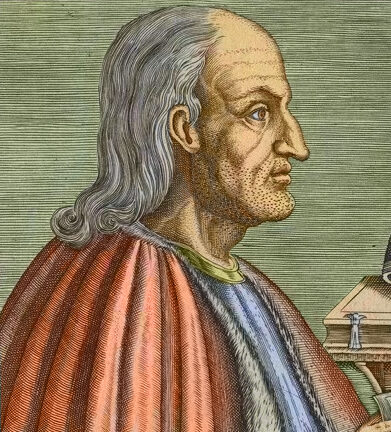
Anselm of Canterbury
Anselm of Canterbury was the 11th‑century Benedictine monk, Archbishop of Canterbury, philosopher and theologian. Born 1033, in Aosta. Died April 21, 1109, in Canterbury. Positions held include Roman Catholic Archbishop of Canterbury (1093–1109) and abbot. Known for Cur Deus homo, Monologion and Proslogion.
Facts
27 facts · 0 confirmed by two sources · 11 cited · 15 from one source · 1 where the sources disagree
What’s different
- Died: we show April 21, 1109 (Sources disagree). Wikidata also lists April 28, 1109
Where this comes from
Papalocal keeps its own record. It started from these sources; what each one said is kept here as it was copied, so a change on their side never changes this page by itself. Tap one to read its version.
What Wikidata says · copied November 16, 2026 · revision 2568996450
- Described as
- 11th‑century Benedictine monk, Archbishop of Canterbury, philosopher and theologian
- Other names
- Anselm, St. Anselm, Saint Anselm, St. Anselm of Canterbury, Anselm of Bec, Anselm of Aosta
- Born
- 1033 · 3 references
- Died
- April 21, 1109 · 3 references; April 28, 1109 · 1 reference
- Born in
- Aosta · 3 references
- Died in
- Canterbury · 3 references
- Buried in
- Canterbury Cathedral
- Citizen of
- Kingdom of France
- Occupation
- philosopher · 1 reference; theologian · 2 references; Latin Catholic priest; archbishop · 2 references; writer · 1 reference; monk · 1 reference; Doctor of the Church · 1 reference
- Positions held
- Roman Catholic Archbishop of Canterbury (1093–1109) · 2 references; abbot · 1 reference
- Known for
- Cur Deus homo; Monologion; Proslogion; De similitudinibus; Questions for a dying man; Meditationes; De casu diaboli; De libertate arbitrii; De veritate; De incarnatione Verbi
- Field
- philosophy
- Religion
- Catholicism · 1 reference
- Wikipedias with a page
- 92
Wikidata item Q43939 (wikidata.org/wiki/Q43939), public domain (CC0). Copied November 16, 2026.
What Wikipedia says · copied November 16, 2026 · revision 1385559628
Anselm of Canterbury (; 1033/4–1109), also known as Anselm of Aosta (French: Anselme d'Aoste, Italian: Anselmo d'Aosta) after his birthplace and Anselm of Bec (French: Anselme du Bec) after his monastery, was a Benedictine abbot, philosopher and theologian who served as Archbishop of Canterbury from 1093 to 1109.
As Archbishop of Canterbury, he defended the Church's interests in England amid the Investiture Controversy. For his resistance to the English kings William II and Henry I, he was exiled twice: once from 1097 to 1100 and then from 1105 to 1107. While in exile, he participated in the Council of Bari, where he helped convince the Greek Catholic bishops of southern Italy to adopt the Roman Rite. In England, he asserted the primacy of Canterbury over the Archbishop of York and over the bishops of Wales, and at the time of his death he appeared to have been successful in this. However, Pope Paschal II later reversed the papal decisions on the matter and restored York's earlier status.
Beginning during his time at Bec, Anselm composed dialogues and treatises with both a mystical and a rational or philosophical approach, this latter aspect causing him sometimes to be credited as the founder of Scholasticism. Despite his lack of recognition in this field in his own lifetime, Anselm is famously regarded as the originator of the ontological argument for the existence of God and of the satisfaction theory of atonement.
After his death, Anselm was canonized as a saint; his feast day is 21 April. He was proclaimed a Doctor of the Church by a papal bull of Pope Clement XI in 1720.
From the Wikipedia article “Anselm of Canterbury” (en.wikipedia.org/wiki/Anselm_of_Canterbury), by its contributors, under CC BY-SA 4.0 (creativecommons.org/licenses/by-sa/4.0/). Copied November 16, 2026; not changed.
Confirmed Two sources agree. Cited One source, and it names where it got it. One source One source, without a reference of its own. Sources disagree The sources disagree. We show the best-supported value and keep theirs below.
