
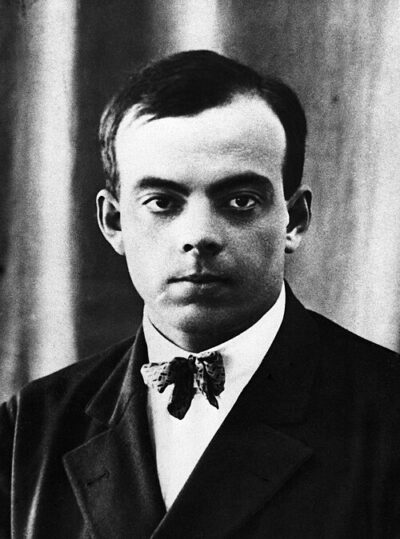
Antoine de Saint-Exupéry
Antoine de Saint-Exupéry was a French writer and aviator. Born June 29, 1900, in 2nd arrondissement of Lyon. Died July 31, 1944, in île de Riou. Known for Night Flight, The Little Prince and Southern Mail. Educated at Lycée Saint-Louis and Villa St. Jean International School. Awards include mort pour la France, Croix de guerre 1939–1945 and Officer of the Legion of Honour.
Facts
55 facts · 2 confirmed by two sources · 17 cited · 35 from one source · 1 where the sources disagree
What’s different
- Born in: we show 2nd arrondissement of Lyon (Sources disagree). Wikidata also lists Lyon
Where this comes from
Papalocal keeps its own record. It started from these sources; what each one said is kept here as it was copied, so a change on their side never changes this page by itself. Tap one to read its version.
What Wikidata says · copied November 16, 2026 · revision 2568844901
- Described as
- French writer and aviator (1900–1944)
- Other names
- Antoine de St. Exupery, Saint-Exupery, Antoine Marie Roger, Vicomte de Saint-Exupéry, Antoine Jean-Baptiste Marie Roger de Saint-Exupéry, Antoine de Saint-Exupery, Saint-Ex, Antoine Marie Jean-Baptiste Roger de Saint-Exupéry, Saint-Exupéry
- Born
- June 29, 1900 · 9 references
- Died
- July 31, 1944 · 6 references
- Born in
- 2nd arrondissement of Lyon · 4 references; Lyon · 2 references
- Died in
- île de Riou · 1 reference
- Cause of death
- aviation accident
- Name at birth
- Antoine Jean-Baptiste Marie Roger de Saint-Exupéry · 2 references
- Citizen of
- France · 2 references
- Occupation
- aircraft pilot · 3 references; novelist; children's writer; writer · 2 references; journalist · 1 reference; illustrator · 2 references; philosopher · 1 reference; poet
- Worked for
- Aéropostale (1926–1936); Paris-Soir (1934–1939)
- Education
- Lycée Saint-Louis; Villa St. Jean International School (1915–1917); Notre Dame de Mongré High School (1914–1915)
- Member of
- Société des poètes français
- Genre
- tale; poetry · 1 reference; récit
- Known for
- Night Flight (1931); The Little Prince (1943); Southern Mail (1929); Wind, Sand and Stars (1939); Letter to a Hostage (1940); Flight to Arras (1942); Citadelle (1948)
- Awards
- mort pour la France (1948); Croix de guerre 1939–1945 (1940); Officer of the Legion of Honour (1939) · 1 reference; Prix Femina (1931); Grand Prix du roman de l'Académie française (1939) · 1 reference; National Book Award for Nonfiction (1939); Retro Hugo Award for Best Novella (2019); Ambassadors' Prize (1948) · 1 reference; National Book Award (1939)
- Field
- fiction · 1 reference; creative and professional writing · 1 reference; aviation · 1 reference; children's literature · 1 reference; fiction · 1 reference; essay · 1 reference
- Spouse
- Consuelo de Saint Exupéry (1931–1944) · 2 references
- Father
- Jean Marc de Saint-Exupéry · 1 reference
- Mother
- Marie de Saint-Exupéry · 1 reference
- Siblings
- Marie-Madeleine de Saint Exupéry; Simone de Saint-Exupéry · 1 reference
- Religion
- Catholicism
- Military branch
- French Air Force · 1 reference
- Military rank
- commanding officer
- Website
- https://www.antoinedesaintexupery.com/ · 1 reference
- Wikipedias with a page
- 171
Wikidata item Q2908 (wikidata.org/wiki/Q2908), public domain (CC0). Copied November 16, 2026.
What Wikipedia says · copied November 16, 2026 · revision 1383948201
Antoine Marie Jean-Baptiste Roger, vicomte de Saint-Exupéry (29 June 1900 – c. 31 July 1944), known simply as Antoine de Saint-Exupéry (UK: , US: ; French: [ɑ̃twan də sɛ̃t‿ɛɡzypeʁi] ), was a French writer, poet, journalist and aviator. He is best known as the author of The Little Prince.
Born in Lyon to an aristocratic family, Saint-Exupéry learned to fly during his military service in 1921. In 1926 he joined the airline Latécoère, later Aéropostale, flying mail between Toulouse and Dakar and serving as station manager at Cape Juby in the Sahara. In 1929 he moved to Argentina to run the company's South American subsidiary, Aeroposta Argentina. His experiences as a pilot shaped his early fiction: the short story The Aviator (1926) and the novels Southern Mail (1929) and Night Flight (1931), which won the Prix Femina. During the 1930s he also worked as a reporter, covering the Soviet Union in 1935 and the Spanish Civil War in 1936 and 1937, and survived a crash in the Libyan Desert during an attempted record flight from Paris to Saigon in 1935. His memoir Wind, Sand and Stars (1939) received the Grand Prix du roman de l'Académie française and, in its English edition, the U.S. National Book Award.
Saint-Exupéry joined the French Air Force at the outbreak of World War II and flew reconnaissance missions until France's armistice with Germany in 1940. After being demobilised, he went into exile in the United States, where he lived from 1941 to 1943 and argued publicly for US intervention in the war. During this period he published Flight to Arras (1942) and The Little Prince (1943), a novella he wrote and illustrated himself. Published in France by Gallimard in 1946, The Little Prince became one of the most translated and best-selling books in the world.In 1943, despite being past the maximum age for a war pilot and in declining health, Saint-Exupéry rejoined his former reconnaissance group in North Africa, flying with the Allied forces. On 31 July 1944 he took off from Corsica, France on a reconnaissance mission over southern France and never returned; his plane is presumed to have crashed. He was officially declared Mort pour la France (lit. 'died for France'). Wreckage of his Lockheed P-38 Lightning was found off the coast of Marseille in 2000 and formally identified in 2003, but the cause of the crash remains unknown.
- Born, in its opening lines
- June 29, 1900
- Died, in its opening lines
- July 31, 1944
From the Wikipedia article “Antoine de Saint-Exupéry” (en.wikipedia.org/wiki/Antoine_de_Saint-Exupéry), by its contributors, under CC BY-SA 4.0 (creativecommons.org/licenses/by-sa/4.0/). Copied November 16, 2026; not changed.
Confirmed Two sources agree. Cited One source, and it names where it got it. One source One source, without a reference of its own. Sources disagree The sources disagree. We show the best-supported value and keep theirs below.
