
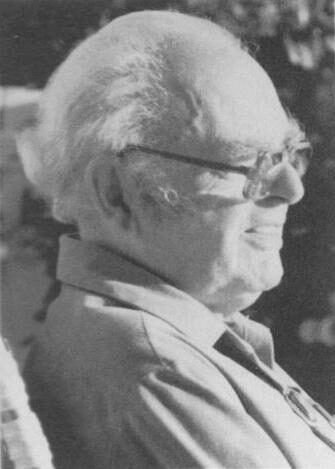
Bart Bok
Bart Bok was a Dutch-American astronomer. Born April 28, 1906, in Hoorn. Died August 5, 1983, in Tucson. Known for Bok globule. Educated at Leiden University and University of Groningen. Awards include Guggenheim Fellowship, Henry Norris Russell Lectureship and Klumpke-Roberts Award.
Facts
26 facts · 2 confirmed by two sources · 7 cited · 17 from one source
Where this comes from
Papalocal keeps its own record. It started from these sources; what each one said is kept here as it was copied, so a change on their side never changes this page by itself. Tap one to read its version.
What Wikidata says · copied November 15, 2026 · revision 2567389057
- Described as
- Dutch-American astronomer (1906–1983)
- Other names
- Bartholomeus Jan Bok, Bart Jan Bok, Bart J. Bok, Bartholomeus Jan
- Born
- April 28, 1906 · 7 references
- Died
- August 5, 1983 · 7 references
- Born in
- Hoorn · 1 reference
- Died in
- Tucson · 1 reference
- Cause of death
- myocardial infarction
- Citizen of
- Kingdom of the Netherlands; United States
- Occupation
- astronomer · 1 reference
- Worked for
- Harvard University; Mount Stromlo Observatory · 1 reference; Steward Observatory · 1 reference
- Education
- Leiden University; University of Groningen
- Member of
- American Academy of Arts and Sciences; Royal Netherlands Academy of Arts and Sciences; International Astronomical Union · 1 reference; American Astronomical Society · 1 reference; National Academy of Sciences
- Known for
- Bok globule · 1 reference
- Awards
- Guggenheim Fellowship (1950) · 1 reference; Henry Norris Russell Lectureship (1982); Klumpke-Roberts Award (1982); Bruce Medal (1977) · 1 reference; Fellow of the Committee for Skeptical Inquiry; Karl G. Jansky Lectureship (1972)
- Spouse
- Priscilla Fairfield Bok · 1 reference
- Wikipedias with a page
- 31
Wikidata item Q434224 (wikidata.org/wiki/Q434224), public domain (CC0). Copied November 15, 2026.
What Wikipedia says · copied November 15, 2026 · revision 1379608115
Bartholomeus Jan "Bart" Bok (April 28, 1906 – August 5, 1983) was a Dutch-American astronomer, teacher, and lecturer. He is best known for his work on the structure and evolution of the Milky Way galaxy, and for the discovery of Bok globules, which are small, densely dark clouds of interstellar gas and dust that can be seen silhouetted against brighter backgrounds. Bok suggested that these globules may be in the process of contracting, before forming into stars.
Bok married fellow astronomer Priscilla Fairfield in 1929, and for the remainder of their lives, the two collaborated so closely on their astronomical work that the Royal Astronomical Society said "from that point on it is difficult and pointless to separate his achievements from hers". The Boks displayed such great mutual enthusiasm for explaining astronomy to the public that The Boston Globe described them in 1936 as "salesmen of the Milky Way". They worked together on research and co-authored academic papers, and their general interest book The Milky Way went through five editions and was "widely acclaimed as one of the most successful astronomical books ever published".
Bok's primary research interest was the structure of our galaxy. When he was asked by the editors of Who's Who in America to submit a statement concerning "Thoughts on My Life", he wrote, "I have been a happy astronomer for the past sixty years, wandering through the highways and byways of our beautiful Milky Way."
Bart Bok was an exceedingly popular personality in the field of astronomy, noted for his affability and humor. When asteroid 1983 Bok was named for him and his wife Priscilla, he thanked the International Astronomical Union for giving him "a little plot of land that I can retire to and live on."
- Born, in its opening lines
- April 28, 1906
- Died, in its opening lines
- August 5, 1983
From the Wikipedia article “Bart Bok” (en.wikipedia.org/wiki/Bart_Bok), by its contributors, under CC BY-SA 4.0 (creativecommons.org/licenses/by-sa/4.0/). Copied November 15, 2026; not changed.
Confirmed Two sources agree. Cited One source, and it names where it got it. One source One source, without a reference of its own. Sources disagree The sources disagree. We show the best-supported value and keep theirs below.
