
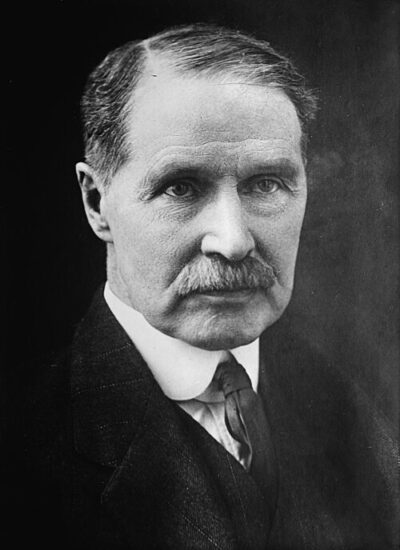
Bonar Law
Bonar Law was a Prime Minister of the United Kingdom from 1922 to 1923. Born September 16, 1858, in Kingston. Died October 30, 1923, in London. Positions held include Leader of the Opposition (1911–1915), Chancellor of the Exchequer (1916–1919) and Prime Minister of the United Kingdom (1922–1923). Educated at University of Glasgow and Lomond School.
Facts
40 facts · 2 confirmed by two sources · 15 cited · 22 from one source · 1 where the sources disagree
What’s different
- Born in: we show Kingston (Sources disagree). Wikidata also lists Rexton
Where this comes from
Papalocal keeps its own record. It started from these sources; what each one said is kept here as it was copied, so a change on their side never changes this page by itself. Tap one to read its version.
What Wikidata says · copied November 16, 2026 · revision 2568113493
- Described as
- Prime Minister of the United Kingdom from 1922 to 1923
- Other names
- Andrew Bonar Law
- Born
- September 16, 1858 · 7 references
- Died
- October 30, 1923 · 8 references
- Born in
- Rexton; Kingston · 1 reference
- Died in
- London · 1 reference
- Buried in
- Westminster Abbey
- Cause of death
- esophageal cancer
- Citizen of
- United Kingdom of Great Britain and Ireland
- Occupation
- politician · 1 reference; chess player
- Positions held
- Leader of the Opposition (1911–1915); Chancellor of the Exchequer (1916–1919); Prime Minister of the United Kingdom (1922–1923); Leader of the House of Commons (1916–1923); Leader of the Conservative Party (1911–1923); Lord Privy Seal (1919–1921); Secretary of State for the Colonies; Parliamentary Secretary to the Board of Trade; Member of the Privy Council of the United Kingdom; member of the 32nd Parliament of the United Kingdom (1922–1923); member of the 31st Parliament of the United Kingdom (1918–1922) · 1 reference; member of the 30th Parliament of the United Kingdom (1911–1918) · 1 reference; member of the 29th Parliament of the United Kingdom (1910) · 1 reference; member of the 28th Parliament of the United Kingdom (1906–1910) · 1 reference; member of the 27th Parliament of the United Kingdom (1900–1906) · 1 reference
- Political party
- Conservative Party
- Worked for
- University of Glasgow
- Education
- University of Glasgow; Lomond School; Gilbertfield House School
- Sport
- chess
- Spouse
- Annie Pitcairn Robley (1891–) · 1 reference; Annie Pitcairn Robley · 1 reference
- Children
- Richard Law, 1st Baron Coleraine; Isabel Harrington Law · 1 reference; Catherine Edith Mary Law · 1 reference; James Kidston Law · 1 reference; Charles Law · 1 reference; Harrington Law · 1 reference
- Father
- James Law · 1 reference
- Mother
- Eliza Kidston · 1 reference
- Wikipedias with a page
- 67
Wikidata item Q166663 (wikidata.org/wiki/Q166663), public domain (CC0). Copied November 16, 2026.
What Wikipedia says · copied November 16, 2026 · revision 1380867525
Andrew Bonar Law (; 16 September 1858 – 30 October 1923) was a British Conservative politician who was Prime Minister of the United Kingdom from 1922 to 1923. He was the first prime minister born outside of Britain or Ireland, and the shortest-serving British prime minister of the 20th century.
Law was born in the British colony of New Brunswick (now a Canadian province). He was of Scottish and Ulster Scots descent and moved to Scotland in 1870. He left school aged sixteen to work in the iron industry, becoming a wealthy man by the age of thirty. He entered the House of Commons at the 1900 general election at age 42, relatively late in life for a front-rank politician; he was made a junior minister, Parliamentary Secretary to the Board of Trade, in 1902. Law joined the Shadow Cabinet in opposition after the 1906 general election. In 1911, he was appointed a Privy Councillor, before standing for the vacant party leadership. Despite never having served in the Cabinet and trailing third after Walter Long and Austen Chamberlain, Law became leader when the two front-runners withdrew rather than risk a draw splitting the party.
As Leader of the Conservative Party and Leader of the Opposition, Law focused his attentions in favour of tariff reform and against Irish Home Rule. His campaigning helped turn Liberal attempts to pass the Third Home Rule Bill into a three-year struggle eventually halted by the start of World War I, with much argument over the status of the six counties in Ulster which would later become Northern Ireland, four of which were predominantly Protestant.
Law first held Cabinet office as Secretary of State for the Colonies in H. H. Asquith's Coalition Government (May 1915 – December 1916). Upon Asquith's fall from power he declined to form a government, instead becoming Chancellor of the Exchequer in David Lloyd George's Coalition Government. He resigned on grounds of ill health early in 1921. In October 1922, with Lloyd George's Coalition having become unpopular with the Conservatives, he wrote a letter to the press giving only lukewarm support to the Government's actions over Chanak. After Conservative MPs voted to end the Coalition, he again became party leader and, this time, prime minister. Bonar Law won a clear majority at the 1922 general election, and his brief premiership saw negotiation with the United States over Britain's war loans. Seriously ill with throat cancer, Law resigned in May 1923, and died later that year. He was the fourth shortest-serving prime minister of the United Kingdom (211 days in office).
- Born, in its opening lines
- September 16, 1858
- Died, in its opening lines
- October 30, 1923
From the Wikipedia article “Bonar Law” (en.wikipedia.org/wiki/Bonar_Law), by its contributors, under CC BY-SA 4.0 (creativecommons.org/licenses/by-sa/4.0/). Copied November 16, 2026; not changed.
Confirmed Two sources agree. Cited One source, and it names where it got it. One source One source, without a reference of its own. Sources disagree The sources disagree. We show the best-supported value and keep theirs below.
