
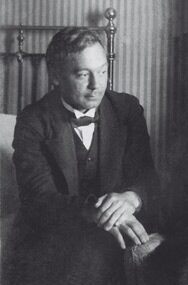
Boris Delaunay
Boris Delaunay was a Soviet mathematician. Born March 3, 1890, in Saint Petersburg. Died July 17, 1980, in Moscow. Known for Delaunay triangulation and Delone set. Educated at Taras Shevchenko National University of Kyiv. Awards include Order of Lenin, Order of the Red Banner of Labour and Medal "For Valiant Labour in the Great Patriotic War 1941–1945".
Facts
36 facts · 1 confirmed by two sources · 11 cited · 23 from one source · 1 where the sources disagree
What’s different
- Born: we show March 3, 1890 (Sources disagree). Wikipedia says March 15, 1890
Where this comes from
Papalocal keeps its own record. It started from these sources; what each one said is kept here as it was copied, so a change on their side never changes this page by itself. Tap one to read its version.
What Wikidata says · copied November 18, 2026 · revision 2565602160
- Described as
- Soviet mathematician (1890–1980)
- Other names
- Boris Delone, Delone Boris Nikolaevich, Delaunay B. N., Delone B. N., Boris Nikolaevich Delaunay, Boris Nikolayevich Delaunay, Борис Николаевич Делоне
- Born
- March 3, 1890 · 3 references
- Died
- July 17, 1980 · 3 references
- Born in
- Saint Petersburg · 2 references
- Died in
- Moscow · 1 reference
- Buried in
- Khovanskoye Cemetery
- Name at birth
- Борис Николаевич Делоне
- Citizen of
- Russian Empire; Soviet Union
- Occupation
- mathematician · 2 references; university teacher; mountaineer
- Worked for
- Saint Petersburg State University (1922–1935) · 1 reference; Taras Shevchenko National University of Kyiv (1916–1922) · 1 reference; Lomonosov Moscow State University (1935–1960) · 1 reference; Steklov Institute of Mathematics (1932–1980) · 1 reference
- Education
- Taras Shevchenko National University of Kyiv (1908–1916) · 2 references
- Member of
- German Academy of Sciences Leopoldina · 1 reference; Russian Academy of Sciences (1929–) · 1 reference
- Sport
- mountaineering
- Known for
- Delaunay triangulation; Delone set
- Awards
- Order of Lenin; Order of the Red Banner of Labour; Medal "For Valiant Labour in the Great Patriotic War 1941–1945"; Lobachevsky Prize (1977) · 1 reference; Master of Sport of the USSR
- Field
- abstract algebra; computational geometry; crystallography; geometry; algebra; number theory
- Children
- Nikolai Borisovich Delone · 1 reference
- Father
- Nickolay Delone
- Mother
- Nadezhda Aleksandrovna Georgievskaya
- Siblings
- Lev Delone
- Wikipedias with a page
- 23
Wikidata item Q893737 (wikidata.org/wiki/Q893737), public domain (CC0). Copied November 18, 2026.
What Wikipedia says · copied November 18, 2026 · revision 1381651642
Boris Nikolayevich Delaunay or Delone (French pronunciation: [dəlonɛ], Russian: Бори́с Никола́евич Делоне́; 15 March 1890 – 17 July 1980) was a Soviet and Russian mathematician, mountain climber, and the father of physicist, Nikolai Borisovich Delone. He is best known for the Delaunay triangulation.
- Born, in its opening lines
- March 15, 1890
- Died, in its opening lines
- July 17, 1980
From the Wikipedia article “Boris Delaunay” (en.wikipedia.org/wiki/Boris_Delaunay), by its contributors, under CC BY-SA 4.0 (creativecommons.org/licenses/by-sa/4.0/). Copied November 18, 2026; not changed.
Confirmed Two sources agree. Cited One source, and it names where it got it. One source One source, without a reference of its own. Sources disagree The sources disagree. We show the best-supported value and keep theirs below.
