
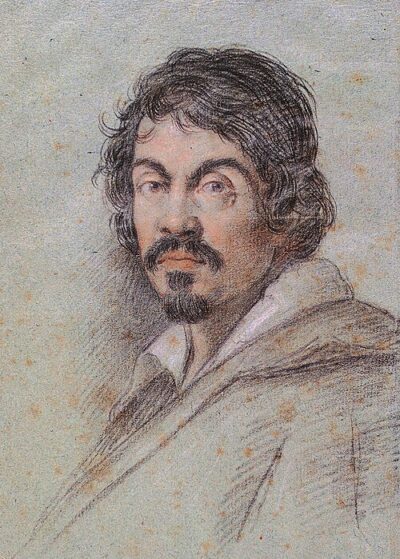
Caravaggio
Caravaggio was an Italian painter. Born September 29, 1571, in Milan. Died July 18, 1610, in Porto Ercole. Known for Supper at Emmaus, Amor Vincit Omnia and Medusa. Awards include Sovereign Military Order of Malta.
Facts
26 facts · 2 confirmed by two sources · 8 cited · 16 from one source
Where this comes from
Papalocal keeps its own record. It started from these sources; what each one said is kept here as it was copied, so a change on their side never changes this page by itself. Tap one to read its version.
What Wikidata says · copied November 16, 2026 · revision 2565950021
- Described as
- Italian painter (1571–1610)
- Other names
- Caravacci, Michel-Ange de Caravage, Michelangelo Caravagli, Michelangelo Caraveggio, Michelangelo di Caravaggio, Michelangelo Merisi da Carravaggio, Michael Angelo da Carravaggio, Michelangelo Caravaggi, Michel Caravaggi, Michael Angelo da Caravaggio, Amerighi Michelangelo da Caravaggio, Michel'Angelo dà Caravaggio
- Born
- September 29, 1571 · 3 references
- Died
- July 18, 1610 · 12 references
- Born in
- Milan · 4 references
- Died in
- Porto Ercole · 3 references
- Buried in
- Porto Ercole
- Name at birth
- Michelangelo Merisi · 1 reference
- Citizen of
- Duchy of Milan
- Occupation
- painter · 4 references
- Genre
- genre painting · 1 reference; religious painting · 1 reference; still life · 1 reference
- Known for
- Supper at Emmaus; Amor Vincit Omnia; Medusa · 1 reference; Basket of Fruit; The Fortune Teller; The Seven Works of Mercy; Self-Portrait as Bacchus; Bacchus; Annunciation; Judith Beheading Holofernes
- Awards
- Sovereign Military Order of Malta
- Field
- painting · 18 references
- Father
- Felipe duram
- Mother
- Lucia Aratori
- Religion
- Catholicism
- Wikipedias with a page
- 116
Wikidata item Q42207 (wikidata.org/wiki/Q42207), public domain (CC0). Copied November 16, 2026.
What Wikipedia says · copied November 16, 2026 · revision 1385171818
Michelangelo Merisi da Caravaggio (also Michele Angelo Merigi or Amerighi da Caravaggio; 29 September 1571 – 18 July 1610), known mononymously as Caravaggio, was an Italian painter active in Rome for a significant portion of his artistic life. He began his apprenticeship in Milan in 1584, and during the final four years of his life, he moved between Naples, Malta, and Sicily. His paintings have been characterized by art critics as combining a realistic observation of the human state, both physical and emotional, with a dramatic use of lighting, which had a formative influence on Baroque painting.
Caravaggio employed close physical observation with a dramatic use of chiaroscuro that came to be known as tenebrism. He made the technique a dominant stylistic element, transfixing subjects in bright shafts of light and darkening shadows. Caravaggio vividly expressed crucial moments and scenes, often featuring violent struggles, torture, and death. He worked rapidly with live models, preferring to forgo drawings and work directly on the canvas. His effect on the new Baroque style that emerged from Mannerism was profound. His influence can be seen directly or indirectly in the work of Peter Paul Rubens, Jusepe de Ribera, Gian Lorenzo Bernini, Velázquez and Rembrandt, as well as many lesser-known artists. Artists most deeply influenced by him were called the "Caravaggisti" (or "Caravagesques"), as well as tenebrists or tenebrosi ("shadowists").
Caravaggio trained as a painter in Milan before moving to Rome when he was in his twenties. He developed a considerable name as an artist and as a violent, touchy and provocative man. He killed Ranuccio Tomassoni in a brawl, which led to a death sentence for murder and forced him to flee to Naples. There he again established himself as one of the most prominent Italian painters of his generation. He travelled to Malta and on to Sicily in 1607 and pursued a papal pardon for his sentence. In 1609, he returned to Naples, where he was involved in a violent clash; his face was disfigured, and rumours of his death circulated. Questions about his mental state arose from his erratic and bizarre behavior. He died in 1610 under uncertain circumstances while on his way from Naples to Rome. Reports stated that he died of a fever, possibly due to wounds. Suggestions have been made that he was murdered or that he died of lead poisoning.
Caravaggio's innovations inspired Baroque painting, which often incorporated the drama of his chiaroscuro with a lesser degree of psychological disturbance. As style evolved and fashions changed, Caravaggio fell out of favor. In the 20th century, interest in his work was revived, and his importance to the development of Western art was reassessed. The 20th-century art historian André Berne-Joffroy stated: "What begins in the work of Caravaggio is, quite simply, modern painting."
- Born, in its opening lines
- September 29, 1571
- Died, in its opening lines
- July 18, 1610
From the Wikipedia article “Caravaggio” (en.wikipedia.org/wiki/Caravaggio), by its contributors, under CC BY-SA 4.0 (creativecommons.org/licenses/by-sa/4.0/). Copied November 16, 2026; not changed.
Confirmed Two sources agree. Cited One source, and it names where it got it. One source One source, without a reference of its own. Sources disagree The sources disagree. We show the best-supported value and keep theirs below.
