
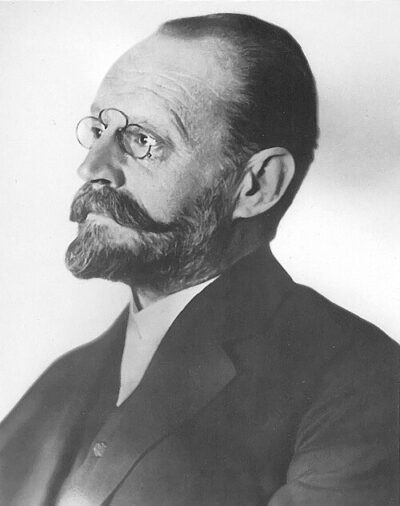
Carl Auer von Welsbach
Carl Auer von Welsbach was an Austrian scientist and inventor. Born September 1, 1858, in Vienna. Died August 4, 1929, in Mölbling. Educated at Heidelberg University. Awards include Werner von Siemens Ring, Elliott Cresson Medal and Wilhelm Exner Medal.
Facts
24 facts · 2 confirmed by two sources · 7 cited · 15 from one source
Where this comes from
Papalocal keeps its own record. It started from these sources; what each one said is kept here as it was copied, so a change on their side never changes this page by itself. Tap one to read its version.
What Wikidata says · copied November 16, 2026 · revision 2569029016
- Described as
- Austrian scientist and inventor (1858-1929)
- Other names
- Carl Auer, Freiherr von Welsbach, Freiherr Auer von Welsbach, Carl Freiherr Auer von Welsbach
- Born
- September 1, 1858 · 9 references
- Died
- August 4, 1929 · 8 references
- Born in
- Vienna · 3 references
- Died in
- Mölbling · 1 reference
- Buried in
- Hietzing Cemetery
- Citizen of
- Austria
- Occupation
- physicist; chemist · 2 references; inventor · 1 reference
- Worked for
- Heidelberg University · 1 reference
- Education
- Heidelberg University · 1 reference
- Member of
- Royal Swedish Academy of Sciences; Royal Prussian Academy of Sciences
- Awards
- Werner von Siemens Ring (1920); Elliott Cresson Medal (1900) · 1 reference; Wilhelm Exner Medal (1921) · 1 reference; National Inventors Hall of Fame (2011)
- Field
- chemistry · 1 reference; ferrocerium; gas mantle; neodymium; didymium; praseodymium
- Father
- Alois Auer · 1 reference
- Wikipedias with a page
- 34
Wikidata item Q89390 (wikidata.org/wiki/Q89390), public domain (CC0). Copied November 16, 2026.
What Wikipedia says · copied November 16, 2026 · revision 1371977692
Carl Auer von Welsbach (1 September 1858 – 4 August 1929), who received the Austrian noble title of Freiherr Auer von Welsbach in 1901, was an Austrian scientist and inventor, who separated didymium into the elements neodymium and praseodymium in 1885. He was also one of three scientists to independently discover the element lutetium (which he named cassiopeium), separating it from ytterbium in 1907, setting off the longest priority dispute in the history of chemistry.
He had a talent not only for making scientific advances, but also for turning them into commercially successful products. His work on rare-earth elements led to the development of the ferrocerium "flints" used in modern lighters, the gas mantle that brought light to the streets of Europe in the late 19th century, and the metal-filament light bulb. He took the phrase plus lucis, meaning "more light", as his motto.
- Born, in its opening lines
- September 1, 1858
- Died, in its opening lines
- August 4, 1929
From the Wikipedia article “Carl Auer von Welsbach” (en.wikipedia.org/wiki/Carl_Auer_von_Welsbach), by its contributors, under CC BY-SA 4.0 (creativecommons.org/licenses/by-sa/4.0/). Copied November 16, 2026; not changed.
Confirmed Two sources agree. Cited One source, and it names where it got it. One source One source, without a reference of its own. Sources disagree The sources disagree. We show the best-supported value and keep theirs below.
