
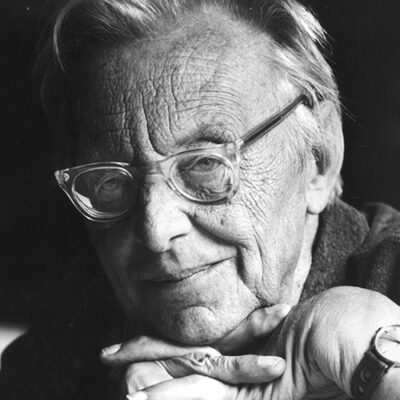
Carl Orff
Carl Orff was a German composer. Born July 10, 1895, in Munich. Died March 29, 1982, in Munich. Known for Die Kluge, Carmina Burana and Der Mond. Educated at University of Music and Theatre Munich and Wittelsbacher-Gymnasium München. Awards include Pour le Mérite for Sciences and Arts order, honorary citizen of Munich and Bavarian Order of Merit.
Facts
56 facts · 2 confirmed by two sources · 17 cited · 37 from one source
Where this comes from
Papalocal keeps its own record. It started from these sources; what each one said is kept here as it was copied, so a change on their side never changes this page by itself. Tap one to read its version.
What Wikidata says · copied November 16, 2026 · revision 2567483800
- Described as
- German composer (1895–1982)
- Other names
- Karl Orff
- Born
- July 10, 1895 · 17 references
- Died
- March 29, 1982 · 15 references
- Born in
- Munich · 3 references
- Died in
- Munich · 3 references
- Buried in
- Andechs Abbey · 1 reference
- Cause of death
- pancreatic cancer
- Citizen of
- German Reich; Germany · 1 reference
- Occupation
- composer · 2 references; musicologist; music educator; university teacher; music theorist · 1 reference; librettist · 1 reference; conductor · 1 reference; répétiteur · 1 reference
- Worked for
- University of Music and Theatre Munich; Mozarteum University Salzburg; Musikheim
- Education
- University of Music and Theatre Munich; Wittelsbacher-Gymnasium München; Ludwig Gymnasium Munich; Mozarteum University Salzburg
- Member of
- Bavarian Academy of Fine Arts
- Genre
- opera
- Instrument
- organ; piano; cello; percussion guitare; xylophone
- Known for
- Die Kluge; Carmina Burana; Der Mond; Catulli Carmina
- Awards
- Pour le Mérite for Sciences and Arts order; honorary citizen of Munich (1975); Bavarian Order of Merit; National Prize of East Germany; Great Cross with Star and Sash of the Order of Merit of the Federal Republic of Germany; Goethe Plaque of the City of Frankfurt (1965); Bavarian Maximilian Order for Science and Art (1981); Bayerischer Poetentaler (1965) · 1 reference; Austrian Decoration for Science and Art (1974); honorary doctor of the University of Munich; honorary doctor of the University of Tübingen; Pour le Mérite · 1 reference; Romano Guardini award (1974); honorary golden medal of the state capital Munich
- Spouse
- Liselotte Orff (1960–1982) · 1 reference; Luise Rinser (1954–1959) · 1 reference; Gertrud Orff (1939–1953) · 1 reference; Alice Solscher (1920–1927) · 1 reference
- Children
- Godela Büchtemann-Orff · 1 reference
- Father
- Heinrich Orff · 1 reference
- Mother
- Paula Köstler · 1 reference
- Lived in
- Gräfelfing · 1 reference
- Wikipedias with a page
- 63
Wikidata item Q44086 (wikidata.org/wiki/Q44086), public domain (CC0). Copied November 16, 2026.
What Wikipedia says · copied November 16, 2026 · revision 1384940746
Carl Heinrich Maria Orff (German: [kaʁl ˈʔɔʁf] ; 10 July 1895 – 29 March 1982) was a German composer and music educator who is best known for composing the cantata Carmina Burana and formulating concepts of his Schulwerk (lit. 'schoolwork'), which became influential for children's music education.
Born in Munich, Orff was raised in a military family that was scholarly and musical, and later attended the Munich Academy of Music. After composing a number of Lieder and other orchestral works, he completed his Carmina Burana for voices and large orchestra in 1936, setting poems from the medieval poetry collection of the same name. Its première was an immediate great success and Orff considered it the first time he had done exactly what he wanted, although he did not have his previous works destroyed as sometimes claimed. While the cantata was initially hampered by a small group of critics and officials, its popularity dramatically rose throughout and after World War II. Orff never received nearly as much recognition or attention for his later works, like the latter two parts of his triptych Trionfi, of which Carmina Burana is the first installment.
Orff was also an influential pedagogue who, along with colleagues like Gunild Keetman, developed an approach (the "Orff Schulwerk") to teaching children, which is a collection of fundamental principles to ensure every child learns music, much like a new language, in a comfortable environment. It involves tools like elementary forms of instruments and specifically composed music (the original form of the Schulwerk).
A member of the Reichsmusikkammer but not the Nazi Party, Orff's relationship with the Third Reich has been analysed by many as he was considerably successful (musically and financially) under its rule, and his work was well-liked by contemporary critics. Having concealed his part-Jewish ancestry throughout his life, Orff underwent denazification and was rated "'Grey C', acceptable" by psychiatrist Bertram Schaffner, who characterized him as a passive anti-Nazi. He was granted an unrestricted license with no further prohibitions from public musical activities, and continued to compose stage works and rework previous compositions until his death in 1982.
- Born, in its opening lines
- July 10, 1895
- Died, in its opening lines
- March 29, 1982
From the Wikipedia article “Carl Orff” (en.wikipedia.org/wiki/Carl_Orff), by its contributors, under CC BY-SA 4.0 (creativecommons.org/licenses/by-sa/4.0/). Copied November 16, 2026; not changed.
Confirmed Two sources agree. Cited One source, and it names where it got it. One source One source, without a reference of its own. Sources disagree The sources disagree. We show the best-supported value and keep theirs below.
