
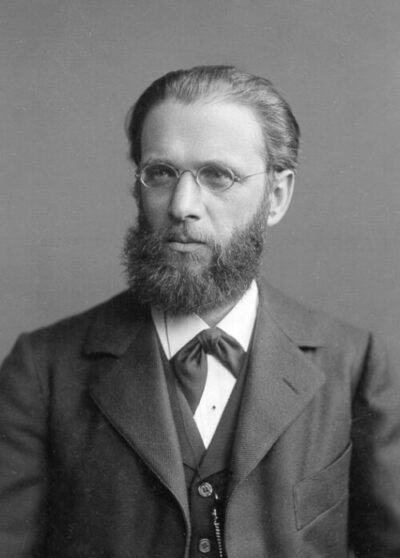
Carl Stumpf
Carl Stumpf was a German philosopher. Born April 21, 1848, in Wiesentheid. Died December 25, 1936, in Berlin. Educated at University of Göttingen. Awards include Pour le Mérite for Sciences and Arts order.
Facts
24 facts · 2 confirmed by two sources · 6 cited · 16 from one source
Where this comes from
Papalocal keeps its own record. It started from these sources; what each one said is kept here as it was copied, so a change on their side never changes this page by itself. Tap one to read its version.
What Wikidata says · copied November 16, 2026 · revision 2568994411
- Described as
- German philosopher (1848–1936)
- Other names
- Friedrich Carl Stumpf
- Born
- April 21, 1848 · 8 references
- Died
- December 25, 1936 · 9 references
- Born in
- Wiesentheid · 1 reference
- Died in
- Berlin · 1 reference
- Buried in
- Parkfriedhof Lichterfelde · 1 reference
- Citizen of
- Germany
- Occupation
- philosopher · 1 reference; psychologist · 1 reference; musicologist · 1 reference; music theorist; ethnomusicologist; university teacher
- Worked for
- LMU Munich; University of Würzburg; University of Göttingen; Martin Luther University Halle-Wittenberg; Charles University; Humboldt-Universität zu Berlin · 1 reference
- Education
- University of Göttingen
- Member of
- Bavarian Academy of Sciences and Humanities; Royal Prussian Academy of Sciences; National Academy of Sciences (1927–); Accademia Nazionale dei Lincei (1923–) · 1 reference
- Awards
- Pour le Mérite for Sciences and Arts order (1929)
- Wikipedias with a page
- 33
Wikidata item Q57497 (wikidata.org/wiki/Q57497), public domain (CC0). Copied November 16, 2026.
What Wikipedia says · copied November 16, 2026 · revision 1385945024
Carl Stumpf (German: [ʃtʊmpf]; 21 April 1848 – 25 December 1936) was a German philosopher, psychologist and musicologist. He is noted for founding the Berlin school of experimental psychology.
He studied with Franz Brentano at the University of Würzburg before receiving his doctorate at the University of Göttingen in 1868. He also tutored the modernist literature writer Robert Musil at the University of Berlin, and worked with Hermann Lotze, who is famous for his work in perception, at Göttingen. Stumpf is known for his work on the psychology of tones. He had an important influence on his students Wolfgang Köhler and Kurt Koffka who were instrumental in the founding of Gestalt psychology as well as Kurt Lewin, who was also a part of the Gestalt group and was key in the establishment of experimental social psychology in America.
Stumpf is considered one of the pioneers of comparative musicology and ethnomusicology, as documented in his study of the origins of human musical cognition The Origins of Music (1911). He held positions in the philosophy departments at the Universities of Göttingen, Würzburg, Prague, Munich and Halle, before obtaining a professorship at the University of Berlin.
- Born, in its opening lines
- April 21, 1848
- Died, in its opening lines
- December 25, 1936
From the Wikipedia article “Carl Stumpf” (en.wikipedia.org/wiki/Carl_Stumpf), by its contributors, under CC BY-SA 4.0 (creativecommons.org/licenses/by-sa/4.0/). Copied November 16, 2026; not changed.
Confirmed Two sources agree. Cited One source, and it names where it got it. One source One source, without a reference of its own. Sources disagree The sources disagree. We show the best-supported value and keep theirs below.
