
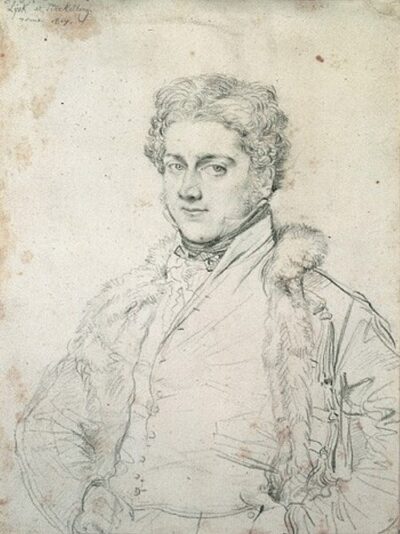
Charles Robert Cockerell
Charles Robert Cockerell was an English architect, archaeologist, and writer. Born April 27, 1788, in London. Died September 17, 1863, in London. Positions held include Surveyor of the Fabric of St Paul's Cathedral (1819–1852) and President of the Royal Institute of British Architects (1860–1861). Known for Ashmolean Museum and Fitzwilliam Museum. Educated at Westminster School. Awards include Royal Gold Medal.
Facts
27 facts · 2 confirmed by two sources · 11 cited · 14 from one source
Where this comes from
Papalocal keeps its own record. It started from these sources; what each one said is kept here as it was copied, so a change on their side never changes this page by itself. Tap one to read its version.
What Wikidata says · copied November 18, 2026 · revision 2567378552
- Described as
- English architect, archaeologist, and writer (1788–1863)
- Other names
- C. R. Cockerell
- Born
- April 27, 1788 · 6 references
- Died
- September 17, 1863 · 8 references
- Born in
- London · 1 reference
- Died in
- London · 1 reference
- Citizen of
- United Kingdom of Great Britain and Ireland
- Occupation
- anthropologist; architect · 2 references; art historian · 2 references; archaeologist · 1 reference
- Positions held
- Surveyor of the Fabric of St Paul's Cathedral (1819–1852); President of the Royal Institute of British Architects (1860–1861)
- Education
- Westminster School
- Member of
- German Archaeological Institute; Royal Academy of Arts; Travellers Club; Accademia delle Arti del Disegno; Académie des beaux-arts
- Known for
- Ashmolean Museum · 1 reference; Fitzwilliam Museum · 1 reference
- Awards
- Royal Gold Medal (1848)
- Spouse
- Anna Rennie · 1 reference
- Children
- Frederick Pepys Cockerell · 1 reference; Samuel Pepys Cockerell
- Father
- Samuel Pepys Cockerell · 1 reference
- Mother
- Anne Wetham · 1 reference
- Siblings
- Anne Cockerell · 1 reference; Richard Howe Cockerell · 1 reference
- Wikipedias with a page
- 23
Wikidata item Q567735 (wikidata.org/wiki/Q567735), public domain (CC0). Copied November 18, 2026.
What Wikipedia says · copied November 18, 2026 · revision 1358372846
Charles Robert Cockerell (27 April 1788 – 17 September 1863) was an English architect, archaeologist and writer. He studied architecture under Robert Smirke and embarked on an extended Grand Tour lasting seven years, mainly in Greece. After returning to London he established a successful architectural practice. Appointed Professor of Architecture at the Royal Academy of Arts, he served between 1839 and 1859. Cockerell wrote widely on archaeology and architecture, and in 1848 became the first recipient of the Royal Gold Medal.
While travelling in Greece he took part in the 1811 removal of the Temple of Aphaia’s pedimental sculptures on Aegina and the 1812 removal of the Bassae frieze, actions later described as plunder and antiquities smuggling. The Aphaia marbles were later acquired by Crown Prince Ludwig of Bavaria for the Glyptothek in Munich, and the Bassae frieze was purchased by the British Museum at a London auction in 1815.
- Born, in its opening lines
- April 27, 1788
- Died, in its opening lines
- September 17, 1863
From the Wikipedia article “Charles Robert Cockerell” (en.wikipedia.org/wiki/Charles_Robert_Cockerell), by its contributors, under CC BY-SA 4.0 (creativecommons.org/licenses/by-sa/4.0/). Copied November 18, 2026; not changed.
Confirmed Two sources agree. Cited One source, and it names where it got it. One source One source, without a reference of its own. Sources disagree The sources disagree. We show the best-supported value and keep theirs below.
