
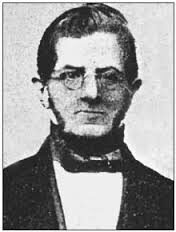
Constantin Wilhelm Lambert Gloger
Constantin Wilhelm Lambert Gloger was a German zoologist and ornithologist. Born September 17, 1803, in Jaszów. Died December 30, 1863, in Berlin. Educated at University of Wrocław.
Facts
17 facts · 2 confirmed by two sources · 8 cited · 7 from one source
Where this comes from
Papalocal keeps its own record. It started from these sources; what each one said is kept here as it was copied, so a change on their side never changes this page by itself. Tap one to read its version.
What Wikidata says · copied November 17, 2026 · revision 2568888688
- Described as
- German zoologist and ornithologist (1803-1863)
- Other names
- Gloger, Constantin Lambert Gloger, C. W. L. Gloger
- Born
- September 17, 1803 · 1 reference
- Died
- December 30, 1863 · 1 reference
- Born in
- Jaszów
- Died in
- Berlin · 1 reference
- Citizen of
- Kingdom of Prussia
- Occupation
- ornithologist · 1 reference; zoologist · 1 reference; naturalist · 1 reference; editor; teacher
- Worked for
- Museum für Naturkunde - Leibniz Institute for Evolution and Biodiversity Science · 1 reference
- Education
- University of Wrocław · 1 reference
- Member of
- German Academy of Sciences Leopoldina (1830–) · 1 reference; Silesian Society for the Culture of the Fatherland
- Field
- zoology · 1 reference; ornithology · 1 reference; natural science · 1 reference
- Wikipedias with a page
- 27
Wikidata item Q63174 (wikidata.org/wiki/Q63174), public domain (CC0). Copied November 17, 2026.
What Wikipedia says · copied November 17, 2026 · revision 1178196816
Constantin Wilhelm Lambert Gloger (17 September 1803 near Grottkau, Silesia, Kingdom of Prussia – 30 December 1863 in Berlin) was a German zoologist and ornithologist.
Gloger was the first person to recognise the structural differences between swallows and swifts, and also the first to put up artificial bat boxes.
He was the originator of what is now known as Gloger's rule, which states that dark pigments increase in races of animals (birds were the examples in which he originally noticed the pattern) living in warm and humid habitats. He put forward this theory in his Das Abändern der Vögel durch Einfluss des Klimas (1833). The exact way this pattern is actually caused is still unclear, but in birds it has been suggested that darker pigmented plumage provides protection against feather-degrading bacteria, whose activity is greater in warm and humid regions. His other works include Gemeinnütziges Hand- und Hilfsbuch der Naturgeschichte (1841).
- Born, in its opening lines
- September 17, 1803
- Died, in its opening lines
- December 30, 1863
From the Wikipedia article “C. L. Gloger” (en.wikipedia.org/wiki/C._L._Gloger), by its contributors, under CC BY-SA 4.0 (creativecommons.org/licenses/by-sa/4.0/). Copied November 17, 2026; not changed.
Confirmed Two sources agree. Cited One source, and it names where it got it. One source One source, without a reference of its own. Sources disagree The sources disagree. We show the best-supported value and keep theirs below.
