
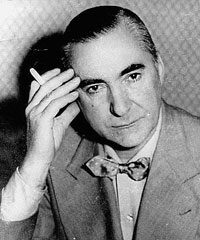
Curzio Malaparte
Curzio Malaparte was an Italian writer. Born June 9, 1898, in Prato. Died July 19, 1957, in Rome. Educated at Sapienza University of Rome and Convitto Nazionale Cicognini. Awards include War Cross for Military Valour.
Facts
24 facts · 2 confirmed by two sources · 12 cited · 10 from one source
Where this comes from
Papalocal keeps its own record. It started from these sources; what each one said is kept here as it was copied, so a change on their side never changes this page by itself. Tap one to read its version.
What Wikidata says · copied November 16, 2026 · revision 2557848190
- Described as
- Italian writer (1898-1957)
- Other names
- Ḳurts'yo Malaparṭeh, Kurt Erich Suckert, Curzio Suckert
- Born
- June 9, 1898 · 7 references
- Died
- July 19, 1957 · 8 references
- Born in
- Prato · 3 references
- Died in
- Rome · 4 references
- Cause of death
- lung cancer
- Name at birth
- Kurt Erich Suckert
- Citizen of
- Italy (1946–) · 1 reference; Kingdom of Italy (–1946) · 1 reference
- Occupation
- film director · 1 reference; screenwriter; journalist · 3 references; diplomat · 2 references; writer · 3 references; war correspondent; novelist; essayist · 1 reference
- Political party
- National Fascist Party
- Education
- Sapienza University of Rome · 1 reference; Convitto Nazionale Cicognini
- Awards
- War Cross for Military Valour · 1 reference
- Field
- literary activity · 1 reference; journalism · 1 reference; opinion journalism · 1 reference
- Military branch
- Foreign Legion · 1 reference
- Wikipedias with a page
- 53
Wikidata item Q312637 (wikidata.org/wiki/Q312637), public domain (CC0). Copied November 16, 2026.
What Wikipedia says · copied November 16, 2026 · revision 1381682376
Curzio Malaparte (Italian: [ˈkurtsjo malaˈparte]; born Kurt Erich Suckert; 9 June 1898 – 19 July 1957) was an Italian writer, filmmaker, war correspondent and diplomat. Malaparte is best known outside Italy for his works Kaputt (1944) and The Skin (1949). The former is a semi-fictionalised account of the Eastern Front during the Second World War and the latter is an account focusing on morality in the immediate post-war period of Naples (it was placed on the Index Librorum Prohibitorum).
During the 1920s, Malaparte was one of the intellectuals who supported the rise of Italian fascism and Benito Mussolini, through the magazine 900. Despite this, Malaparte had a complex relationship with the National Fascist Party and was stripped of membership in 1933 for his independent streak. Arrested numerous times, he had Casa Malaparte created in Capri where he lived under house arrest. After the Second World War, he became a filmmaker and moved closer to both Togliatti's Italian Communist Party and the Catholic Church (though once a staunch atheist), reputedly becoming a member of both before his death.
- Born, in its opening lines
- June 9, 1898
- Died, in its opening lines
- July 19, 1957
From the Wikipedia article “Curzio Malaparte” (en.wikipedia.org/wiki/Curzio_Malaparte), by its contributors, under CC BY-SA 4.0 (creativecommons.org/licenses/by-sa/4.0/). Copied November 16, 2026; not changed.
Confirmed Two sources agree. Cited One source, and it names where it got it. One source One source, without a reference of its own. Sources disagree The sources disagree. We show the best-supported value and keep theirs below.
