
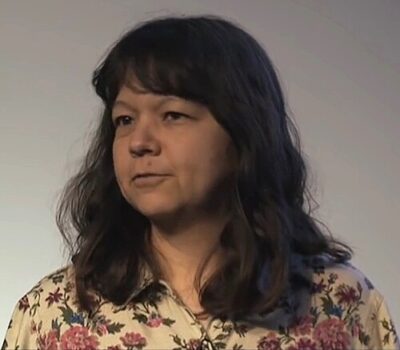
Deborah S. Jin
Deborah S. Jin was an American physicist. Born November 15, 1968, in Stanford. Died September 15, 2016, in Boulder. Educated at Princeton University and University of Chicago. Awards include MacArthur Fellows Program, L'Oréal-UNESCO Award For Women in Science and William Procter Prize for Scientific Achievement.
Facts
36 facts · 2 confirmed by two sources · 22 cited · 12 from one source
Where this comes from
Papalocal keeps its own record. It started from these sources; what each one said is kept here as it was copied, so a change on their side never changes this page by itself. Tap one to read its version.
What Wikidata says · copied November 16, 2026 · revision 2512673732
- Described as
- American physicist (1968–2016)
- Other names
- Deborah Jin, Deborah S Jin, Deborah Shiu-lan Jin
- Born
- November 15, 1968 · 2 references
- Died
- September 15, 2016 · 3 references
- Born in
- Stanford · 1 reference
- Died in
- Boulder · 2 references
- Cause of death
- cancer
- Citizen of
- United States
- Occupation
- physicist · 1 reference; university teacher
- Worked for
- University of Colorado Boulder · 1 reference; JILA (1995–2016) · 1 reference
- Education
- Princeton University (–1990); University of Chicago (–1995) · 1 reference
- Member of
- National Academy of Sciences (2005–) · 2 references; American Academy of Arts and Sciences; National Institute of Standards and Technology; JILA (1997–); The Jin Group (1997–)
- Awards
- MacArthur Fellows Program (2003) · 1 reference; L'Oréal-UNESCO Award For Women in Science (2013) · 1 reference; William Procter Prize for Scientific Achievement (2009) · 1 reference; Isaac Newton Medal (2014) · 1 reference; Benjamin Franklin Medal (2008) · 1 reference; Maria Goeppert-Mayer Award (2002) · 1 reference; Presidential Early Career Award for Scientists and Engineers (2000) · 1 reference; I. I. Rabi Prize (2005) · 1 reference; Comstock Prize in Physics (2014) · 1 reference; Fellow of the American Academy of Arts and Sciences · 1 reference; Research Leader of the Year (2004); Clarivate Citation Laureates (2015) · 1 reference; Samuel Wesley Stratton Award (2001) · 1 reference; William O. Baker Award for Initiatives in Research (2002) · 1 reference; Fellow of the American Association for the Advancement of Science (2006) · 1 reference
- Field
- physics
- Spouse
- John L. Bohn (–2016) · 1 reference
- Lived in
- Indian Harbour Beach · 1 reference
- Website
- https://jila.colorado.edu/taxonomy/term/19
- Wikipedias with a page
- 24
Wikidata item Q1181574 (wikidata.org/wiki/Q1181574), public domain (CC0). Copied November 16, 2026.
What Wikipedia says · copied November 16, 2026 · revision 1372409466
Deborah Shiu-lan Jin (Chinese: 金秀兰; pinyin: Jīn Xiùlán; November 15, 1968 – September 15, 2016) was an American physicist and fellow with the National Institute of Standards and Technology (NIST); Professor Adjunct, Department of Physics at the University of Colorado; and a fellow of the JILA, a NIST joint laboratory with the University of Colorado.
She was considered a pioneer in polar molecular quantum chemistry. From 1995 to 1997 she worked with Eric Cornell and Carl Wieman at JILA, where she was involved in some of the earliest studies of dilute gas Bose-Einstein condensates. In 2003 Jin's team at JILA made the first fermionic condensate, a new form of matter. She used magnetic traps and lasers to cool fermionic atomic gases to less than 100 billionths of a degree above zero, successfully demonstrating quantum degeneracy and the formation of a molecular Bose-Einstein condensate. Jin was frequently mentioned as a strong candidate for the Nobel Prize in Physics. In 2002, Discover magazine recognized her as one of the 50 most important women in science.
- Born, in its opening lines
- November 15, 1968
- Died, in its opening lines
- September 15, 2016
From the Wikipedia article “Deborah S. Jin” (en.wikipedia.org/wiki/Deborah_S._Jin), by its contributors, under CC BY-SA 4.0 (creativecommons.org/licenses/by-sa/4.0/). Copied November 16, 2026; not changed.
Confirmed Two sources agree. Cited One source, and it names where it got it. One source One source, without a reference of its own. Sources disagree The sources disagree. We show the best-supported value and keep theirs below.
