
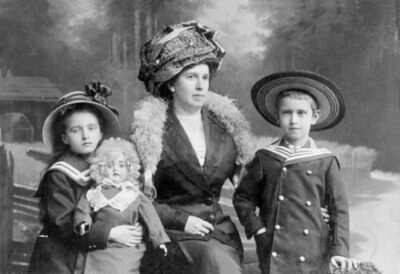
Dmitry Borisovich Kabalevsky
Dmitry Borisovich Kabalevsky was a composer, conductor (music), pianist, music teacher. Born December 17, 1904, in Saint Petersburg. Died February 14, 1987, in Moscow. Positions held include deputy of the Supreme Soviet of the Soviet Union (1966–1987). Known for Piano Concerto No. 3. Educated at Moscow Conservatory and Academic Music College of the Moscow Conservatory. Awards include Stalin Prize, USSR State Prize and Order of Lenin.
Facts
49 facts · 1 confirmed by two sources · 6 cited · 41 from one source · 1 where the sources disagree
What’s different
- Born: we show December 17, 1904 (Sources disagree). Wikipedia says December 30, 1904
Where this comes from
Papalocal keeps its own record. It started from these sources; what each one said is kept here as it was copied, so a change on their side never changes this page by itself. Tap one to read its version.
What Wikidata says · copied November 16, 2026 · revision 2557854976
- Described as
- composer, conductor (music), pianist, music teacher
- Other names
- Dmitry Kabalevsky, Dmitri Borísovich Kabalievski, Kabalevsky, Dmitri M. Kabelevsky, D. Kabalewsky, Dmitri Kabalewski, Dmitri M. Kabalewskij, Dmitriĭ Borisovich Kabalevskiĭ, Dmitrij Kabalevskij, D. Kabalevskiĭ, D. Kabalevsky, Dimitry Kabalevsky
- Born
- December 17, 1904 · 5 references
- Died
- February 14, 1987 · 3 references
- Born in
- Saint Petersburg · 3 references
- Died in
- Moscow · 2 references
- Buried in
- Novodevichy Cemetery
- Citizen of
- Russian Empire; Russian Socialist Federative Soviet Republic; Soviet Union
- Occupation
- classical composer; conductor · 1 reference; choreographer; musicologist; music educator; university teacher; pianist · 1 reference; film score composer
- Positions held
- deputy of the Supreme Soviet of the Soviet Union (1966–1987)
- Political party
- Communist Party of the Soviet Union
- Worked for
- Moscow Conservatory
- Education
- Moscow Conservatory; Academic Music College of the Moscow Conservatory
- Member of
- Union of Soviet Composers; Academy of Arts of the GDR
- Genre
- opera; symphony; classical music; chamber music · 1 reference; incidental music · 1 reference; 20th-century classical music
- Instrument
- piano
- Known for
- Piano Concerto No. 3
- Awards
- Stalin Prize; USSR State Prize; Order of Lenin; Hero of Socialist Labour (1974); Order of the Badge of Honour; People's Artist of the USSR; Order of the Patriotic War, 1st class; Medal "For Valiant Labour in the Great Patriotic War 1941–1945"; Order of the Red Banner of Labour; Lenin Komsomol Prize; People's Artist of the RSFSR; Honored Artist of the RSFSR; Lenin Prize; Honored art worker of the Russian Soviet Federative Socialist Republic; Medal "In Commemoration of the 800th Anniversary of Moscow"
- Field
- music composing; conducting
- Website
- http://www.kabalevsky.ru
- Wikipedias with a page
- 51
Wikidata item Q153776 (wikidata.org/wiki/Q153776), public domain (CC0). Copied November 16, 2026.
What Wikipedia says · copied November 16, 2026 · revision 1376530804
Dmitry Borisovich Kabalevsky (Russian: Дми́трий Бори́сович Кабале́вский ; 30 December [O.S. 17 December] 1904 – 14 February 1987) was a Soviet composer, conductor, pianist and pedagogue of Russian gentry descent.
He helped set up the Union of Soviet Composers in Moscow and remained one of its leading figures during his lifetime. He was a prolific composer of piano music and chamber music; many of his piano works were performed by Vladimir Horowitz. He is best known in Western Europe for his Second Symphony; the "Comedians' Galop" from The Comedians Suite, Op. 26; and his Third Piano Concerto.
- Born, in its opening lines
- December 30, 1904
- Died, in its opening lines
- February 14, 1987
From the Wikipedia article “Dmitry Kabalevsky” (en.wikipedia.org/wiki/Dmitry_Kabalevsky), by its contributors, under CC BY-SA 4.0 (creativecommons.org/licenses/by-sa/4.0/). Copied November 16, 2026; not changed.
Confirmed Two sources agree. Cited One source, and it names where it got it. One source One source, without a reference of its own. Sources disagree The sources disagree. We show the best-supported value and keep theirs below.
