
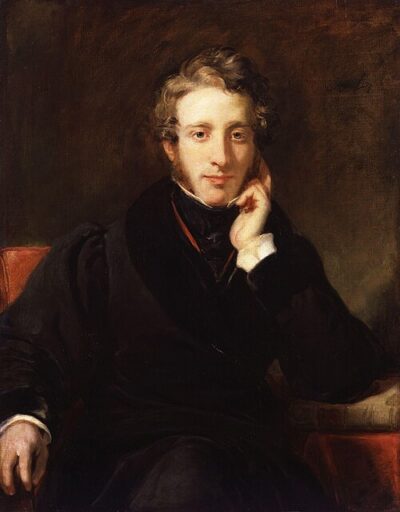
Edward Bulwer-Lytton
Edward Bulwer-Lytton was a British statesman and author. Born May 25, 1803, in London. Died January 18, 1873, in Torquay. Positions held include Secretary of State for the Colonies (1858–1859), member of the 19th Parliament of the United Kingdom (1865–1866) and member of the 18th Parliament of the United Kingdom (1859–1865). Known for Pelham, Godolphin and The Last Days of Pompeii. Educated at Trinity College and Trinity Hall. Awards include Chancellor's Gold Medal.
Facts
53 facts · 2 confirmed by two sources · 24 cited · 27 from one source
Where this comes from
Papalocal keeps its own record. It started from these sources; what each one said is kept here as it was copied, so a change on their side never changes this page by itself. Tap one to read its version.
What Wikidata says · copied November 16, 2026 · revision 2567814286
- Described as
- British statesman and author (1803–1873)
- Other names
- Owen Meredith, Edward Bulwer Lytton, Edward George Earle, 1st Baron Lytton Bulwer-Lytton, Edward George Earle Lytton Bulwer, Pisistratus Caxton, George Edward Bulwer, Lord Lytton, Edward Bulwer-Lytton, 1st Baron Lytton, E. G. L. B., Baron Edward Bulwer Lytton, Lord Lytton
- Born
- May 25, 1803 · 15 references
- Died
- January 18, 1873 · 16 references
- Born in
- London · 5 references
- Died in
- Torquay · 4 references
- Buried in
- Westminster Abbey
- Name at birth
- Edward George Earle Lytton Bulwer-Lytton
- Citizen of
- United Kingdom of Great Britain and Ireland
- Occupation
- playwright · 1 reference; writer · 5 references; politician · 2 references; novelist · 1 reference; poet; literary critic; science fiction writer; prose writer · 1 reference
- Positions held
- Secretary of State for the Colonies (1858–1859); member of the 19th Parliament of the United Kingdom (1865–1866) · 2 references; member of the 18th Parliament of the United Kingdom (1859–1865) · 2 references; member of the 17th Parliament of the United Kingdom (1857–1859) · 2 references; member of the 16th Parliament of the United Kingdom (1852–1857) · 2 references; member of the 13th Parliament of the United Kingdom (1837–1841) · 2 references; member of the 12th Parliament of the United Kingdom (1835–1837) · 2 references; member of the 11th Parliament of the United Kingdom (1832–1834) · 2 references; member of the House of Lords (1866–1873) · 1 reference; member of the 10th Parliament of the United Kingdom (1831–1832) · 1 reference
- Political party
- Whigs
- Education
- Trinity College; Trinity Hall
- Member of
- Freemasonry; Rosicrucianism
- Genre
- horror literature; historical fiction
- Known for
- Pelham; Godolphin; The Last Days of Pompeii; Rienzi; The Coming Race; Ernest Maltravers; Paul Clifford; Leila: or The Siege of Granada; Eugene Aram; The Last of the Barons
- Awards
- Chancellor's Gold Medal
- Field
- creative and professional writing · 1 reference; politics · 1 reference; literature · 1 reference
- Spouse
- Rosina Bulwer Lytton (1827–) · 3 references
- Children
- Robert Bulwer-Lytton, 1st Earl of Lytton · 2 references; Emily Bulwer-Lytton · 3 references
- Father
- William Earle Bulwer · 1 reference
- Mother
- Elizabeth Barbara Lytton · 1 reference
- Siblings
- Henry Bulwer, 1st Baron Dalling and Bulwer · 1 reference; William Earle Lytton Bulwer · 1 reference
- Wikipedias with a page
- 72
Wikidata item Q318462 (wikidata.org/wiki/Q318462), public domain (CC0). Copied November 16, 2026.
What Wikipedia says · copied November 16, 2026 · revision 1384838076
Edward George Earle Lytton Bulwer-Lytton, 1st Baron Lytton (; 25 May 1803 – 18 January 1873) was an English writer and politician. He served as a Whig member of Parliament from 1831 to 1841 and a Conservative from 1851 to 1866. He was Secretary of State for the Colonies from June 1858 to June 1859, as which he selected Richard Clement Moody to found British Columbia. He was created Baron Lytton of Knebworth in 1866.
Bulwer-Lytton's works were well known in his time. He coined famous phrases like "pursuit of the almighty dollar", "the pen is mightier than the sword", "dweller on the threshold", "the great unwashed", and the opening phrase (incipit) "It was a dark and stormy night". The sardonic Bulwer-Lytton Fiction Contest, held annually from 1982 to 2024, claimed to seek the "opening sentence of the worst of all possible novels".
- Born, in its opening lines
- May 25, 1803
- Died, in its opening lines
- January 18, 1873
From the Wikipedia article “Edward Bulwer-Lytton” (en.wikipedia.org/wiki/Edward_Bulwer-Lytton), by its contributors, under CC BY-SA 4.0 (creativecommons.org/licenses/by-sa/4.0/). Copied November 16, 2026; not changed.
Confirmed Two sources agree. Cited One source, and it names where it got it. One source One source, without a reference of its own. Sources disagree The sources disagree. We show the best-supported value and keep theirs below.
