
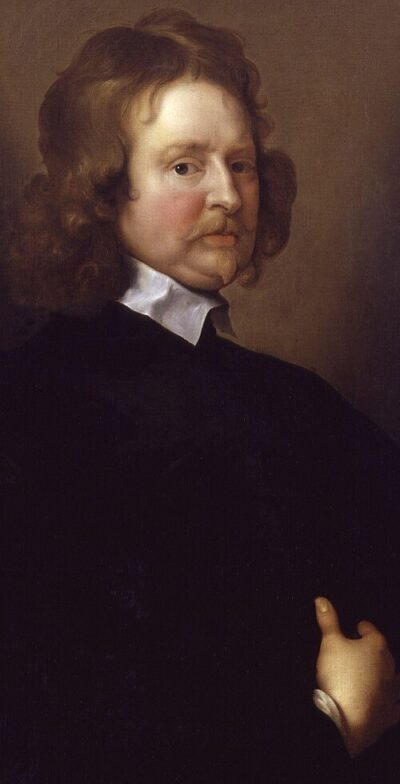
Edward Hyde, 1st Earl of Clarendon
Edward Hyde, 1st Earl of Clarendon was an English politician and historian. Born February 18, 1609, in London. Died December 9, 1674, in Rouen. Positions held include Member of Parliament in the Parliament of England, Lord Chancellor (1658–1667) and Chancellor of the Exchequer (1643–1646). Educated at Magdalen Hall and Gillingham School. Awards include Fellow of the Royal Society and Knight Bachelor.
Facts
35 facts · 2 confirmed by two sources · 10 cited · 23 from one source
Where this comes from
Papalocal keeps its own record. It started from these sources; what each one said is kept here as it was copied, so a change on their side never changes this page by itself. Tap one to read its version.
What Wikidata says · copied November 17, 2026 · revision 2569253720
- Described as
- English politician and historian (1609-1674)
- Other names
- Edward Hyde, Earl of Clarendon, Earl of Clarendon Edward Hyde, Edward, 1st Earl of Clarendon Hyde, Edward Hyde, Lord Clarendon
- Born
- February 18, 1609 · 10 references
- Died
- December 9, 1674 · 3 references
- Born in
- London
- Died in
- Rouen · 2 references
- Buried in
- Westminster Abbey
- Citizen of
- Kingdom of England
- Occupation
- historian · 1 reference; politician · 1 reference; judge; writer · 1 reference
- Positions held
- Member of Parliament in the Parliament of England; Lord Chancellor (1658–1667); Chancellor of the Exchequer (1643–1646); Chancellor of the University of Oxford (1660–1667); Lord Lieutenant of Oxfordshire (1663–1668); Member of the April 1640 Parliament; Member of the 1640-42 Parliament; Lord Lieutenant of Wiltshire (1667–1668)
- Political party
- Tories · 1 reference
- Education
- Magdalen Hall; Gillingham School; Middle Temple
- Member of
- Royal Society of London (1665–); Short Parliament
- Awards
- Fellow of the Royal Society; Knight Bachelor
- Spouse
- Frances Hyde, Countess of Clarendon (1634–) · 2 references; Ann Ayliffe · 1 reference
- Children
- Anne, Duchess of York · 1 reference; Henry Hyde, 2nd Earl of Clarendon · 1 reference; Laurence Hyde, 1st Earl of Rochester · 1 reference; Edward Hyde; Frances Hyde · 1 reference
- Father
- Henry Hyde
- Mother
- Mary Langford
- Wikipedias with a page
- 28
Wikidata item Q335173 (wikidata.org/wiki/Q335173), public domain (CC0). Copied November 17, 2026.
What Wikipedia says · copied November 17, 2026 · revision 1384450960
Edward Hyde, 1st Earl of Clarendon (18 February 1609 – 9 December 1674) was an English statesman, lawyer, diplomat and historian who served as chief adviser to Charles I during the First English Civil War, and Lord Chancellor to Charles II from 1660 to 1667.
Hyde largely avoided involvement in the political disputes of the 1630s until elected to the Long Parliament in November 1640. Like many moderates he felt attempts by Charles I to rule without Parliament had gone too far, but by 1642 felt Parliament's leaders were, in turn, seeking too much power. A devout believer in an Episcopalian Church of England, his opposition to Puritan attempts to reform it drove much of his policy over the next two decades. He joined Charles in York shortly before the First English Civil War began in August 1642, and initially served as his senior political advisor. However, as the war turned against the Royalists, his rejection of attempts to build alliances with Scots Covenanters or Irish Catholics led to a decline in his influence.
In 1644, the King's son, the future Charles II, was placed in command of the West Country, with Hyde and his close friend Sir Ralph Hopton as part of his Governing Council. When the Royalists surrendered in June 1646, Hyde went into exile with the younger Charles, who (from the royalist perspective) became king after his father's execution in January 1649. Hyde avoided participation in the Second or Third English Civil War, for both involved alliances with Scots and English Presbyterians; instead he served as a diplomat in Paris and Madrid. After the Restoration in 1660, Charles II appointed him Lord Chancellor and Earl of Clarendon, while Hyde's daughter Anne married the future James II, making him grandfather of two queens regnant, Mary II and Anne.
Lord Clarendon's links to the King brought him both power and enemies, while Charles became increasingly irritated by his criticism. Despite having limited responsibility for the disastrous Second Anglo-Dutch War (1665–1667), Clarendon was charged with treason and forced into permanent exile. He lived in continental Europe until his death in 1674; during this period he completed The History of the Rebellion, now regarded as one of the most significant histories of the 1642-to-1646 civil war. First written as a defence of Charles I, it was extensively revised after 1667 and became far more critical and franker, particularly in its assessments of his contemporaries.
- Born, in its opening lines
- February 18, 1609
- Died, in its opening lines
- December 9, 1674
From the Wikipedia article “Edward Hyde, 1st Earl of Clarendon” (en.wikipedia.org/wiki/Edward_Hyde,_1st_Earl_of_Clarendon), by its contributors, under CC BY-SA 4.0 (creativecommons.org/licenses/by-sa/4.0/). Copied November 17, 2026; not changed.
Confirmed Two sources agree. Cited One source, and it names where it got it. One source One source, without a reference of its own. Sources disagree The sources disagree. We show the best-supported value and keep theirs below.
