
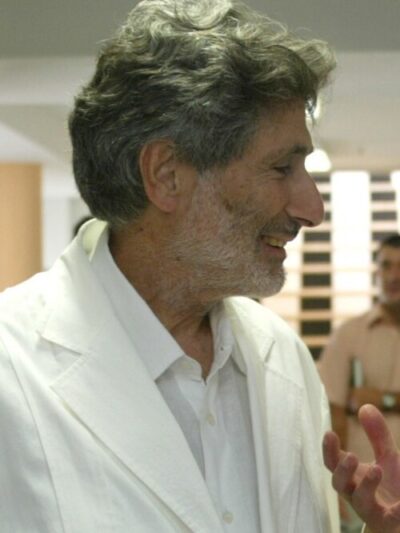
Edward Said
Edward Said was a Palestinian-American professor. Born November 1, 1935, in Jerusalem. Died September 24, 2003, in New York City. Known for Orientalism. Educated at Harvard University and Princeton University. Awards include Guggenheim Fellowship, Princess of Asturias Award for Concord and American Book Awards.
Facts
39 facts · 2 confirmed by two sources · 5 cited · 32 from one source
What’s different
- Died: we show September 24, 2003 (Confirmed). Wikidata also lists September 25, 2003
Where this comes from
Papalocal keeps its own record. It started from these sources; what each one said is kept here as it was copied, so a change on their side never changes this page by itself. Tap one to read its version.
What Wikidata says · copied November 13, 2026 · revision 2562921525
- Described as
- Palestinian-American professor (1935–2003)
- Other names
- Edward Wadie Said
- Born
- November 1, 1935 · 8 references
- Died
- September 25, 2003 · 4 references; September 24, 2003 · 3 references
- Born in
- Jerusalem · 1 reference
- Died in
- New York City · 2 references
- Cause of death
- leukemia
- Citizen of
- United States; Mandatory Palestine
- Occupation
- writer; literary critic; journalist; philosopher · 1 reference; musicologist · 1 reference; political scientist · 1 reference; translator; researcher
- Worked for
- Columbia University
- Education
- Harvard University; Princeton University; Northfield Mount Hermon School; Victoria College; St. George's School, Palestine
- Member of
- American Academy of Arts and Sciences; American Academy of Arts and Letters; Arab Academy of Damascus; American Philosophical Society (2000–)
- Known for
- Orientalism
- Awards
- Guggenheim Fellowship (1972) · 1 reference; Princess of Asturias Award for Concord (2002); American Book Awards (1996); Anisfield-Wolf Book Awards (2000); International Nonino Prize (1998); Messenger Lectures (1986); honorary doctorate from the University of Paris-VII (2001) · 1 reference
- Spouse
- Mariam C. Said (1970–2003); Maire Jaanus (1962–1970) · 1 reference
- Children
- Wadih Edward Said; Najla Said
- Siblings
- Rosemarie Said Zahlan; Jean Said Makdisi
- Wikipedias with a page
- 91
Wikidata item Q201538 (wikidata.org/wiki/Q201538), public domain (CC0). Copied November 13, 2026.
What Wikipedia says · copied November 13, 2026 · revision 1384460574
Edward Wadie Said (1 November 1935 – 24 September 2003) was a Palestinian and American academic, literary critic, and political activist. As a professor of literature at Columbia University, he was among the founders of post-colonial studies. As a cultural critic, Said is best known for his book Orientalism (1978), a foundational text which critiques the cultural representations that are the bases of Orientalism—how the Western world perceives the Orient. His model of textual analysis transformed the academic discourse of researchers in literary theory, literary criticism, and Middle Eastern studies.
Born in Jerusalem, Mandatory Palestine, in 1935, Said was a United States citizen by way of his father, who had served in the United States Army during World War I. After the 1948 Palestine war, he relocated the family to Egypt, where they had previously lived, and then to the United States. Said enrolled at the secondary school Victoria College while in Egypt and Northfield Mount Hermon School after arriving in the United States. He graduated from Princeton University in 1957 and received a doctorate in English literature from Harvard University in 1964. His principal influences were Antonio Gramsci, Frantz Fanon, Aimé Césaire, Michel Foucault, and Theodor W. Adorno.
In 1963, Said joined Columbia University as a member of the English and Comparative Literature faculties, where he taught and worked until 2003. He lectured at more than 200 other universities in North America, Europe, and the Middle East.
As a public intellectual, Said was a member of the Palestinian National Council supporting a two-state solution that incorporated the Palestinian right of return, before resigning in 1993 due to his criticism of the Oslo Accords. He advocated for the establishment of a Palestinian state to ensure political and humanitarian equality in the Israeli-occupied territories, where Palestinians have witnessed the increased expansion of Israeli settlements. However, in 1999, he argued that sustainable peace was only possible with one Israeli–Palestinian state. He defined his oppositional relation with the Israeli status quo as the remit of the public intellectual who has "to sift, to judge, to criticize, to choose, so that choice and agency return to the individual".
- Born, in its opening lines
- November 1, 1935
- Died, in its opening lines
- September 24, 2003
From the Wikipedia article “Edward Said” (en.wikipedia.org/wiki/Edward_Said), by its contributors, under CC BY-SA 4.0 (creativecommons.org/licenses/by-sa/4.0/). Copied November 13, 2026; not changed.
Confirmed Two sources agree. Cited One source, and it names where it got it. One source One source, without a reference of its own. Sources disagree The sources disagree. We show the best-supported value and keep theirs below.
