
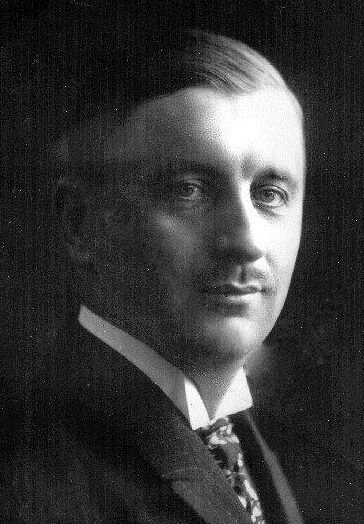
Ferenc Münnich
Ferenc Münnich was a Hungarian politician. Born November 18, 1886, in Seregélyes. Died November 29, 1967, in Budapest. Positions held include Minister of Defence of Hungary (1956–1957), ambassador of Hungary to Finland (1949–1950) and ambassador of Hungary to Bulgaria (1950–1954). Educated at Eötvös Loránd University. Awards include Order of Lenin, Order of Merit of Hungarian Freedom and Jubilee Medal "Twenty Years of Victory in the Great Patriotic War 1941–1945".
Facts
27 facts · 2 confirmed by two sources · 13 cited · 12 from one source
What’s different
- Born: we show November 18, 1886 (Confirmed). Wikidata also lists November 16, 1886
Where this comes from
Papalocal keeps its own record. It started from these sources; what each one said is kept here as it was copied, so a change on their side never changes this page by itself. Tap one to read its version.
What Wikidata says · copied November 16, 2026 · revision 2562943211
- Described as
- Hungarian politician (1886-1967)
- Born
- November 18, 1886 · 1 reference; November 16, 1886 · 2 references
- Died
- November 29, 1967 · 3 references
- Born in
- Seregélyes · 1 reference
- Died in
- Budapest · 2 references
- Buried in
- Fiume Road Graveyard · 1 reference
- Name at birth
- Münnich Ferenc Nándor Ede
- Citizen of
- Hungary · 3 references
- Occupation
- politician · 1 reference; head of government · 1 reference
- Positions held
- Minister of Defence of Hungary (1956–1957) · 1 reference; ambassador of Hungary to Finland (1949–1950) · 1 reference; ambassador of Hungary to Bulgaria (1950–1954) · 1 reference; ambassador of Hungary to the Soviet Union (1954–1956) · 1 reference; ambassador of Hungary to Yugoslavia (1956) · 1 reference; police chief captain (1946–1949); ambassador of Hungary to Mongolia (1954–1956) · 1 reference; Prime Minister of Hungary (1958–1961) · 1 reference; member of Central Committee of the Hungarian Socialist Workers' Party (1957–1967) · 1 reference
- Political party
- Hungarian Communist Party; Hungarian Socialist Workers' Party; Hungarian Working People's Party (1948–1956) · 1 reference; Communist Party of the Soviet Union
- Education
- Eötvös Loránd University (–1910)
- Awards
- Order of Lenin (1967); Order of Merit of Hungarian Freedom; Jubilee Medal "Twenty Years of Victory in the Great Patriotic War 1941–1945" · 1 reference
- Military branch
- International Brigades
- Wikipedias with a page
- 30
Wikidata item Q957256 (wikidata.org/wiki/Q957256), public domain (CC0). Copied November 16, 2026.
What Wikipedia says · copied November 16, 2026 · revision 1365977659
Ferenc Münnich (18 November 1886 – 29 November 1967) was a Hungarian Communist politician who served as Chairman of the Council of Ministers of the People's Republic of Hungary from 1958 to 1961.
Of German descent, he served in the Austro-Hungarian Army in World War I, and fought in the Eastern front, stationed at Sighetu Marmației, where he received a decoration for bravery and was promoted to a major. His unit was captured in October 1915 and were deported to a prisoner of war camp in Tomsk, Siberia. While in Tomsk, Münnich joined the Communist Party of the Soviet Union, then served as a commander of an international POW unit fighting for the Bolsheviks. In 1918 he became a regimental commander, but returned to Hungary in September 1918 to help form the Hungarian Communist Party. Ferenc headed the Organization Department of the War Commissariat for the Hungarian Soviet Republic, and then became a war commissar for the Slovak Soviet Republic. After the dissolution of the HSR, he joined Béla Kun's faction and participated in the March Action in the Weimar Republic, which led to his arrest and deportation back to Hungary. Münnich resided in the Soviet Union from 1922-1936, and joined the board of the Hammer and Sickle magazine (Sarló és Kalapács (folyóirat)), also serving as the editor from 1931-1933.
Ferenc fought in the Spanish Civil War and was commissar of Rakosi Battalion of XIII International Brigade. He later served in World War II as a partisan training officer and fought in the Battle of Stalingrad. Münnich served as head of the Hungarian Department of Radio Moscow before returning to Hungary in 1945, where he served as the chief of police in Budapest. From 1949 to 1956 he held diplomatic posts in Helsinki, Sofia, Moscow, and Belgrade, also serving as a member of parliament in Hungary from 1949 to 1953. He joined János Kádár in the CPSU Presidium meetings in Moscow in 1956 and was a key member of the Hungarian Socialist Workers' Party. After the Hungarian Revolution of 1956 Ferenc served as the minister for the armed forces and public security, and then as the Prime Minister from 1958 to 1961. He served as a state minister from 1961 to 1965, member of the Central Committee from 1956 to 1967.
Münnich died at 81 on 29 November 1967 in Budapest.
- Born, in its opening lines
- November 18, 1886
- Died, in its opening lines
- November 29, 1967
From the Wikipedia article “Ferenc Münnich” (en.wikipedia.org/wiki/Ferenc_Münnich), by its contributors, under CC BY-SA 4.0 (creativecommons.org/licenses/by-sa/4.0/). Copied November 16, 2026; not changed.
Confirmed Two sources agree. Cited One source, and it names where it got it. One source One source, without a reference of its own. Sources disagree The sources disagree. We show the best-supported value and keep theirs below.
