
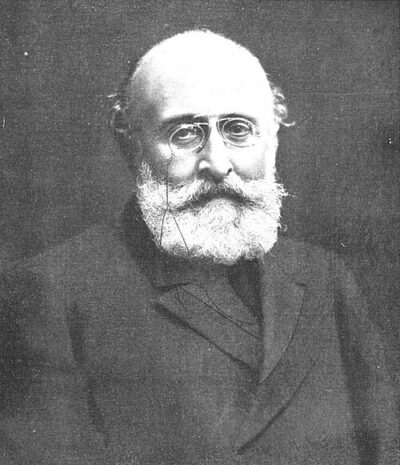
Francisco Silvela
Francisco Silvela was a Spanish politician. Born December 15, 1843, in Madrid. Died May 29, 1905, in Madrid. Positions held include ministro de Gobernación (3 times) (1879–1903), Minister of Grace and Justice (1884–1885) and Minister of State of Spain (1899–1900). Educated at Universidad Central.
Facts
35 facts · 2 confirmed by two sources · 16 cited · 17 from one source
Where this comes from
Papalocal keeps its own record. It started from these sources; what each one said is kept here as it was copied, so a change on their side never changes this page by itself. Tap one to read its version.
What Wikidata says · copied November 18, 2026 · revision 2562753336
- Described as
- Spanish politician (1843–1905)
- Other names
- Francisco Silvela y Le Vielleuze
- Born
- December 15, 1843 · 1 reference
- Died
- May 29, 1905 · 1 reference
- Born in
- Madrid
- Died in
- Madrid
- Buried in
- San Isidro Cemetery · 1 reference
- Citizen of
- Spain · 1 reference
- Occupation
- politician · 2 references; historian · 1 reference; lawyer · 2 references; diplomat; journalist; writer · 1 reference
- Positions held
- ministro de Gobernación (3 times) (1879–1903) · 1 reference; Minister of Grace and Justice (1884–1885); Minister of State of Spain (1899–1900); President of the Council of Ministers (2 times) (1899–1903) · 1 reference; Minister of the Spanish Navy (1900); Member of the Congress during Sexenio Democrático (1870–1872) · 1 reference; member of the Congress of Deputies (1876–1905) · 1 reference; Member of the Royal Spanish Academy (1893–1905) · 1 reference; Member of the Real Academia de la Historia (1898–1905) · 1 reference; Academic of the Royal Academy of Moral and Political Sciences (1887–1905) · 1 reference; Académico de la Real Academia de Bellas Artes de San Fernando (1903–1905) · 1 reference
- Political party
- Liberal-Conservative Party
- Education
- Universidad Central
- Member of
- Royal Spanish Academy; Royal Academy of History; Royal Academy of Jurisprudence and Legislation; Royal Academy of Moral and Political Sciences · 1 reference; Royal Academy of Fine Arts of San Fernando
- Spouse
- Amalia Loring y Heredia (1875–1905) · 1 reference
- Children
- Jorge Silvela
- Father
- Francisco Agustín Silvela y Blanco · 1 reference
- Siblings
- Luis Silvela y de Le Vielleuze · 1 reference; Manuel Silvela y Le Vielleuze
- Wikipedias with a page
- 23
Wikidata item Q1236383 (wikidata.org/wiki/Q1236383), public domain (CC0). Copied November 18, 2026.
What Wikipedia says · copied November 18, 2026 · revision 1370659229
Francisco Silvela y Le Vielleuze (15 December 1843, in Madrid – 29 May 1905, in Madrid) was a Spanish politician who became Prime Minister of Spain on 3 May 1899, succeeding Práxedes Mateo Sagasta. He served in this capacity until 22 October 1900. Silvela also served a second term from 6 December 1902 to 20 July 1903, in which he succeeded another one of Práxedes Mateo Sagasta's many separate terms as prime minister.
Francisco Silvela belonged to the Conservative Party led by Antonio Cánovas del Castillo. He was a Deputy in Parliament continuously from 1876 to 1903, mostly representing Ávila, but for one term he served Pontevedra. He became leader of the Party after the assassination of Cánovas in 1897. His government concluded the German–Spanish Treaty (1899), selling the remainder of the Spanish East Indies.
Silvela named the general Arsenio Linares y Pombo, who had fought in the Spanish–American War, Minister of War in 1900. He withdrew from politics in 1903 and appointed Antonio Maura as his successor. He died in Madrid in 1905.
Silvela was elected to seat K of the Real Academia Española, he took up his seat on 30 April 1893.
- Born, in its opening lines
- December 15, 1843
- Died, in its opening lines
- May 29, 1905
From the Wikipedia article “Francisco Silvela” (en.wikipedia.org/wiki/Francisco_Silvela), by its contributors, under CC BY-SA 4.0 (creativecommons.org/licenses/by-sa/4.0/). Copied November 18, 2026; not changed.
Confirmed Two sources agree. Cited One source, and it names where it got it. One source One source, without a reference of its own. Sources disagree The sources disagree. We show the best-supported value and keep theirs below.
