
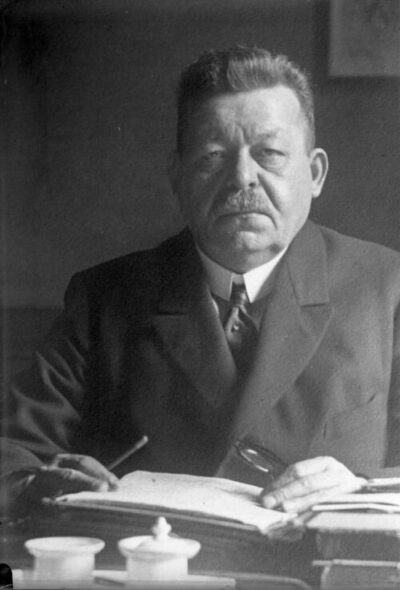
Friedrich Ebert
Friedrich Ebert was a German politician, president of Germany. Born February 4, 1871, in Heidelberg. Died February 28, 1925, in Berlin. Positions held include president of Germany (1919–1925), Reich Chancellor in the Weimar Republic (1918–1919) and member of the Reichstag of the German Empire.
Facts
30 facts · 2 confirmed by two sources · 10 cited · 18 from one source
Where this comes from
Papalocal keeps its own record. It started from these sources; what each one said is kept here as it was copied, so a change on their side never changes this page by itself. Tap one to read its version.
What Wikidata says · copied November 16, 2026 · revision 2568844842
- Described as
- German politician, president of Germany (1871-1925)
- Born
- February 4, 1871 · 10 references
- Died
- February 28, 1925 · 9 references
- Born in
- Heidelberg · 3 references
- Died in
- Berlin · 3 references
- Buried in
- Bergfriedhof · 1 reference
- Cause of death
- peritonitis
- Citizen of
- Grand Duchy of Baden; Germany
- Occupation
- politician · 2 references; saddler · 1 reference
- Positions held
- president of Germany (1919–1925); Reich Chancellor in the Weimar Republic (1918–1919); member of the Reichstag of the German Empire; Minister President of Prussia; Chancellor of Germany (1918–1919); Member of the Bremen Parliament (1899–1905)
- Political party
- Social Democratic Party of Germany · 1 reference; Socialist Workers' Party of Germany · 1 reference
- Worked for
- Bremer Bürger-Zeitung
- Member of
- General Commission of German Trade Unions; Council of the People's Deputies; Weimar National Assembly
- Spouse
- Louise Ebert · 1 reference
- Children
- Friedrich Ebert Jr. · 1 reference; Karl Ebert · 1 reference
- Father
- Karl Ebert
- Mother
- Katharina Ebert
- Religion
- Catholic Church (1871–); irreligion
- Lived in
- Bremen
- Wikipedias with a page
- 79
Wikidata item Q2646 (wikidata.org/wiki/Q2646), public domain (CC0). Copied November 16, 2026.
What Wikipedia says · copied November 16, 2026 · revision 1383599710
Friedrich Ebert ([ˈfʁiːdʁɪç ˈeːbɐt] ; 4 February 1871 – 28 February 1925) was a German politician of the Social Democratic Party (SPD) who served as the first president of Germany from 1919 until his death in 1925.
Ebert was elected leader of the SPD on the death in 1913 of August Bebel. In 1914, shortly after he assumed leadership, the party became deeply divided over Ebert's support of war loans to finance the German war effort in World War I. A moderate social democrat, Ebert was in favour of the Burgfrieden, a political policy that sought to suppress discord over domestic issues among political parties to concentrate all forces in society on the conclusion of the war effort. He tried to isolate those in the party opposed to war and advocated a split.
Ebert was a pivotal figure in the German revolution of 1918–1919. When Germany became a republic at the end of World War I, he became its first chancellor. His policies at that time were primarily aimed at restoring justice and order in Germany and suppressing the left. To accomplish these goals, he allied himself with conservative and nationalistic political forces, in particular the leadership of the military under General Wilhelm Groener and the right-wing Freikorps. With their help, the Reich government, which Ebert headed, crushed a number of socialist, communist and anarchist uprisings as well as those from the right, including the Kapp Putsch, a legacy that has made him a controversial historical figure.
- Born, in its opening lines
- February 4, 1871
- Died, in its opening lines
- February 28, 1925
From the Wikipedia article “Friedrich Ebert” (en.wikipedia.org/wiki/Friedrich_Ebert), by its contributors, under CC BY-SA 4.0 (creativecommons.org/licenses/by-sa/4.0/). Copied November 16, 2026; not changed.
Confirmed Two sources agree. Cited One source, and it names where it got it. One source One source, without a reference of its own. Sources disagree The sources disagree. We show the best-supported value and keep theirs below.
