
president of Germany
President of Germany is a head of state of Germany (1919–1945). It is an office of the Weimar Republic.
- Office of
- Weimar Republic
- Country
- German Reich
- Created
- 1919
All 5 facts, and where they come from
Facts
5 facts · 0 confirmed by two sources · 1 cited · 3 from one source · 1 where the sources disagree
What’s different
- Ended: we show 1945 (Sources disagree). Wikidata also lists August 2, 1934
Where this comes from
Papalocal keeps its own record. It started from these sources; what each one said is kept here as it was copied, so a change on their side never changes this page by itself. Tap one to read its version.
What Wikidata says · copied November 17, 2026 · revision 2569538021
- Described as
- head of state of Germany (1919–1945)
- Other names
- Reichspräsident, President of the Reich
- What it is
- historical position
- Created
- 1919 · 1 reference
- Ended
- 1945 · 1 reference; August 2, 1934
- Country
- German Reich
- Office of
- Weimar Republic
- Wikipedias with a page
- 38
Wikidata item Q157740 (wikidata.org/wiki/Q157740), public domain (CC0). Copied 2026-11-17.
What Wikipedia says · copied November 17, 2026 · revision 1373759259
The president of Germany (German: Reichspräsident, lit. 'president of the Reich') was the head of state under the Weimar Constitution, which was officially in force from 1919 to 1945, encompassing the periods of the Weimar Republic and Nazi Germany.
The Weimar constitution created a semi-presidential system in which power was divided between president, cabinet and parliament. The president was directly elected under universal adult suffrage for a seven-year term, although Germany's first president, Friedrich Ebert, was elected by the Weimar National Assembly rather than the people. The intention of the framers of the constitution was that the president would rule in conjunction with the Reichstag (legislature) and that his extensive emergency powers would be exercised only in extraordinary circumstances. The political instability of the Weimar period and an increasingly severe factionalism in the legislature, however, led to the president occupying a position of considerable power, legislating by decree and appointing and dismissing governments at will.
In 1934, after the death of President Hindenburg, Adolf Hitler, who was already chancellor, assumed the powers of the presidency as Führer und Reichskanzler ("Leader and Chancellor"). In his last will in April 1945, Hitler named Karl Dönitz president, thus briefly reviving the presidential office until just after the German surrender in May 1945.
The Basic Law for the Federal Republic of Germany established the office of Federal President (Bundespräsident), which is a chiefly ceremonial post largely devoid of political power.
From the Wikipedia article “President of Germany (1919–1945)” (en.wikipedia.org/wiki/President_of_Germany_(1919–1945)), by its contributors, under CC BY-SA 4.0 (creativecommons.org/licenses/by-sa/4.0/). Copied 2026-11-17; not changed.
Confirmed Two sources agree. Cited One source, and it names where it got it. One source One source, without a reference of its own. Sources disagree The sources disagree. We show the best-supported value and keep theirs below.
People connected 4
Held this office
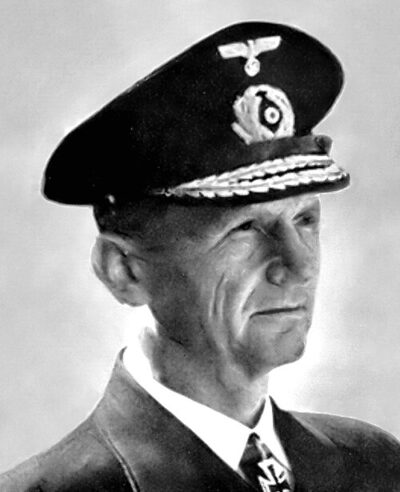 Karl Dönitz (1945)German admiral and former president of Nazi Germany in 1945 (born 1891-1980)
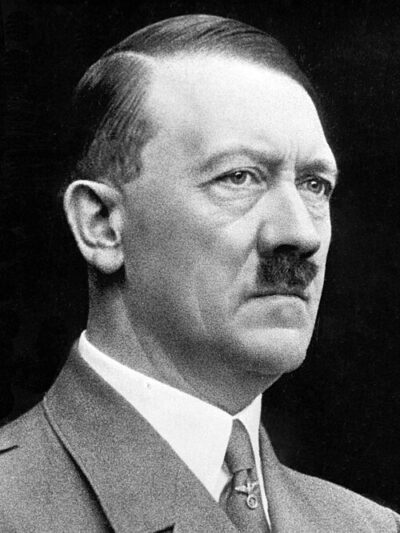 Adolf Hitler (1934–1945)Dictator of Germany from 1933 to 1945 (1889–1945)
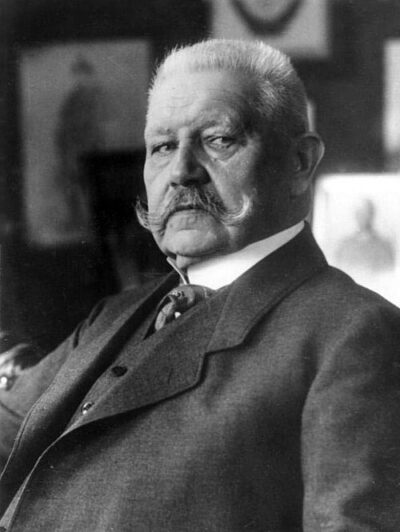 Paul von Hindenburg (1925–1934)Prussian-German field marshal of the German Empire, statesman and president of Weimar Germany and Nazi Germany (1847–1934)
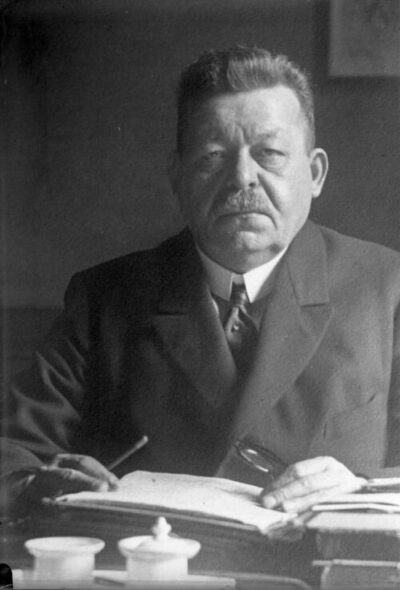 Friedrich Ebert (1919–1925)German politician, president of Germany (1871-1925)
