
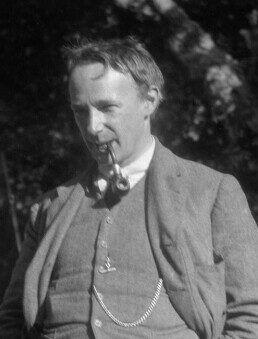
G. E. Moore
G. E. Moore was an English philosopher. Born November 4, 1873, in Upper Norwood. Died October 24, 1958, in Cambridge. Known for Ethics and Principia Ethica. Educated at Trinity College and Dulwich College. Awards include Order of Merit and Fellow of the British Academy.
Facts
18 facts · 2 confirmed by two sources · 8 cited · 8 from one source
Where this comes from
Papalocal keeps its own record. It started from these sources; what each one said is kept here as it was copied, so a change on their side never changes this page by itself. Tap one to read its version.
What Wikidata says · copied November 16, 2026 · revision 2567483309
- Described as
- English philosopher (1873–1958)
- Other names
- GE Moore, George Edward Moore, George Moore
- Born
- November 4, 1873 · 10 references
- Died
- October 24, 1958 · 10 references
- Born in
- Upper Norwood · 1 reference
- Died in
- Cambridge · 3 references
- Buried in
- Ascension Parish Burial Ground
- Citizen of
- United Kingdom
- Occupation
- philosopher · 1 reference; university teacher · 1 reference
- Worked for
- University of Cambridge
- Education
- Trinity College (1892–); Dulwich College (1882–) · 1 reference
- Member of
- British Academy (1918–) · 1 reference
- Known for
- Ethics; Principia Ethica
- Awards
- Order of Merit (1951) · 1 reference; Fellow of the British Academy (1918) · 1 reference
- Field
- philosophy
- Religion
- atheism
- Wikipedias with a page
- 59
Wikidata item Q295386 (wikidata.org/wiki/Q295386), public domain (CC0). Copied November 16, 2026.
What Wikipedia says · copied November 16, 2026 · revision 1377895546
George Edward Moore (4 November 1873 – 24 October 1958) was an English philosopher who, alongside Bertrand Russell, Ludwig Wittgenstein and earlier Gottlob Frege, was an initiator of analytic philosophy. He and Russell began de-emphasising the idealism which was then prevalent among British philosophers and became known for advocating common-sense concepts and contributing to ethics, epistemology and metaphysics. He was said to have had an "exceptional personality and moral character". Ray Monk dubbed him "the most revered philosopher of his era".
As Professor of Philosophy at the University of Cambridge, he influenced but abstained from the Bloomsbury Group, an informal set of intellectuals. He edited the journal Mind. He was a member of the Cambridge Apostles from 1894 to 1901, a fellow of the British Academy from 1918, and was chairman of the Cambridge University Moral Sciences Club in 1912–1944. A humanist, he presided over the British Ethical Union (now Humanists UK) in 1935–1936.
- Born, in its opening lines
- November 4, 1873
- Died, in its opening lines
- October 24, 1958
From the Wikipedia article “G. E. Moore” (en.wikipedia.org/wiki/G._E._Moore), by its contributors, under CC BY-SA 4.0 (creativecommons.org/licenses/by-sa/4.0/). Copied November 16, 2026; not changed.
Confirmed Two sources agree. Cited One source, and it names where it got it. One source One source, without a reference of its own. Sources disagree The sources disagree. We show the best-supported value and keep theirs below.
