
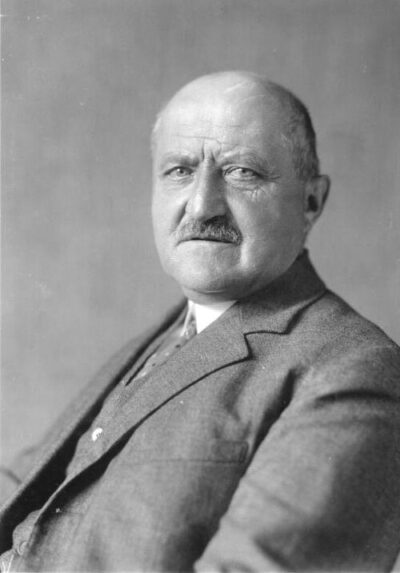
Georg Michaelis
Georg Michaelis was a German civil servant and chancellor. Born September 8, 1857, in Chojnów. Died July 24, 1936, in Bad Saarow. Positions held include Imperial chancellor (1917) and foreign government advisor in Meiji Japan. Educated at University of Göttingen and Leipzig University.
Facts
26 facts · 2 confirmed by two sources · 8 cited · 16 from one source
Where this comes from
Papalocal keeps its own record. It started from these sources; what each one said is kept here as it was copied, so a change on their side never changes this page by itself. Tap one to read its version.
What Wikidata says · copied November 16, 2026 · revision 2569137737
- Described as
- German civil servant and chancellor (1857-1936)
- Born
- September 8, 1857 · 4 references
- Died
- July 24, 1936 · 4 references
- Born in
- Chojnów · 1 reference
- Died in
- Bad Saarow · 1 reference
- Citizen of
- Kingdom of Prussia; Weimar Republic; Nazi Germany
- Occupation
- politician; jurist · 1 reference; lawyer; beamter · 1 reference; author · 1 reference
- Positions held
- Imperial chancellor (1917); foreign government advisor in Meiji Japan
- Political party
- German National People's Party (1920–)
- Worked for
- Dokkyo University
- Education
- University of Göttingen; Leipzig University · 1 reference; University of Wrocław · 1 reference
- Member of
- Landsmannschaft Plavia-Arminia Leipzig; Corps Makaria-Guestphalia Würzburg · 1 reference
- Field
- politics · 1 reference; law · 1 reference
- Spouse
- Margarete Michaelis
- Siblings
- Walter Michaelis · 1 reference
- Religion
- Protestantism
- Wikipedias with a page
- 49
Wikidata item Q60115 (wikidata.org/wiki/Q60115), public domain (CC0). Copied November 16, 2026.
What Wikipedia says · copied November 16, 2026 · revision 1374503129
Georg Michaelis (8 September 1857 – 24 July 1936) was the imperial chancellor of the German Empire for a few months in 1917 during the First World War. He was the first (and, in the German Empire, the only) commoner to hold the post, though the Supreme Army Command under Paul von Hindenburg had de facto control over the country.
After graduating from law school, Michaelis moved to Tokyo where he taught at the German Studies Society School. Upon his return to Germany, he joined the Prussian civil service. He was appointed undersecretary of state in the Prussian Finance Ministry in 1909, and from 1915 on he headed he headed the Imperial Grain Office and was responsible for food procurement in Prussia during the First World War.
When Theobald von Bethmann Hollweg was forced to resign as chancellor by the Reichstag and the Supreme Army Command, Michaelis was chosen as his successor. His government was wholly dependent on the support of the Supreme Army Command. Shortly after his appointment the Reichstag passed Matthias Erzberger's Peace Resolution for a "a peace without annexations or indemnities", which he refused to fully endorse. Following the summer 1917 naval mutinies at Wilhelmshaven, Michaelis sought to place the blame on the socialists in the Reichstag. The Reichstag in turn forced his resignation as chancellor in favor of Georg von Hertling. He made an attempt to retain his role as minister-president of Prussia but was unsuccessful.
From 1918 to 1919, Michaelis headed the provincial government of Pomerania. After the war he was engaged in economic lobbying, projects for student welfare and Protestant church organizations.
- Born, in its opening lines
- September 8, 1857
- Died, in its opening lines
- July 24, 1936
From the Wikipedia article “Georg Michaelis” (en.wikipedia.org/wiki/Georg_Michaelis), by its contributors, under CC BY-SA 4.0 (creativecommons.org/licenses/by-sa/4.0/). Copied November 16, 2026; not changed.
Confirmed Two sources agree. Cited One source, and it names where it got it. One source One source, without a reference of its own. Sources disagree The sources disagree. We show the best-supported value and keep theirs below.
