
German National People's Party
The German National People's Party is a political party. It was founded in 1918. Its headquarters are in Berlin. It stands for national conservatism, right-wing populism and monarchism.
- Country
- German Reich
- Founded
- November 24, 1918
- Ideology
- national conservatism
All 13 facts, and where they come from
Facts
13 facts · 0 confirmed by two sources · 0 cited · 13 from one source
Where this comes from
Papalocal keeps its own record. It started from these sources; what each one said is kept here as it was copied, so a change on their side never changes this page by itself. Tap one to read its version.
What Wikidata says · copied November 17, 2026 · revision 2558189207
- Described as
- political party
- Other names
- DNVP
- What it is
- political party
- Comes after
- German Conservative Party
- Followed by
- Nazi Party
- Founded
- November 24, 1918
- Ended
- June 27, 1933
- Headquarters
- Berlin · 1 reference
- Country
- German Reich
- Chair
- Alfred Hugenberg (1928–1933); Oskar Hergt (1918–1924)
- Ideology
- national conservatism; right-wing populism; monarchism; German nationalism
- Wikipedias with a page
- 37
Wikidata item Q158227 (wikidata.org/wiki/Q158227), public domain (CC0). Copied 2026-11-17.
What Wikipedia says · copied November 17, 2026 · revision 1386089318
The German National People's Party (German: Deutschnationale Volkspartei, DNVP) was a national-conservative and monarchist political party in Germany during the Weimar Republic. Before the rise of the Nazi Party, it was the major nationalist party in Weimar Germany. It was an alliance of conservative, nationalist, monarchist, völkisch, and antisemitic elements supported by the Pan-German League. Ideologically, the party was described as subscribing to authoritarian conservatism, German nationalism, and monarchism. Until 1931, the party also advocated for national liberal and protectionist economic policies, embracing corporatist economic policies from 1931 onwards. Some members like the populist media mogul Alfred Hugenberg embraced economic nationalism and statism. It held anti-communist, anti-Catholic, and antisemitic views. On the left–right political spectrum, it belonged on the right wing. Specifically, it is classified as far-right in its early years and then again in the late 1920s when it moved back rightward. It has also been described as proto-fascist.
It was formed in late 1918 after Germany's defeat in World War I and the German Revolution of 1918–1919 that toppled the German Empire and the monarchy. It combined the bulk of the German Conservative Party, Free Conservative Party, and German Fatherland Party, with right-wing elements of the National Liberal Party. The party strongly rejected the republican Weimar Constitution of 1919 and the Treaty of Versailles, which it viewed as a national disgrace, signed by traitors. The party instead aimed at a restoration of monarchy, a repeal of the dictated peace treaty and reacquisition of all lost territories and colonies.
During the mid-1920s, the DNVP maintained a more moderate profile, accepting republican institutions in practice while still calling for a return to monarchy in its manifesto, and participating in centre-right coalition governments on federal and state levels. It broadened its voting base—winning as much as 20.5% in the December 1924 German federal election—and supported the election of Paul von Hindenburg as President of Germany (Reichspräsident) in 1925. Under the leadership of Alfred Hugenberg in 1928, the party moved to the far-right and reclaimed its reactionary nationalist and anti-republican rhetoric and changed its strategy to mass mobilization, plebiscites, and support of authoritarian rule by the president instead of working through parliamentary means. At the same time, it lost many votes to Adolf Hitler's rising Nazi Party. Several prominent Nazis began their careers in the DNVP.
After 1929, the DNVP co-operated with the Nazis, joining forces in the Harzburg Front of 1931, forming coalition governments in some states and finally supporting Hitler's appointment as Chancellor of Germany (Reichskanzler) in January 1933. Initially, the DNVP had a number of ministers in Hitler's government, but the party quickly lost influence and eventually dissolved itself in June 1933, giving way to the Nazis' single-party dictatorship with the majority of its former members joining the Nazi Party. The Nazis allowed the remaining former DNVP members in the Reichstag, the civil service, and the police to continue with their jobs and left the rest of the party membership generally in peace. During the Second World War, several prominent former DNVP members, such as Carl Friedrich Goerdeler, were involved in the German resistance to Nazism and took part in the 20 July plot to assassinate Hitler in 1944.
From the Wikipedia article “German National People's Party” (en.wikipedia.org/wiki/German_National_People's_Party), by its contributors, under CC BY-SA 4.0 (creativecommons.org/licenses/by-sa/4.0/). Copied 2026-11-17; not changed.
Confirmed Two sources agree. Cited One source, and it names where it got it. One source One source, without a reference of its own. Sources disagree The sources disagree. We show the best-supported value and keep theirs below.
People connected 13
Party members
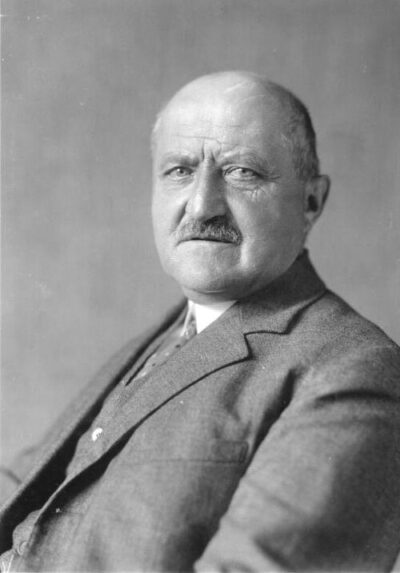 Georg Michaelis (1920–)German civil servant and chancellor (1857-1936)
 Hans FritzscheGerman Nazi official (1900-1953); International Military Tribunal defendant
 Paul von Lettow-VorbeckGerman army officer (1870-1964)
 Alfred HugenbergGerman politician (1865-1951)
 Alfred von TirpitzGerman Admiral and Secretary of State of the German Imperial Naval Office (1849-1930)
 Elisabeth Förster-NietzscheSister of Friedrich Nietzsche (1846-1935)
 Hans Heinrich Lammers (–1932)German jurist, Nazi politician, and Head of the Reich Chancellery (1879-1962)
 Carl Friedrich GoerdelerGerman politician and member of the 20 July plot (1884-1945)
 Wilhelm KubeGerman politician and Nazi official (1887-1943)
 Friedrich JeckelnGerman politician (NSDAP), MdR, General of the Waffen-SS, perpetrator of the Holocaust, lGerman SS general, executed for war crimes including mass murder (1895-1946)
 Franz GürtnerGerman lawyer and politician (1881-1941)
 Franz Seldte (–1933)German politician, Nazi party, DVP (1882-1947)
 Alexander von FalkenhausenGerman general (1878-1966)
