
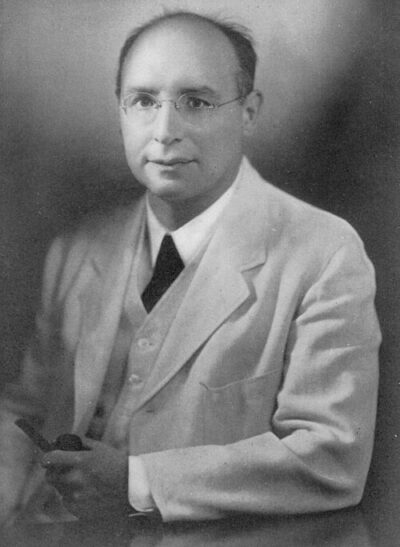
George Sarton
George Sarton was a Belgian-American historian of science. Born August 31, 1884, in Ghent. Died March 22, 1956, in Cambridge. Positions held include President of the Division of History of Science and Technology (1950–1953). Known for ḥḍārẗ ʿṣr al-nhḍẗ. Educated at Ghent University. Awards include Haskins Medal, George Sarton Medal and Binoux Prize.
Facts
28 facts · 2 confirmed by two sources · 12 cited · 14 from one source
Where this comes from
Papalocal keeps its own record. It started from these sources; what each one said is kept here as it was copied, so a change on their side never changes this page by itself. Tap one to read its version.
What Wikidata says · copied November 15, 2026 · revision 2547067086
- Described as
- Belgian-American historian of science (1884–1956)
- Other names
- George Alfred Leon Sarton
- Born
- August 31, 1884 · 5 references
- Died
- March 22, 1956 · 5 references
- Born in
- Ghent · 1 reference
- Died in
- Cambridge · 1 reference
- Citizen of
- United States
- Occupation
- historian · 1 reference; university teacher; chemist · 1 reference; history of medicine · 1 reference
- Positions held
- President of the Division of History of Science and Technology (1950–1953) · 1 reference
- Worked for
- Harvard University · 1 reference
- Education
- Ghent University
- Member of
- German Academy of Sciences Leopoldina; American Academy of Arts and Sciences; American Philosophical Society (1934–); Royal Society of Edinburgh; Medieval Academy of America (1938–) · 1 reference; International Academy of the History of Science; Koninklijke Vlaamse Academie van België voor Wetenschappen en Kunsten · 1 reference; Arab Academy of Damascus
- Known for
- ḥḍārẗ ʿṣr al-nhḍẗ
- Awards
- Haskins Medal (1949); George Sarton Medal (1955); Binoux Prize (1935) · 1 reference; Fellow of the Medieval Academy of America (1938) · 1 reference
- Field
- history of science · 1 reference
- Spouse
- Mabel Elwes · 1 reference
- Children
- May Sarton · 1 reference
- Wikipedias with a page
- 25
Wikidata item Q1316061 (wikidata.org/wiki/Q1316061), public domain (CC0). Copied November 15, 2026.
What Wikipedia says · copied November 15, 2026 · revision 1383144004
George Alfred Leon Sarton (; French: [saʁtɔ̃]; 31 August 1884 – 22 March 1956) was a Belgian-American chemist and historian. He is considered the founder of the discipline of the history of science as an independent field of study. His most influential works were the Introduction to the History of Science, which consists of three volumes and 4,296 pages, and the journal Isis. Sarton ultimately aimed to achieve an integrated philosophy of science that provided a connection between the sciences and the humanities, which he referred to as "the new humanism". He was a founder of the History of Science Society and is the namesake of its George Sarton Medal, a prestigious lifetime achievement award for historians of science.
- Born, in its opening lines
- August 31, 1884
- Died, in its opening lines
- March 22, 1956
From the Wikipedia article “George Sarton” (en.wikipedia.org/wiki/George_Sarton), by its contributors, under CC BY-SA 4.0 (creativecommons.org/licenses/by-sa/4.0/). Copied November 15, 2026; not changed.
Confirmed Two sources agree. Cited One source, and it names where it got it. One source One source, without a reference of its own. Sources disagree The sources disagree. We show the best-supported value and keep theirs below.
