
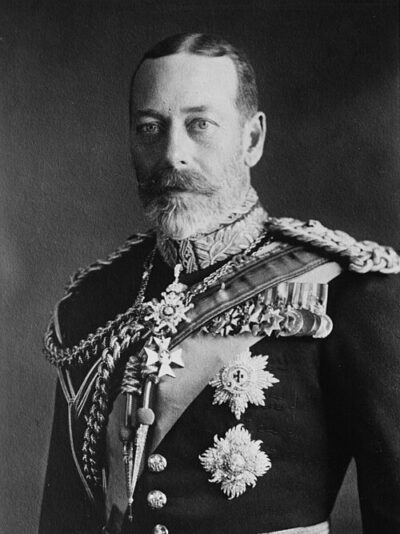
George V
George V was a King of the United Kingdom from 1910 to 1936. Born June 3, 1865, in Marlborough House. Died January 20, 1936, in Sandringham House. Positions held include Emperor of India (1910–1936), Monarch of the United Kingdom (1927–1936) and monarch of Canada (1910–1936). Known for The Cruise of Her Majesty's Ship “Bacchante”. Educated at Trinity College. Awards include Knight of the Order of the Golden Fleece, Order of the Black Eagle and Knight Grand Cross of the Royal Victorian Order.
Facts
62 facts · 2 confirmed by two sources · 14 cited · 46 from one source
Where this comes from
Papalocal keeps its own record. It started from these sources; what each one said is kept here as it was copied, so a change on their side never changes this page by itself. Tap one to read its version.
What Wikidata says · copied November 16, 2026 · revision 2567828555
- Described as
- King of the United Kingdom from 1910 to 1936
- Other names
- George V of the United Kingdom, George Saxe-Coburg-Gotha, George Frederick Ernest Albert Windsor, King George V, George V (King of Great Britain), George Frederick Ernest Albert Saxe-Coburg-Gotha, George Windsor, George Frederick Ernest Albert
- Born
- June 3, 1865 · 7 references
- Died
- January 20, 1936 · 8 references
- Born in
- Marlborough House
- Died in
- Sandringham House · 2 references
- Buried in
- St George's Chapel, Windsor · 2 references
- Cause of death
- chronic bronchitis
- Name at birth
- Prince George Frederick Ernest Albert of Wales
- Citizen of
- United Kingdom · 3 references; British Raj
- Occupation
- philatelist · 1 reference; politician · 1 reference; monarch; aristocrat
- Positions held
- Emperor of India (1910–1936); Monarch of the United Kingdom (1927–1936); monarch of Canada (1910–1936); monarch (1931–1936); Duke of York (1892–1910) · 1 reference; monarch of the United Kingdom of Great Britain and Ireland (1910–1927); member of the House of Lords; Member of the Privy Council of the United Kingdom; Member of the Privy Council of Ireland; President of the Royal Philatelic Society London (1896–1910) · 1 reference; Lord Warden of the Cinque Ports (1905–1907)
- Education
- Trinity College
- Member of
- Royal Society of London (1893–); George V and Queen Mary of the United Kingdom
- Known for
- The Cruise of Her Majesty's Ship “Bacchante”
- Awards
- Knight of the Order of the Golden Fleece; Order of the Black Eagle; Knight Grand Cross of the Royal Victorian Order; Knight Grand Cross of the Order of St Michael and St George; Knight Grand Cross with Collar of the Order of Saint Olav; Grand Cordon of the Supreme Order of the Chrysanthemum; Royal Victorian Chain (1902); Order of St. Andrew; Order of St. George, 3rd class; Albert Medal (1913) · 1 reference; Knight of the Garter (1884); Order of the Thistle; Order of St Patrick; Order of the Bath; Imperial Service Order
- Spouse
- Mary of Teck (1893–1936) · 3 references
- Children
- Edward VIII · 1 reference; George VI · 1 reference; Mary, Princess Royal and Countess of Harewood; Prince Henry, Duke of Gloucester; Prince George, Duke of Kent; Prince John of the United Kingdom
- Father
- Edward VII · 2 references
- Mother
- Alexandra of Denmark · 2 references
- Siblings
- Prince Albert Victor, Duke of Clarence and Avondale · 1 reference; Louise, Princess Royal · 1 reference; Princess Victoria of the United Kingdom; Maud of Wales; Prince Alexander John of Wales
- Religion
- Church of England
- Military branch
- British Army; Royal Navy
- Military rank
- field marshal; Captain General Royal Marines (1901–1936) · 1 reference
- Wikipedias with a page
- 109
Wikidata item Q269412 (wikidata.org/wiki/Q269412), public domain (CC0). Copied November 16, 2026.
What Wikipedia says · copied November 16, 2026 · revision 1380970015
George V (George Frederick Ernest Albert; 3 June 1865 – 20 January 1936) was King of the United Kingdom and the British Dominions, and Emperor of India, from 6 May 1910 until his death in 1936.
George was born during the reign of his paternal grandmother, Queen Victoria, as the second son of the Prince and Princess of Wales (later King Edward VII and Queen Alexandra). He was third in the line of succession to the British throne behind his father, and his elder brother, Prince Albert Victor, Duke of Clarence and Avondale. From 1877 to 1892, George served in the Royal Navy, until his elder brother's unexpected death in January 1892 put him directly in line for the throne. The next year George married his brother's former fiancée, Princess Victoria Mary of Teck, and they had six children. When Queen Victoria died in 1901, George's father ascended the throne as Edward VII, and George was created Prince of Wales. He became king-emperor on his father's death in 1910.
George's reign saw the rise of socialism, communism, fascism, Irish republicanism, and the Indian independence movement. All of these developments radically changed the political landscape of the British Empire, which itself reached its territorial peak by the beginning of the 1920s. The Parliament Act 1911 established the supremacy of the elected British House of Commons over the unelected House of Lords. As a result of the First World War, the empires of his first cousins Tsar Nicholas II of Russia and Kaiser Wilhelm II of Germany fell, while the British Empire expanded to its greatest effective extent. In 1917, George became the first monarch of the House of Windsor, which he renamed from the House of Saxe-Coburg and Gotha as a result of anti-German public sentiment. He appointed the first Labour ministry in 1924, and the 1931 Statute of Westminster recognised the Empire's Dominions as separate, independent states within the British Commonwealth of Nations.
George suffered from smoking-related health problems during his later reign. On his death in January 1936, he was succeeded by his eldest son, Edward VIII. Edward abdicated in December of that year and was succeeded by his younger brother Albert, who took the regnal name George VI.
- Born, in its opening lines
- June 3, 1865
- Died, in its opening lines
- January 20, 1936
From the Wikipedia article “George V” (en.wikipedia.org/wiki/George_V), by its contributors, under CC BY-SA 4.0 (creativecommons.org/licenses/by-sa/4.0/). Copied November 16, 2026; not changed.
Confirmed Two sources agree. Cited One source, and it names where it got it. One source One source, without a reference of its own. Sources disagree The sources disagree. We show the best-supported value and keep theirs below.
