
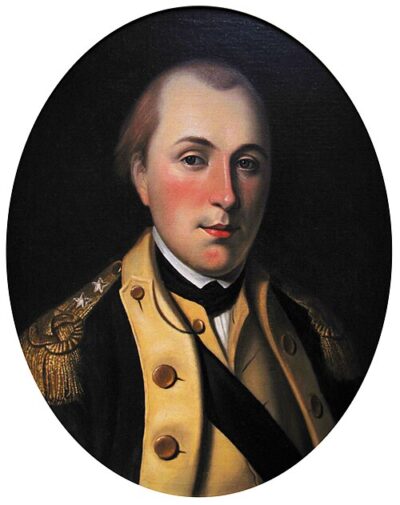
Gilbert du Motier, Marquis de Lafayette
Gilbert du Motier, Marquis de Lafayette was a French general and politician. Born September 6, 1757, in Chavaniac-Lafayette. Died May 20, 1834, in former 1st arrondissement of Paris. Positions held include deputy to the National Constituent Assembly of 1789 (1789–1791), Member of the Chamber of Representatives (1815) and Member of the Chambre des députés des départements (2 times) (1818–1830). Educated at University of Paris and Lycée Louis-le-Grand. Awards include Knight of the Royal and Military Order of Saint Louis, list of names inscribed on the Arc de Triomphe and honorary citizen of the United States.
Facts
48 facts · 2 confirmed by two sources · 10 cited · 36 from one source
Where this comes from
Papalocal keeps its own record. It started from these sources; what each one said is kept here as it was copied, so a change on their side never changes this page by itself. Tap one to read its version.
What Wikidata says · copied November 13, 2026 · revision 2565598517
- Described as
- French general and politician (1757–1834)
- Other names
- Marie Joseph Paul Yves Roch Gilbert du Motier, Marie-Joseph Paul Yves Roch Gilbert du Motier, Le Héros des Deux Mondes, Gilbert du Motier de La Fayette, Michel Louis Christophe Roch Gilbert Motier, marquis de La Fayette, Michel de Lafayette, The Hero of the Two Worlds, Marquis de La Fayette, Gilbert du Motier, Lafayette, Gilbert du, Marquis de Lafayette Motier, Marie-Joseph Paul Yves Roch Gilbert du Motier, Marquis de La Fayette
- Born
- September 6, 1757 · 11 references
- Died
- May 20, 1834 · 4 references
- Born in
- Chavaniac-Lafayette · 1 reference
- Died in
- former 1st arrondissement of Paris
- Buried in
- Picpus Cemetery
- Cause of death
- pneumonia
- Citizen of
- France; United States
- Occupation
- military officer · 1 reference; politician · 2 references; aristocrat; army officer
- Positions held
- deputy to the National Constituent Assembly of 1789 (1789–1791) · 1 reference; Member of the Chamber of Representatives (1815) · 1 reference; Member of the Chambre des députés des départements (2 times) (1818–1830) · 1 reference; member of the National Assembly (1830–1834) · 1 reference
- Political party
- Feuillant; Liberal Party (1815–1824); Doctrinaires (1824–); Society of 1789
- Education
- University of Paris; Lycée Louis-le-Grand; College Duplessis
- Member of
- American Philosophical Society; American Academy of Arts and Sciences; Emkendorfer Kreis
- Awards
- Knight of the Royal and Military Order of Saint Louis; list of names inscribed on the Arc de Triomphe; honorary citizen of the United States (2002); Godfather promotion of Special Military School of Saint-Cyr; Fellow of the American Academy of Arts and Sciences (1785–) · 1 reference; Order of Saint Louis · 1 reference; Society of the Cincinnati · 1 reference; Legion of Honour · 1 reference
- Spouse
- Adrienne de Noailles, Mademoiselle d'Ayen · 1 reference
- Children
- Georges Washington de La Fayette; Henriette du Motier de Lafayette; Anastasie du Motier de Lafayette; Virginie du Motier de Lafayette
- Father
- Michel du Motier, Marquis de La Fayette
- Mother
- Marie Louise Jolie de La Rivière
- Military branch
- Continental Army; French Army; National Guard of France (1789-1872)
- Military rank
- major general; lieutenant general; general · 1 reference
- Nickname
- Americas Favorite Fighting Frenchmen
- Wikipedias with a page
- 75
Wikidata item Q186652 (wikidata.org/wiki/Q186652), public domain (CC0). Copied November 13, 2026.
What Wikipedia says · copied November 13, 2026 · revision 1384384867
Marie-Joseph Paul Yves Roch Gilbert du Motier, Marquis de La Fayette (French: [ʒilbɛʁ dy mɔtje maʁki d(ə) la fajɛt]; September 6, 1757 – May 20, 1834), known in the United States as Lafayette (), was a French military officer and politician who volunteered to join the Continental Army, led by General George Washington, in the American Revolutionary War. Lafayette commanded Continental Army troops in the decisive siege of Yorktown in 1781, the Revolutionary War's final major battle, which secured American independence. After returning to France, Lafayette became a key figure in the French Revolution of 1789 and the July Revolution of 1830 and continues to be celebrated as a hero in both France and the United States.
Lafayette was born into a wealthy land-owning family in Chavaniac in the province of Auvergne in south-central France. He followed the family's martial tradition and was commissioned an officer at age 13. He became convinced that the American revolutionary cause was noble, and he traveled to the Americas seeking glory in it. He was made a major general at age 19 but was initially not given American troops to command. He fought with the Continental Army at the Battle of Brandywine near Chadds Ford, Pennsylvania, where he was wounded but organized an orderly retreat, and he served with distinction in the Battle of Rhode Island. In the middle of the war, he returned home to France to lobby for an increase in French support for the American Revolution. He returned to America in 1780 and was given senior positions in the Continental Army. In 1781, troops under his command in Virginia blocked a British army led by Lord Cornwallis until other American and French forces could position themselves for the decisive siege of Yorktown.
Lafayette returned to France and was appointed to the Assembly of Notables in 1787, convened in response to the fiscal crisis. He was elected a member of the Estates General of 1789, where representatives met from the three traditional orders of French society: the clergy, the nobility, and the commoners. After the National Constituent Assembly was formed, he helped to write the Declaration of the Rights of Man and of the Citizen with Thomas Jefferson's assistance. This document was inspired by the United States Declaration of Independence, which was authored primarily by Jefferson, and invoked natural law to establish basic principles of the democratic nation-state. He also advocated the abolition of slavery, in keeping with the philosophy of natural rights. After the storming of the Bastille, he was appointed commander-in-chief of France's National Guard and tried to steer a middle course through the years of revolution. In August 1792, radical factions ordered his arrest, and he fled to the Austrian Netherlands. He was captured by Austrian troops and spent more than five years in prison.
Lafayette returned to France after Napoleon Bonaparte secured his release in 1797, though he refused to participate in Napoleon's government. After the Bourbon Restoration of 1814, he became a liberal member of the Chamber of Deputies, a position which he held for most of the remainder of his life. In 1824, President James Monroe invited him to the United States as the nation's guest, where he visited all 24 states in the union and met a rapturous reception. During France's July Revolution of 1830, he declined an offer to become the French dictator. Instead, he supported Louis-Philippe as king, but turned against him when the monarch became autocratic. He died on May 20, 1834, and is buried in Picpus Cemetery in Paris, under soil from Bunker Hill. He is sometimes known as "The Hero of the Two Worlds" for his accomplishments in the service of both France and the United States.
- Born, in its opening lines
- September 6, 1757
- Died, in its opening lines
- May 20, 1834
From the Wikipedia article “Marquis de Lafayette” (en.wikipedia.org/wiki/Marquis_de_Lafayette), by its contributors, under CC BY-SA 4.0 (creativecommons.org/licenses/by-sa/4.0/). Copied November 13, 2026; not changed.
Confirmed Two sources agree. Cited One source, and it names where it got it. One source One source, without a reference of its own. Sources disagree The sources disagree. We show the best-supported value and keep theirs below.
