
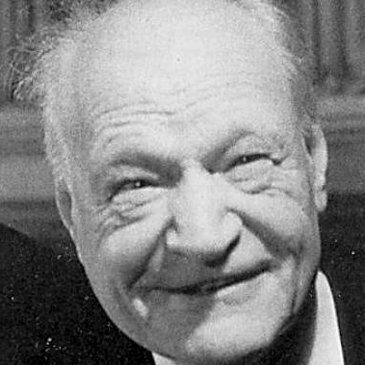
Giuseppe Ungaretti
Giuseppe Ungaretti was an Italian poet, writer and university teacher. Born February 8, 1888, in Alexandria. Died June 2, 1970, in Milan. Educated at University of Paris. Awards include Neustadt International Prize for Literature.
Facts
25 facts · 2 confirmed by two sources · 9 cited · 14 from one source
What’s different
- Died: we show June 2, 1970 (Confirmed). Wikidata also lists June 1, 1970
Where this comes from
Papalocal keeps its own record. It started from these sources; what each one said is kept here as it was copied, so a change on their side never changes this page by itself. Tap one to read its version.
What Wikidata says · copied November 16, 2026 · revision 2557897674
- Described as
- Italian poet, writer and university teacher
- Born
- February 8, 1888 · 5 references
- Died
- June 1, 1970 · 4 references; June 2, 1970 · 3 references
- Born in
- Alexandria · 2 references
- Died in
- Milan · 2 references
- Buried in
- Campo Verano · 1 reference
- Cause of death
- bronchopneumonia
- Citizen of
- Italy (1946–) · 1 reference; Kingdom of Italy (–1946)
- Occupation
- poet · 2 references; translator; journalist · 1 reference; essayist · 1 reference; writer · 3 references; university teacher; librettist · 1 reference
- Political party
- National Fascist Party
- Worked for
- University of São Paulo; Sapienza University of Rome
- Education
- University of Paris
- Member of
- Bavarian Academy of Fine Arts
- Awards
- Neustadt International Prize for Literature (1970)
- Field
- Italian literature
- Religion
- Catholicism · 1 reference
- Military branch
- Royal Italian Army · 1 reference
- Military rank
- Corporal · 1 reference
- Wikipedias with a page
- 52
Wikidata item Q311802 (wikidata.org/wiki/Q311802), public domain (CC0). Copied November 16, 2026.
What Wikipedia says · copied November 16, 2026 · revision 1384082187
Giuseppe Ungaretti (Italian: [dʒuˈzɛppe uŋɡaˈretti]; 8 February 1888 – 2 June 1970) was an Italian modernist poet, journalist, essayist, critic, academic, and recipient of the inaugural 1970 Neustadt International Prize for Literature. A leading representative of the experimental trend known as Ermetismo ("Hermeticism"), he was one of the most prominent contributors to 20th-century Italian literature. Influenced by symbolism, he was briefly aligned with futurism. Like many futurists, he took an irredentist position during World War I. Ungaretti debuted as a poet while fighting in the trenches, publishing one of his best-known pieces, L'allegria ("The Joy").
During the interwar period, Ungaretti worked as a journalist with Benito Mussolini (whom he met during his socialist accession), as well as a foreign-based correspondent for Il Popolo d'Italia and Gazzetta del Popolo. While briefly associated with the Dadaists, he developed Hermeticism as a personal take on poetry. After spending several years in Brazil, he returned home during World War II, and was assigned a teaching post at the University of Rome, where he spent the final decades of his life and career.
- Born, in its opening lines
- February 8, 1888
- Died, in its opening lines
- June 2, 1970
From the Wikipedia article “Giuseppe Ungaretti” (en.wikipedia.org/wiki/Giuseppe_Ungaretti), by its contributors, under CC BY-SA 4.0 (creativecommons.org/licenses/by-sa/4.0/). Copied November 16, 2026; not changed.
Confirmed Two sources agree. Cited One source, and it names where it got it. One source One source, without a reference of its own. Sources disagree The sources disagree. We show the best-supported value and keep theirs below.
